
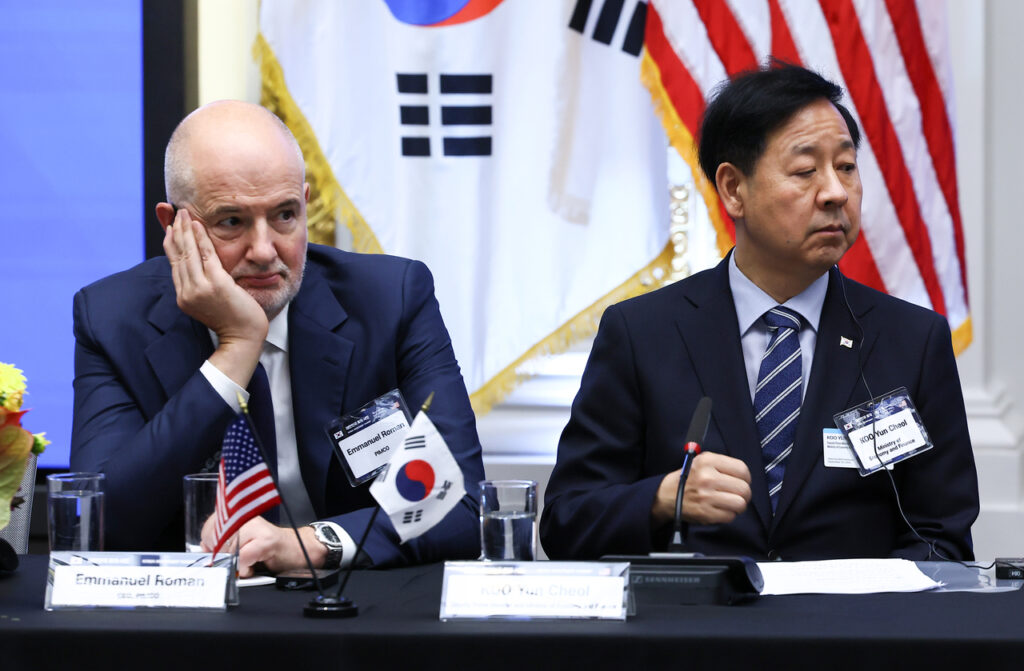
Finance Minister Koo Yun-cheol said the government’s US$350 billion commitment to invest in strategic U.S. sectors under the November 2025 trade accord is unlikely to begin flowing in the first half of 2026. Koo said “it’s unlikely” the programme would start in H1 2026 and noted that the government intends to implement the package “as soon as possible,” but that project timelines and external legal uncertainty will constrain rapid deployment.
The pledge, made as part of the bilateral deal, carries an agreed cap of US$20 billion in annual dollar outflows. That limit, combined with the practical sequencing of large infrastructure and industrial projects, means immediate, large-scale capital transfers are not expected. Koo highlighted the example of a potential nuclear power project to illustrate the point: site selection, design and construction planning dominate early stages and substantially delay major dollar outflows even for high-value undertakings.
As of mid-January, no specific projects have been finalised under the commitment. The administration plans to ask the National Assembly to begin reviewing legislation in February to set up a special fund proposed in 2025 to channel the investment package. Lawmakers would need to pass the bill and resolve regulatory details before the fund can operate, a process that can stretch months and is sensitive to political negotiation.
A further variable is an expected U.S. court ruling related to tariffs imposed during the previous U.S. administration. Koo warned that uncertainty around that legal outcome could affect domestic momentum and timing for implementing the investment package. The $20 billion annual cap was part of the political compromise that tied the investment pledge to tariff adjustments; court developments could therefore have both legal and political ramifications for how quickly Seoul moves.
AI-generated illustration
Market conditions also play a role. The won has traded near the psychological 1,500 per U.S. dollar level, creating currency pressure that would complicate large near-term dollar transfers. Authorities’ measures to stabilise the currency have had limited success, and officials face a trade-off between deploying capital abroad and defending the exchange rate. In the short term, the delay is likely to be viewed as relieving immediate capital outflow pressure, but investors may interpret postponement as signaling implementation risks and political conditionality around the broader bilateral deal.
Longer term, the pledge remains economically significant. If carried out over several years, US$350 billion could reshape supply chains, industrial footprints and strategic ties between South Korea and the United States, especially in energy, semiconductors and critical infrastructure. Yet the annual cap, legislative requirements and project sequencing mean the impact will be gradual rather than transformational overnight.
For markets and policymakers, the watch points are clear: parliamentary review of the special fund in February, the outcome of U.S. court action on tariffs, and any concrete project announcements or memoranda of understanding. Those developments will determine whether the pledge begins to move from political commitment to realized capital flows and will shape both near-term currency dynamics and the longer-term economic architecture linking the two economies.