

Thank you for opening your Chartbook email.

Jean Auguste Dominique Ingres, Joan of Arc at the Coronation of Charles VII in the Cathedral of Reims (1854)
Trump talks blithely about the US oil industry and its interest in Venezuela, but the Permian is feeling the pain right now.
The number of operating rigs in the Permian Basin is down 14% over the past year, according to analytics company Enverus. Cash-strapped workers spend less at local businesses, hurting the local economy. Occupancy at area hotels was down 5.6% between November 2024 and November 2025, according to data company CoStar.
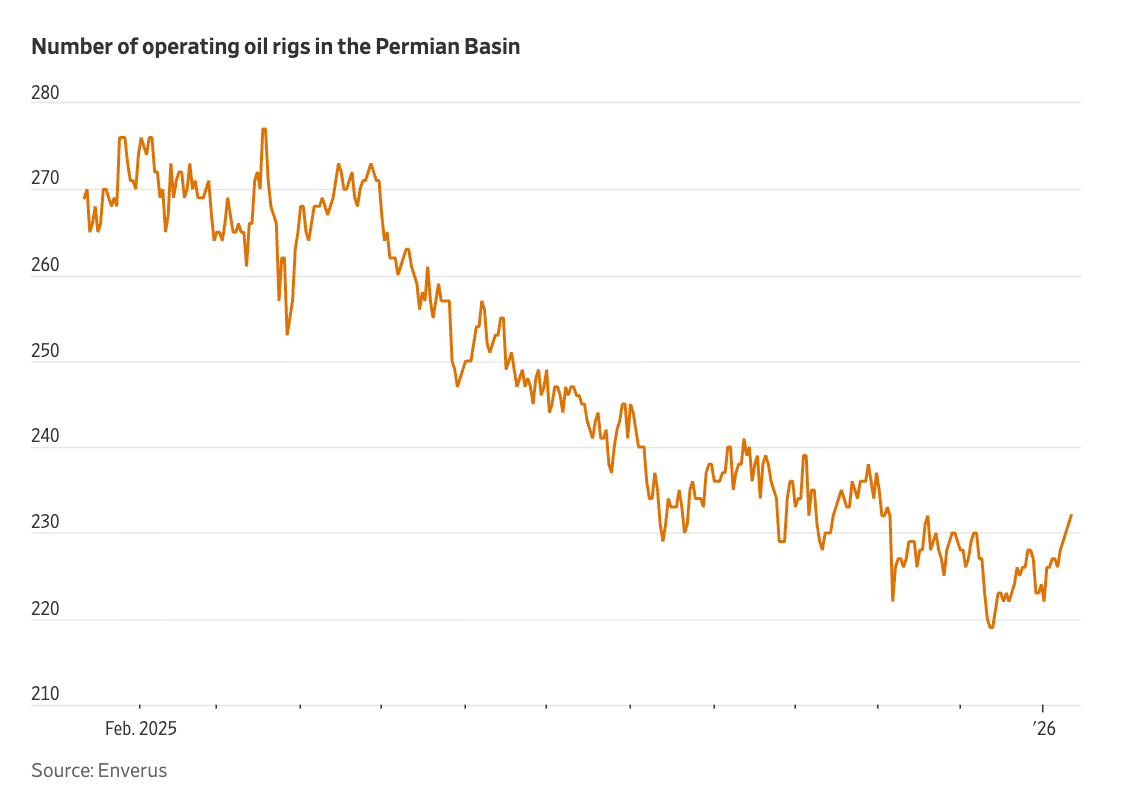
Source: Wall Street Journal
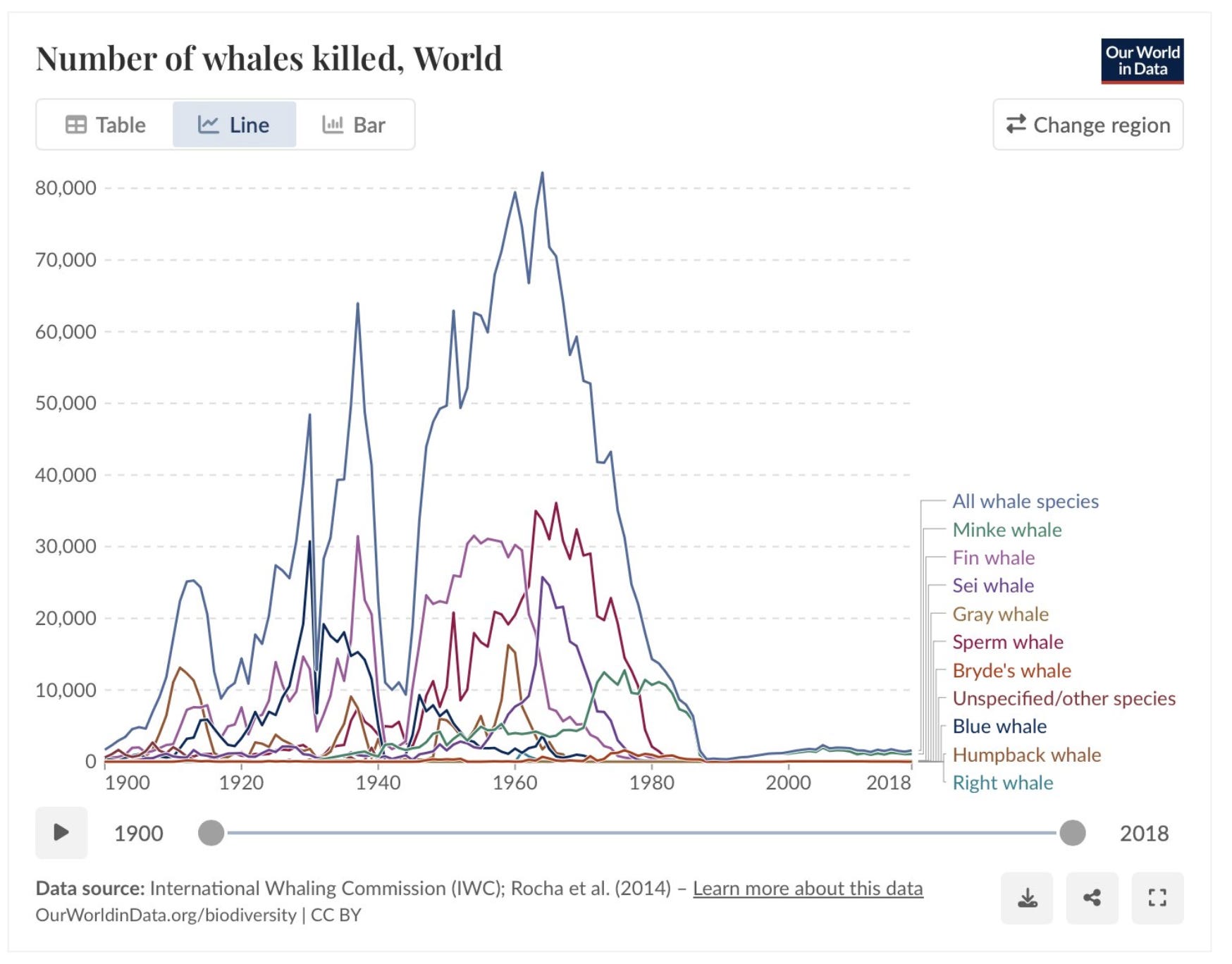
The 20th-century “Great Acceleration” in whaling entirely refutes the idea that the industry died out in the late 19th century.
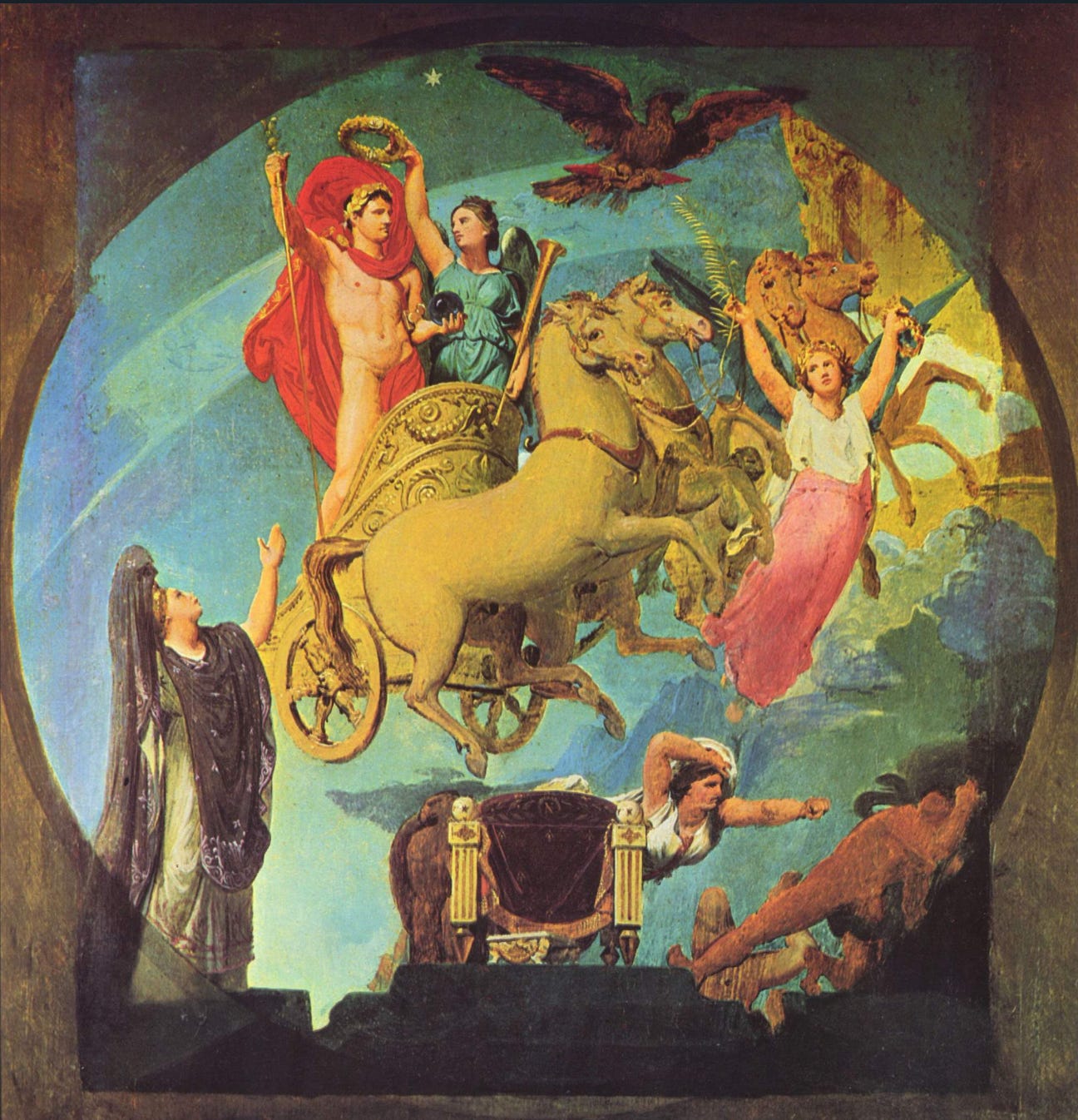
Jean Auguste Dominique Ingres, The Apotheosis of Napoleon I (1853)
Source: Wikiart
After the coup d’état in 1851, Ingres, a partisan of the new government, made no effort to hide his support for Louis-Napoleon Bonaparte. His admiration for the nephew of Napoleon I, and his support for the imperial regime saw him receive and accept a commission which was probably made through the Prince Napoleon. On 2 March, 1853, the painter, at this point seventy-three years old, agreed to a contract committing him to completing before the end of that same year not only The Apotheosis of Napoleon I, a monumental work that would adorn the ceiling of the Salon de l’Empereur in the Hôtel de Ville in Paris, but also eight decorative panels depicting the eight principal cities linked to the history of First Empire: Rome, Milan, Naples, Berlin, Vienna, Moscow, Madrid and Cairo.
Painted with help from his students, The Apotheosis of Napoleon I was indeed completed at the end of the year, in a large workshop rented from the sculptor Gatteaux found at 47 rue de Lille, next-door to the artist’s home. It was also here that Napoleon III and Eugenie came to admire the work at the end of January, 1854. And although Ingres had refused to participate in any of the artistic Salons since 1834, he acquiesced, out of respect for the Emperor, to a retrospective featuring the painting at the Universal Exhibition of 1855. There, the Apotheosis of Napoleon I took its place opposite Ingres’ painting of Homer’s own deification, painted in 1827. The accompanying booklet made plain the allegory: “[Napoleon] is taken, by chariot, to the temple of Glory and Immortality; Pheme crowns him and Victory drives his horses; France mourns his passing; Nemesis, the goddess of vengeance, strikes down Anarchy.”
The original painting, along with its companion piece, the Delacroix ceiling known as La Paix vient consoler les hommes et ramène l’abondance, was destroyed during the fire at the Hôtel de Ville in May 1871. All that remained of it was a photograph of it on display at the Universal Exhibition and various painted sketches and preparatory drawings. This modello held in the Musée Carnavalet and the water-colour in the Louvre nevertheless give an accurate idea of the composition of the painting. In the same vein as the Roman apotheoses of old, the canvas bore a political message rarely found in Ingres’ works. The inscription found on the throne’s arm-rests, “in nepote redivivus” (“he lives again through his nephew”), rendered this panegyric to the Napoleonic dynasty all the more unequivocal during the Second Empire.
The deification of Napoleon, although not a new theme (it features heavily in Ingres’ portrait of Napoleon on the Imperial throne, painted forty-eight years previously), here takes a more academic form, a style greatly appreciated by the Imperial government. And following another imperial commission, Ingres produced a model drawing of the composition for a sardonyx cameo produced by Adolphe David.
Source: Napoleon.org
Searching for radioactive waste in the depths of the Atlantic
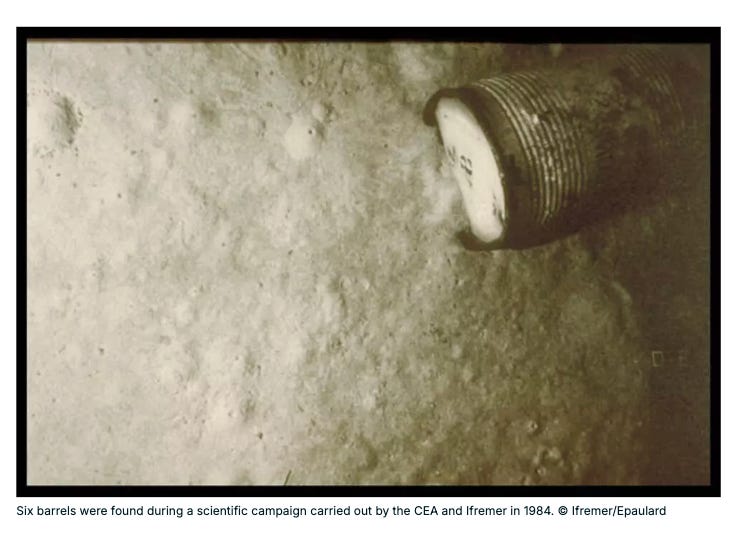
For nearly five decades, more than 200,000 barrels of radioactive waste were dumped in the icy depths of the northeast Atlantic. Today, no one knows precisely where these barrels are located, or what kind of state they are in. On June 15, a French-led team of scientists will set sail from Brittany in a bid to map the barrels and assess their impacts on surrounding marine ecosystems.
It had long been considered a safe way to dispose of radioactive waste. For nearly five decades, tens of thousands of tonnes of waste – sealed in watertight barrels of asphalt and cement – were dumped in international waters. Although the practice is now banned, between 1946 and 1993, 14 European countries – including France and the UK – carried out dumping operations at more than 80 locations in the Arctic, Atlantic and Pacific. In the northeast Atlantic, home to the most concentrated stretch of this radioactive marine waste, some 200,000 barrels lie at a depth of 4,000 metres.
On June 15, a team of scientists from the CNRS (France’s National Centre for Scientific Research), Ifremer (the French national institute for ocean science and technology) and the French oceanographic fleet, will set sail from the Brittany port of Brest in a bid to locate the barrels. “This is a reflection of a particular period in history. At the time, we were in the midst of the rapid development of the nuclear industry and nuclear weapons. States communicated very little. Even today, we have very little information,” said Patrick Chardon, a research engineer at the Clermont Auvergne Physics Laboratory (LPCA) and a specialist in the effects of radioactivity on the environment.
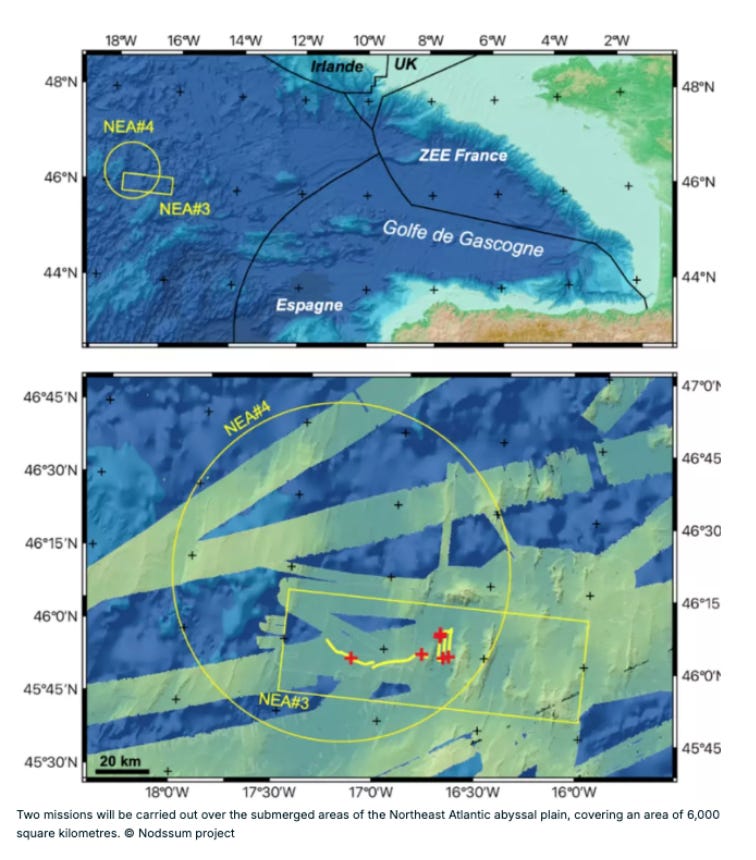
Source: France24

The world according to “Big Oil”.
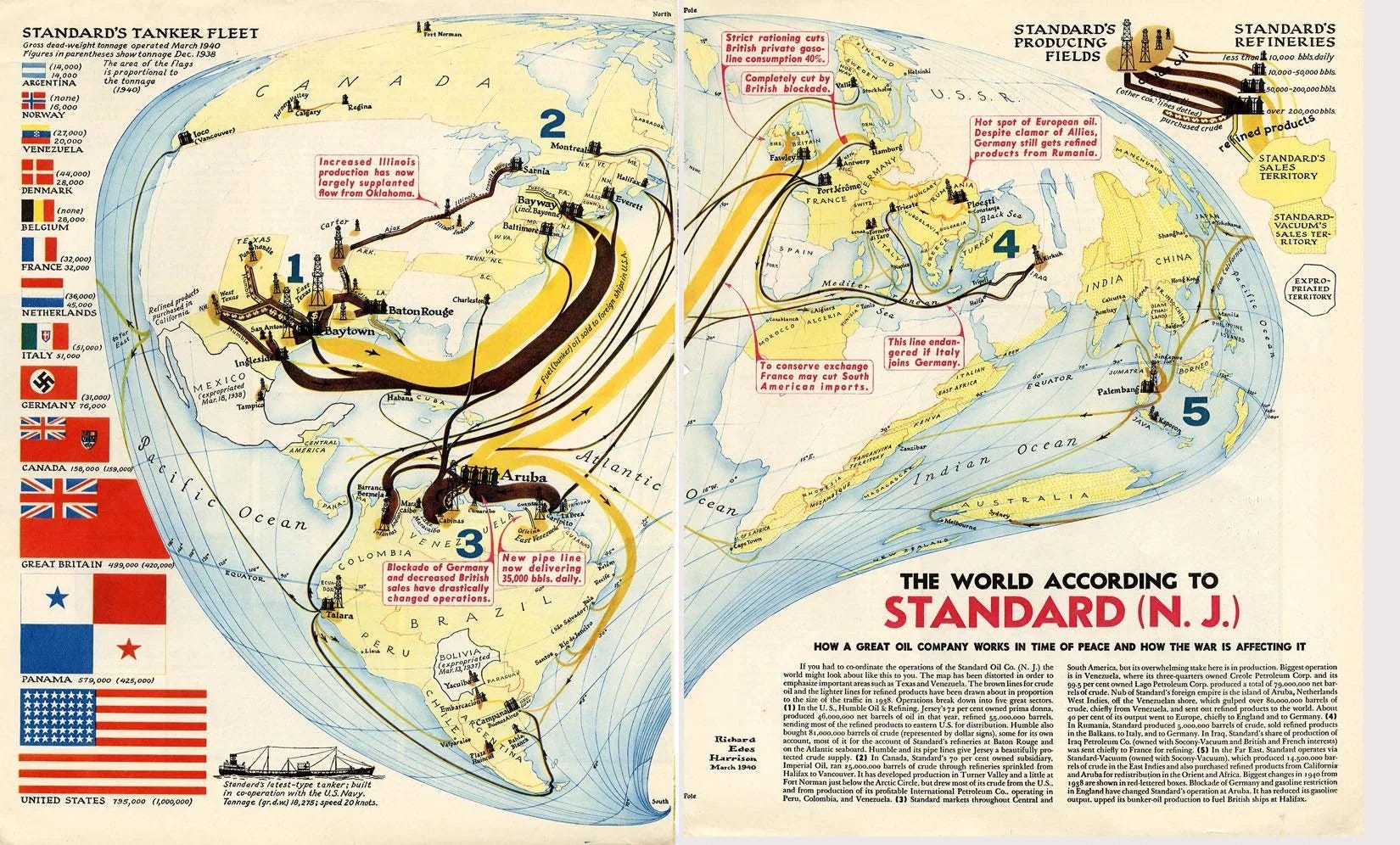

Vintage Maps@vintagemapstore
The world according to Standard Oil Co. (1940) (created by Richard Edes Harrison for Fortune Magazine)

3:04 PM · Jan 10, 2026 · 47.7K Views
11 Replies · 169 Reposts · 771 Likes
HEY READERS,
THANK YOU for opening the Chartbook email. I hope it brightens your day.
I enjoy putting out the newsletter, but tbh, what keeps this flow going is the generosity of those readers who clicked the subscription button.

If you are persuaded to click, please consider the annual subscription of $50. It is both better value for you and a much better deal for me, as it involves only one credit card charge. Why feed the payments companies if we don’t have to.
The continuity in European politics.
For contributing subscribers only.
Jean Auguste Dominique Ingres, Portrait of Madame Moitessier Sitting (1856)

If you’ve scrolled this far, you know you want to click: