

Na civil construction in Switzerland2026 has become a year of talent hunting, with companies expanding hiring to meet the modernization of the real estate market and the demand for energy efficiency. This movement is driven by projects that are not limited to constructing new buildings, but also to transforming old structures into sustainable units with modern systems and technical integration.
The center of this growth is the Burkhalter Group, considered the leading interdisciplinary supplier of building technology in the region, with job openings throughout the country. For Brazilians with European citizenship or work visas, the scenario combines salaries considered among the most competitive in Europe with stringent requirements: qualification, local language and adaptation to a high standard of precision.
Why will the construction industry in Switzerland see an explosion in demand in 2026?
The pressure on labor in 2026 is described as a result of a critical need for renewal of the Swiss real estate market.
See also other features
-
Home-office positions available for teachers who wish to work as online tutors, only 20 hours per week, with an attractive salary.


-
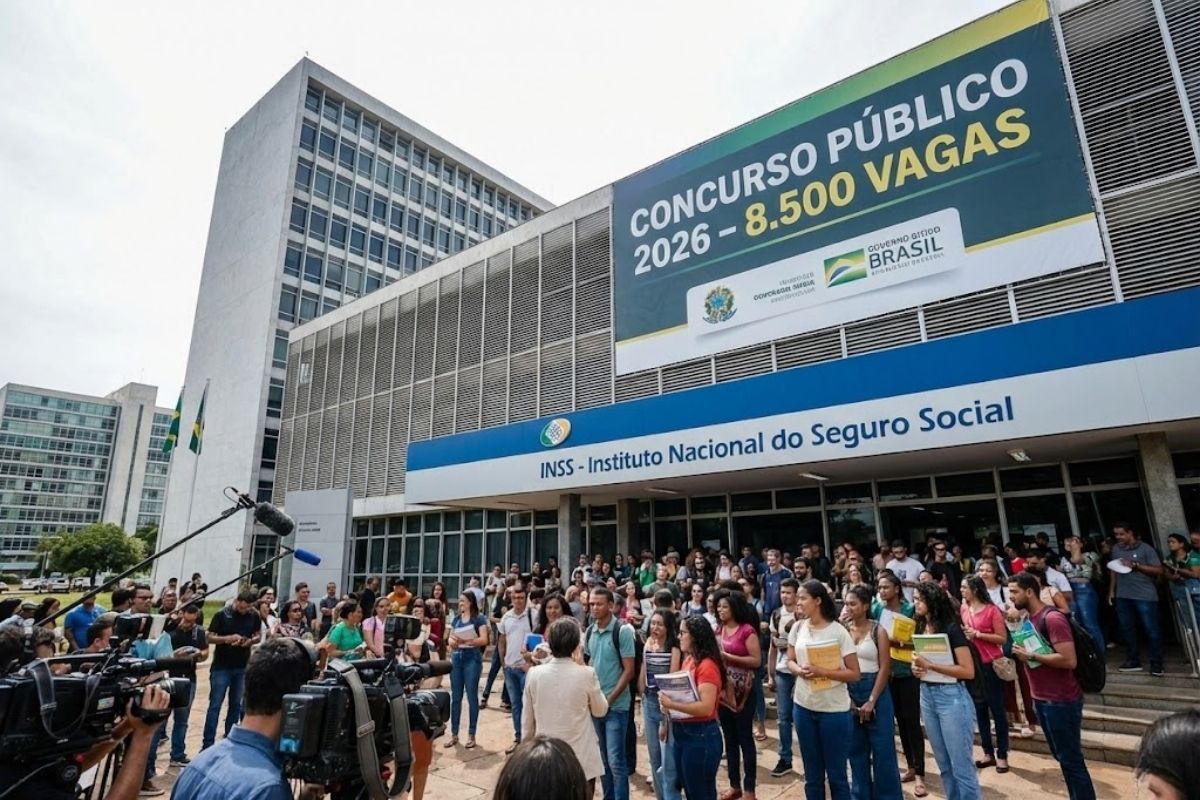
INSS (Brazilian National Social Security Institute) is preparing a competitive examination with 8.500 vacancies throughout Brazil, including positions at the intermediate and higher levels, with salaries reaching R$ 10.371,31. The exam aims to address a historical deficit of employees and is awaiting final government authorization to be officially launched in 2026.
-
Top 3 companies with work-from-home positions in 2026: part-time opportunities, evening options, and real chances for beginners who want to work from home.

-
SBM Offshore has job openings: the company has offshore and onshore positions open in 2026 for engineers, technicians, managers, and more to work offshore.

Instead of expansion based solely on new construction, the driving force now is the extensive renovation and modernization of older buildings, with a focus on… modernization, efficiency and reduction of energy consumption.
The agenda mentioned is the Energy Strategy 2050, which sets ambitious targets for reducing consumption and CO2 emissions by 2050.
This plan is pushing the sector to expand projects that include more efficient air conditioning, remodeled electrical networks, building automation, and systems that communicate with each other, increasing the demand for professionals capable of integrating disciplines.
Who is the Burkhalter Group and how does it spread job opportunities across the country?
The Burkhalter Group operates in a decentralized manner, with 84 autonomous companies distributed in more than 160 locations in Switzerland and Liechtenstein.
This structure broadens the reach of hiring: opportunities are not limited to large urban centers, but also extend to smaller regions, with residential, industrial, and infrastructure projects.
This decentralized model means that, within the same group, professionals may encounter different demands depending on the location: urban retrofit projects, expansion of industrial facilities, maintenance of security systems, telecom and data projects, as well as modernization of buildings to meet efficiency standards.
The positions cited as most sought after in 2026 reflect the focus on building technology and systems integration.
The package includes engineering, field techniques, and coordination roles. Among the positions listed are:
Electrical Project Engineer, with experience in the design, execution, and integration of electrical systems in modern construction projects.
Technician in Heating and Cooling Systems (HVAC), specializing in air conditioning modernization and energy efficiency.
Specialist in Smart Building Automation, responsible for integrating control, sensors, and intelligent building management.
Industrial Electrician, focused on environments with high safety and operational continuity requirements.
Energy Efficiency Engineer, focused on reducing consumption and optimizing systems.
Sanitary Systems Designer, specializing in technical drawings for installations and resource optimization.
Security Systems Maintenance Technician, specializing in critical building infrastructure.
Infrastructure Project Manager, coordinating schedule, teams, and technical delivery.
Ventilation and Air Conditioning Installer, an essential field position in the execution.
Specialist in Renewable Energy and Photovoltaics, directly connected to the focus on clean energy.
Construction Supervisor specializing in Building Technology, overseeing technical execution on the construction site.
Telecommunications and Data Technician, reflecting the importance of connectivity and internal networks.
Building Sustainability Consultant, guiding adaptation and efficiency goals.
Technical Installations Planner, designing integration and execution sequence.
Specialized Technical Assistant, an entry point for those starting their career.
This data shows that 2026 favors hybrid profiles: The technician who understands the interplay between electrical, automation, HVAC, and sanitary systems. It gains relevance because the works require coordination of subsystems within the same building.
The new standard for construction: technical integration and mastery of digital technology.
A professional needs to know how electrical systems interact with automation, how sanitary systems can be optimized for savings or reuse, and how air conditioning fits into efficiency goals.
Furthermore, the mastery of digital technologies and modeling software stands out as a differentiating factor, reinforcing the idea that the modern construction site is not solely about manual tools.
It also involves technical design, compatibility, planning, and precise execution to meet high energy and safety standards.
Languages as a practical barrier: German, French, and Italian cantons
The language barrier is treated as a crucial point.
Switzerland has regions with distinct predominant languages, and depending on the canton, fluency in German, French, or Italian may be essential, especially for technical communication and safety on the construction site.
The requirement is practical, not aesthetic: on a construction site, instructions need to be clear, reports have a standard format, and communication failures can create risks.
Therefore, the local language is presented as a filter, especially in technical and supervisory positions.
How Brazilians can enter Switzerland: citizenship, visa, recognition, and curriculum vitae.
For Brazilians wishing to enter the market, the process requires attention to legal details.
ACCESS THE GROUP’S CAREER PORTAL.
The first step mentioned is the recognition of diplomas and certifications, especially for regulated professions such as engineering and technical areas related to safety.
Applications should be submitted through the group’s official portal, with a Swiss-style CV described as straightforward, including a professional photo and a cover letter in English, German, French, or Italian, highlighting experience in modernization or energy efficiency.
Work standards and culture: punctuality, accuracy, and mandatory compliance.
In the Swiss environment, punctuality and technical precision are paramount.
In the building technology sector, compliance with local technical standards, such as SIA standards, is described as mandatory, requiring standards reading, disciplined execution, and attention to detail.
It is also pointed out that professionals need to be willing to pursue continuing education, because the country invests heavily in employee training.
In a market focused on energy efficiency, methods and standards evolve and require constant updating.
High salaries and cost of living: the equation that determines who can withstand change.
The cost of living in Switzerland is one of the highest in the world.
Even with high salaries, financial planning is considered essential, taking into account housing and mandatory health insurance.
The situation described points to a common reality: Switzerland pays well, but charges high prices.
Those who arrive without planning may struggle with the basics, while those who plan can transform the opportunity into stability, especially if they can secure a position aligned with their language skills and qualifications.
Clean energy as a central focus of contracting in 2026.
The focus on clean energy is not a minor detail, but a driver of demand.
Job openings related to photovoltaics, energy efficiency, automation, and modern climate control indicate that construction in 2026 is being driven by energy retrofitting and reduced consumption.
In practice, the civil construction in Switzerland In 2026, it will function as a bridge between traditional engineering and the energy transition: modernizing buildings, reducing emissions, automating consumption, and integrating systems has become the central focus, and this explains why so many job openings are occurring simultaneously.
Networking and strategy to accelerate entry into the Swiss market.
Practical recommendations include networking through platforms like LinkedIn and making direct contact with local, independent businesses within the group, which could accelerate market integration by 2026.
The logic is that, with a decentralized structure, each unit can have its own demands and specific processes.
In addition to formal submission, a proactive attitude is considered a differentiating factor, along with a well-suited resume, correct language skills, and… demonstration of experience in modernization and efficiency, which are the most valuable themes across all the listed positions.
Would you move to Switzerland in 2026 to work in construction even knowing that the cost of living is high and the language barrier could be a deciding factor?