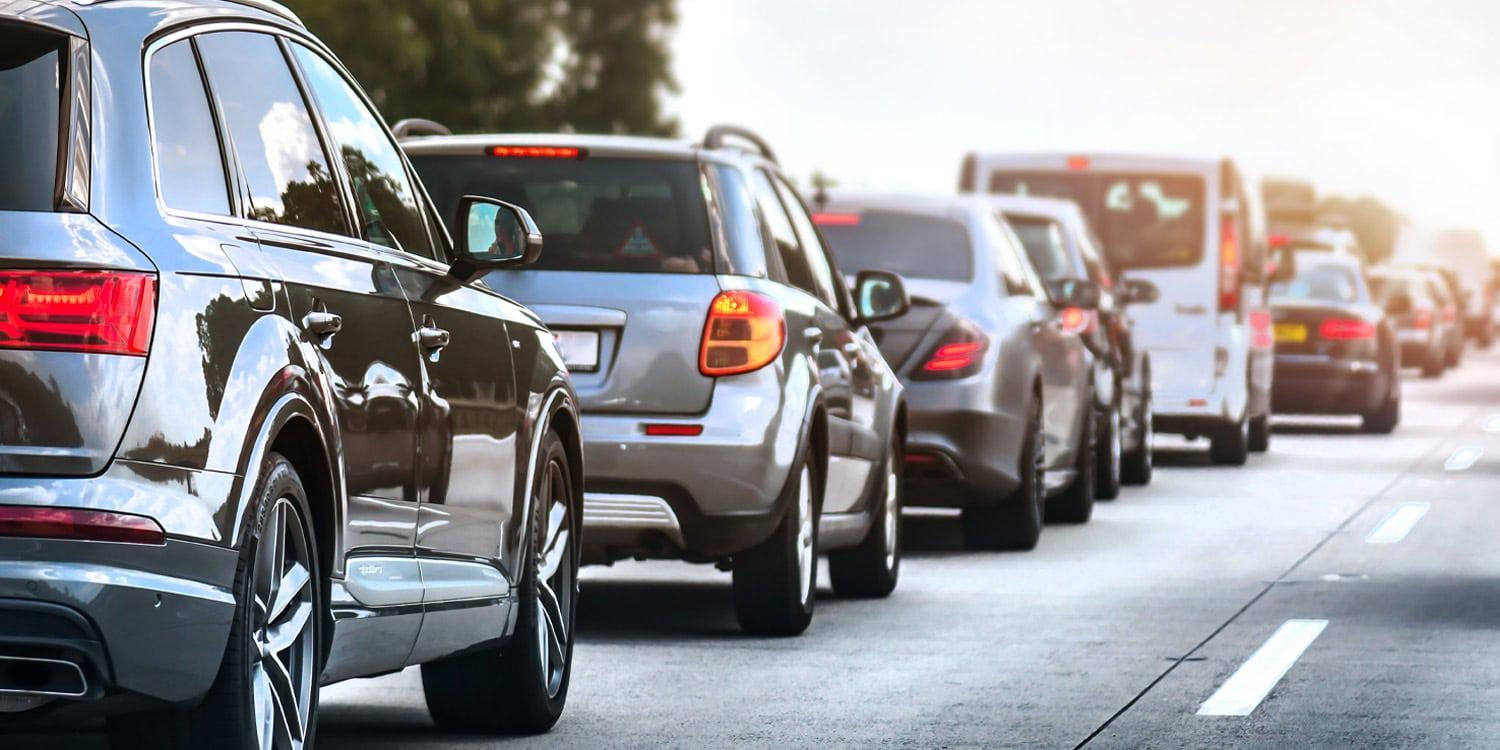
Growing up near busy roads linked to higher risk of depression and anxiety. Night-time noise showed similar effects, supporting the idea that disrupted sleep may play a role.
Growing up near busy roads linked to higher risk of depression and anxiety

Growing up near busy roads linked to higher risk of depression and anxiety. Night-time noise showed similar effects, supporting the idea that disrupted sleep may play a role.
Growing up near busy roads linked to higher risk of depression and anxiety
4 Comments
>Living near busy roads may increase the risk of developing depression or anxiety, according to a large new [study](https://doi.org/10.1016/j.envres.2025.122443) published in Environmental Research.
>Traffic noise is an unavoidable part of modern city life. Cars, buses, and trains generate constant background sound that many learn to tune out. But scientists have long suspected that this noise may still affect the body, even when one believes they have adapted to it.
>Previous research has highlighted that traffic noise can disturb sleep, raise stress levels, and increase the risk of heart disease. In recent years, attention has turned to the effects on mental health.
>However, most earlier studies on noise and mental health have focused on middle-aged or older adults. Hence, the researchers behind the Finnish study wanted to understand whether noise exposure during key developmental years might influence the risk of mental health disorders later on.
There’s a lot of studies linking proximity to roads with pollution (tires, exhaust, etc.) with a lot of bad health outcomes as well. Wouldn’t be surprised if those are also contributing factors.
I lived in an apartment on the side of a main road a couple years ago. My depression was so bad in that apartment, and I did have a hard time staying asleep because of the constant noise. We moved to a new town on a much less busy street. My sleep has been excellent and my mood has improved as a result.
There are many valid reasons why urbanists and activists argue against cars in dense population centers. Even if you reduce the pollution emitted, they are still incredibly loud and stressful to be around as they are inherently giant, deadly machines. There are lots of examples out there showing the reduced decibels when slower, safer streets are implemented. A healthy tree canopy (often missing on busy boulevards) also helps absorb noise.