
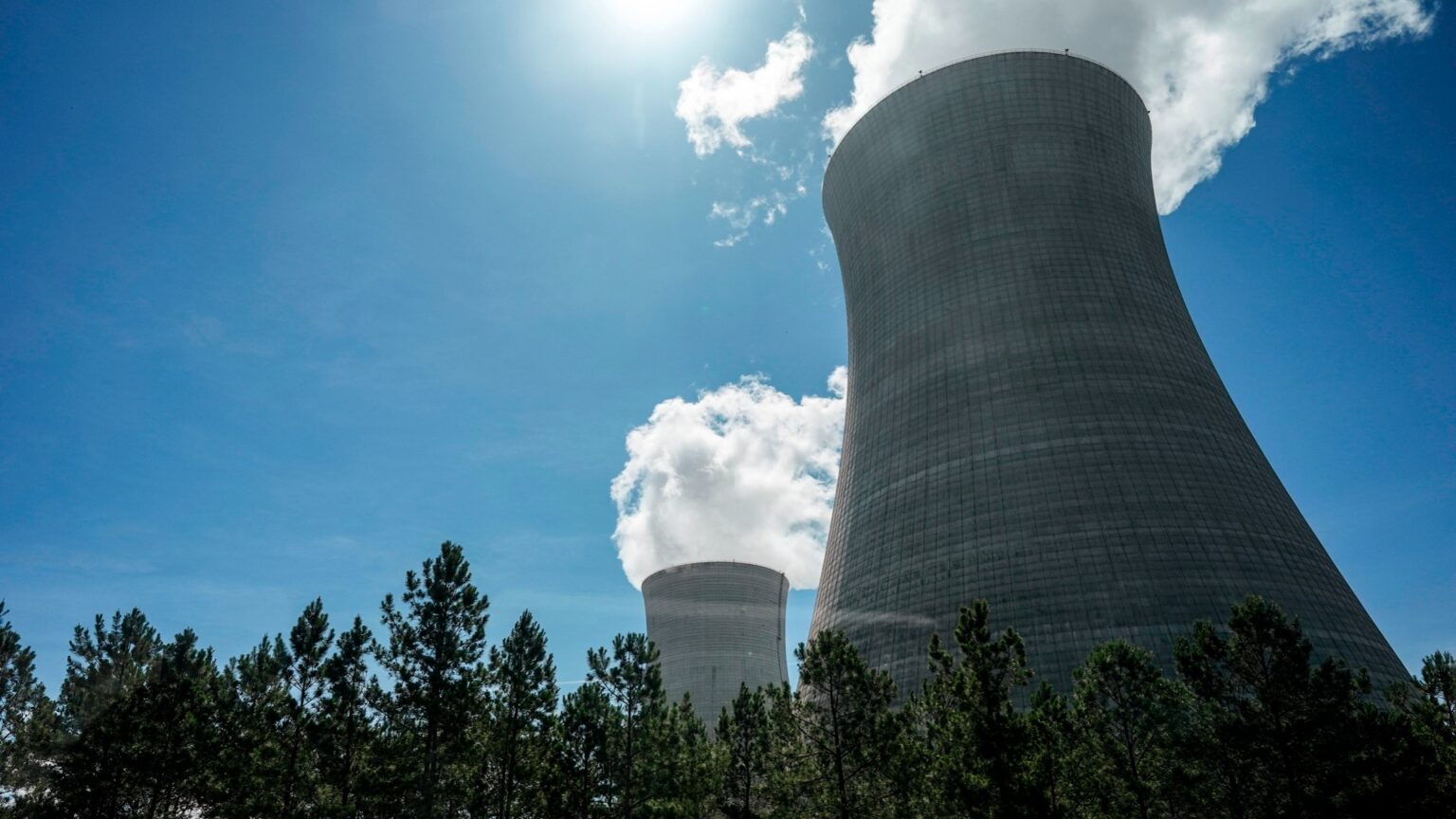
Companies across the nuclear energy value chain have outperformed broader global stock markets over the past year, as investors pour money into the sector after a prolonged period of more subdued investment, data shared with Sustainable Views by Morgan Stanley shows.
The US investment bank tracked 63 companies spanning nuclear fuel, equipment, reactor technology and power generation. Shares in uranium mining companies — which supply the raw material for nuclear power — have emerged as some of the strongest performers in the nuclear value chain, nearly doubling over the past year and far outpacing broader equity benchmarks.
In a note published in August 2025, Morgan Stanley said potential investment in the nuclear value chain globally could reach $2.2tn by 2050, upgrading its estimate from $1.5tn last year, arguing that a “nuclear renaissance” was under way.
Tech as catalyst
Investor interest in nuclear power has been catalysed by long-term commitments from some of the world’s largest tech companies, which are seeking reliable, round-the-clock electricity for data centres and other energy-intensive operations.
“The uptick in investor interest in nuclear is driven by AI,” says BNP Paribas Equity Research quantitative analyst Maxime Drei. “Many investors are using nuclear energy as a proxy to invest in AI.”
On January 9, Meta announced deals with three companies: nuclear tech developers TerraPower and Oklo, and US power generator Vistra.
The company said it will support TerraPower and Oklo in developing advanced nuclear tech, including small modular reactors, and agreed with Vistra to purchase more than 2.1 gigawatts of electricity from two operating nuclear power plants through long-term power purchase agreements.
Meta says the agreements together are expected to deliver 6.6GW of nuclear capacity by 2035 — enough electricity to power a country the size of Denmark.
The deals illustrate how tech companies are engaging with nuclear power across existing generation and new reactor technologies.
“[Our agreement] includes support for existing nuclear generation facilities — extending their lifecycle and increasing the amount of energy they produce — as well as supporting the development of small modular reactors,” a Meta spokesperson tells Sustainable Views.
Last year, Google announced a partnership with NextEra Energy aimed at restarting nuclear plants. “We’re working to revitalise legacy nuclear infrastructure in the US to unlock more capacity for the system in the near term,” Google spokesperson Michiel Sallaets tells Sustainable Views.
Amazon says that it has invested more than $1bn in nuclear energy projects over the past two years, including in reactor tech, power generation and nuclear fuels, with investments beginning in 2024.
Policy reopens doors
These corporate commitments have landed as governments and multilateral institutions reopen the door to nuclear power after years of political and financial restraint.
One of the strongest political signals has come from Washington. The Donald Trump administration has pledged to quadruple commercial nuclear capacity by 2050 and is moving to cut regulatory hurdles around reactor licensing to accelerate new projects.
Nonetheless, the International Energy Agency estimates China’s nuclear fleet will overtake that of the US by 2030.
Multilateral lenders are also reassessing their stance.
“Countries urgently need reliable electricity to support jobs, growth and improved living standards,” a World Bank spokesperson tells Sustainable Views. “Nuclear is one of several options we consider — depending on a country’s needs, resources and readiness.”
The bank last year reversed its long-standing ban on financing nuclear projects and said it is in the early stages of developing its nuclear investment programme.
Money flows
These political shifts and corporate commitments are beginning to filter through to financial markets, where long-standing exclusions on nuclear power are easing.
According to analysis by the Morgan Stanley Institute for Sustainable Investing, based on Morningstar data, 2.4 per cent of global assets under management had an exclusion policy on nuclear energy as of June 2025, down from 3.2 per cent in June 2023.
Investor appetite is also visible in fund launches. The number of nuclear and uranium-focused funds doubled to eight in 2025, shows Morningstar data, while total AUM increased more than sevenfold over the past three years to $17.8bn as of December 2025.
Institutional support has also become more explicit. In September 2024, a group of banks and investment managers said they would increase financial backing for the nuclear power industry in support of the COP28 goal of tripling global nuclear capacity by 2050.
Reality check
Despite the renewed momentum, nuclear power still accounts for a relatively small share of global energy investment, and projects remain capital intensive and slow to deliver.
IEA data shows that nuclear represented less than 5 per cent of total investment in the power sector between 2022 and 2024, while electricity generation accounted for about 40 per cent of overall energy investment. While spending on nuclear is expected to rise over the next decade, it remains modest compared with investment in renewables.
The sector also continues to face various challenges.
The IEA says large-scale nuclear projects in Europe and the US have, on average, been completed around eight years later than planned and cost roughly 2.5 times more than initially estimated.
By contrast, some projects in countries such as China, Russia and South Korea have stayed closer to original timelines and budgets.
And there is also the question of what could happen if, as some analysts are predicting, the AI bubble bursts and the recent release of financing dries up.
“A bursting AI bubble could depress the valuations of companies producing nuclear power, much as it could weigh on other utilities and utility equipment providers,” says Morningstar senior equity analyst Tancrede Fulop.
In Drei’s opinion, while a correction would affect nuclear investments in the short term, the effect is likely to be limited.
“The impact of this potential bubble burst would vary across continents,” he says. “In the US, where we see more AI-related investment [in nuclear], the impact would likely be higher.”