
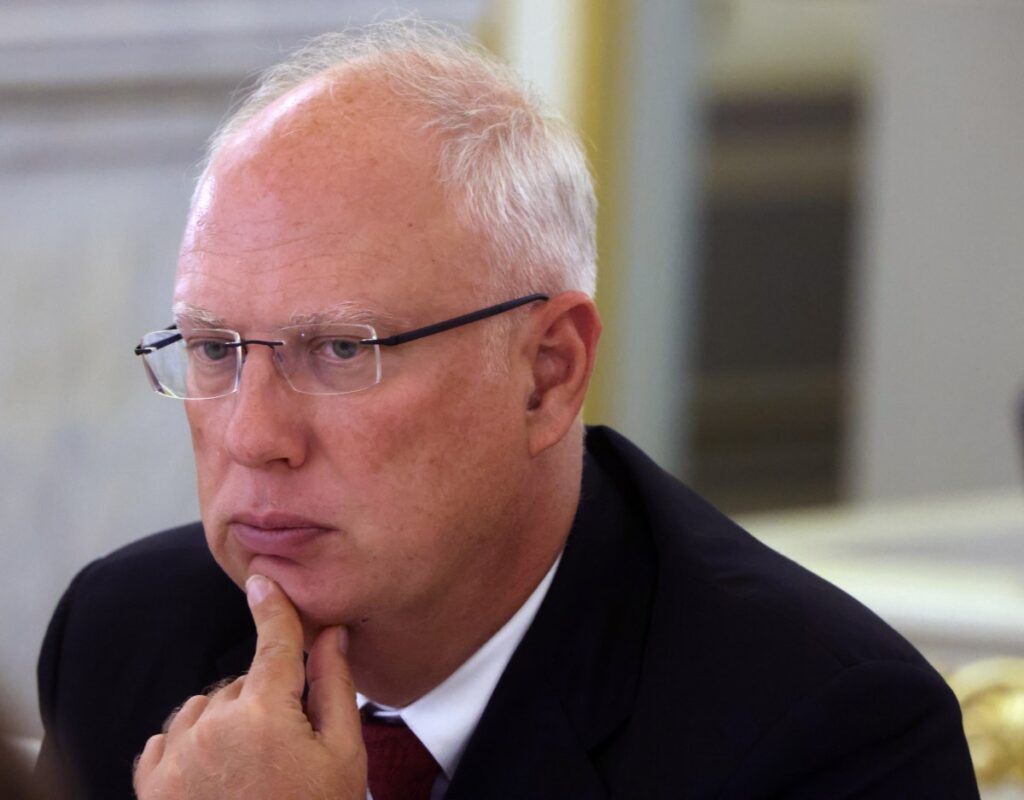
Figures close to Vladimir Putin have welcomed President Donald Trump’s threat to impose tariffs on NATO allies over Greenland.
Kirill Dmitriev, a key figure in negotiations with the U.S. over the war in Ukraine, posted on X that “the transatlantic alliance is over.”
The post followed Trump’s announcement that Washington would impose 10 percent levies on NATO members on France, Sweden, Denmark, Norway, Germany, the U.K., the Netherlands, and Finland, unless there was a deal to buy Greenland.
Former Russian President Dmitri Medvedev also described Trump’s position as a sign of deepening divisions within NATO.
Eric Golson, associate professor of economics at the University of Surrey, in England, told Newsweek that, from an economic warfare perspective, using tariffs to force territorial concessions has never worked historically and is unlikely to succeed here.
Newsweek has contacted NATO for comment.
Why It Matters
Moscow has framed its invasion of Ukraine it started as a proxy war with NATO. and so it has seen its growing divisions with its main member over Trump’s ambitions to acquire Greenland as an opportunity to weaken the alliance at a critical time for the war.
What To Know
Last week, European forces from France, Germany and other countries arrived in Greenland for military drills at a time in which Trump has stepped up his rhetoric over acquiring the island, which is part of the kingdom of Denmark.
Trump announced 10 percent tariffs on NATO allies—France, Sweden, Denmark, Norway, Germany, the U.K., the Netherlands, and Finland—until the U.S. reaches a deal to acquire the island.
Dmitriev referred to the drills in an X post in which he said that was in response to their “dangerous game of sending military to Greenland,” adding “Europe should not provoke their Daddy.”
In a follow-up post, Dmitriev referred to the upcoming economic forum, posting on X: “collapse of the transatlantic union. Finally—something actually worth discussing in Davos.”
Meanwhile, Medvedev, deputy chair of Russia’s Security Council, and who has railed at the West over the war in Ukraine, also appeared to delight in the ructions that Trump’s threat had caused. He posted on social media “the U.S. is preparing to attack Greenland, choosing the island itself rather than some kind of Atlantic solidarity.”
However, Golson said that Trump’s new tariffs will raise prices for American consumers, who are already facing an inflation crisis, while further depressing European exports beyond previous tariff rounds.
“The EU is economically strong enough to absorb the impact without conceding to pressure. It runs a substantial trade surplus and retains relatively solid fundamentals,” Golson said.
What People Are Saying
Kremlin aide Kirill Dmitriev posted: “The transatlantic alliance is over.”
Former Russian President Dmitri Medvedev said: “Make America Great Again (MAGA) = Make Denmark Small Again (MDSA) = Make Europe Poor Again (MEPA). Has this idea finally sunk in, dimwits?”
Eric Golson, associate professor of economics at the University of Surrey, said the tariffs: “will simply become an added cost for consumers and businesses on both sides of the Atlantic.”
Golson added: “Trump’s strategy is unlikely to deliver a win for the United States, but it may be the only approach his team knows how to use.”
What Happens Next
Further frantic diplomacy is expected to push back against Trump’s threats, after U.K Prime Minister Keir Starmer told the U.S. president he was wrong to threaten tariffs against NATO allies.