
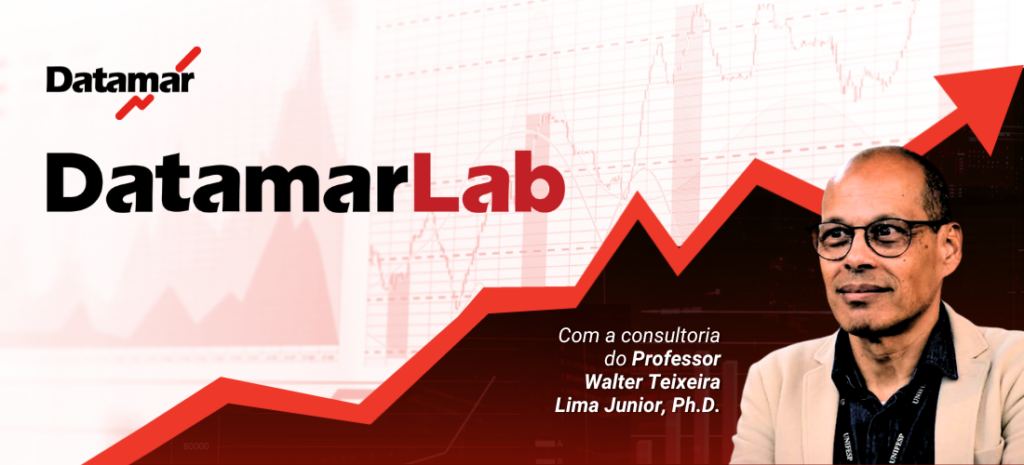
Conceived as a strategic arm of Datamar, DatamarLab was created with the goal of becoming a center of excellence in applied research, the development of technological solutions and the practical training of talent focused on foreign trade cargo intelligence. In a landscape shaped by logistics disruptions, rising competition and growing sustainability pressures, the lab is built on the integration of science, data and technology to turn information into actionable intelligence.
Led by Professor Walter Teixeira Lima Junior, a researcher in Artificial Cognitive Systems and Social Robotics at the Federal University of São Paulo (Unifesp) and a consultant to the project, DatamarLab brings together academic researchers and market specialists, combining methodological rigor with real-world application. In this interview, he explains the foundations of the initiative, the effort to bridge science and the corporate world, and the role of technology in supporting more efficient and sustainable decision-making.
Question: How would you define DatamarLab and why is this project important?
Answer: DatamarLab brings together cutting-edge scientific knowledge and the market experience Datamar has built up over decades. The idea is to create real synergy between these two worlds. Today, there is a very large gap inside companies between scientific knowledge and corporate practice, which often makes us dependent on technologies developed abroad, without fully taking our own reality into account. An interdisciplinary project like DatamarLab creates a space where different fields of knowledge can truly interact. Technology is often seen as overly complex, but humans deal with multiple dimensions at the same time. There is no artificial intelligence that delivers ready-made answers. What it offers are possible paths, which still need to be assessed based on efficiency, sustainability and the specific context of each decision.
Question: DatamarLab aims to be a center of excellence in applied research and talent development, something still relatively uncommon in the corporate environment. What can the business world learn from science?
Science provides methodology, conceptual frameworks and rigor in project development. Many of the most important advances come from experimental research, which allows hypotheses to be tested before being taken to market. In industry, when a new model is adopted, it already must work efficiently. Scientific research helps anticipate this process, creating solutions that are more mature from the outset and that put companies ahead of their competitors. Today, excessive expectations around generative artificial intelligence have distorted strategic decision-making. There is a widespread belief that these tools are a cure-all that can solve any problem, which is not true. At DatamarLab, the focus is on what is feasible and grounded in reality. Many companies end up stuck after investing in solutions that fail to evolve. Science helps identify trends in a realistic way and connect them to concrete market needs.
Question: How did the partnership with Datamar come about, and why was the company chosen for this project?
There is growing pressure from stakeholders to adopt artificial intelligence, often in ways that are disconnected from operational reality. That pressure usually falls on technology teams, creating unrealistic expectations. Science is essential to bring this discussion back to what is actually possible. Datamar, as a data provider, holds a strategic position because it works with information rooted in the reality of foreign trade. High-quality data is essential for human decision-making. There are tasks that only machines can perform and others that depend entirely on human judgment, especially in complex markets like the one Datamar serves. The lab is built on that understanding, aiming to improve processes and generate competitiveness while respecting the context in which decisions are made.
Question: What types of techniques, tools and methodologies does DatamarLab plan to apply when integrating artificial intelligence and machine learning into cargo data analysis?
The project is based on combining Datamar’s maritime expertise with knowledge of artificial intelligence. A third, fundamental pillar is human–machine symbiosis, where humans remain the decision-makers, supported by technology. Human-made tools may provide structural and conceptual foundations, but they must interact with users in a process of mutual learning. We are dealing with complex problems in which human decision-making is still irreplaceable. Datamar had the vision to pursue this path, bringing together its market experience and scientific knowledge to develop experimental products that can later be turned into practical solutions.
Question: How does DatamarLab view the role of technology in the logistics sustainability agenda?
Sustainability is now a central issue, which also involves how humans perceive and interpret it. Many of these concepts are still evolving. For a long time, for example, people believed water was an infinite resource. That shows how our understanding of sustainability is constantly being updated. Artificial intelligence alone does not solve these challenges. When combined with human insight, however, it can expand our ability to perceive and analyze reality, opening the door to new interpretations. AI works from past data, while humans project the future, though not always realistically. With structured, intelligent datasets aligned with a solid understanding of reality, decision-making becomes more effective. In this context, technology helps unlock more informed decisions about routes, infrastructure use and environmental impacts.
Question: Finally, how could DatamarLab influence the way South American foreign trade is analyzed and operated in the coming years?
The main impact of DatamarLab is to show that it is possible to look to the future in a realistic way, using processes based on structured scientific knowledge. That approach will guide the lab and help shape a new way of analyzing, planning and operating foreign trade in the region, always connecting science, data and the market.