
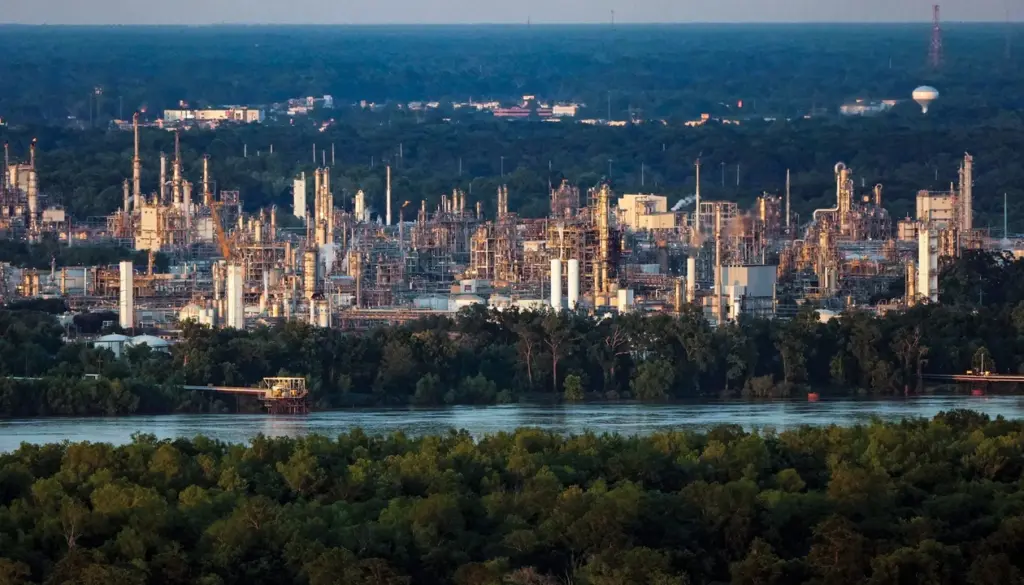
Every day, employees in sterilization plants, medical supply warehouses, and industrial facilities inhale a chemical that could quietly kill them.
Ethylene oxide (EtO) is used to sterilize about 20 billion medical devices annually in the US, making it indispensable to health care. But its importance doesn’t diminish its health hazards. The growing body of scientific evidence connecting EtO exposure to chronic illnesses has not been met with updated federal protections. The US Occupational Safety and Health Administration (OSHA) standards have remained virtually unchanged since the 1980s, leaving workers vulnerable while regulators fail to act.
Workers are legally subject to unhealthy amounts of EtO in daily operations
EtO’s value lies in its ability to sterilize heat- and steam-sensitive medical equipment. Its effectiveness, however, comes with health-altering consequences for those working with or near it. The Environmental Protection Agency classifies EtO as a known human carcinogen. Prolonged exposure, even at low concentration levels, can cause cell mutations, while short bursts of concentrated contact can trigger lung irritation, dizziness, and neurological issues.
The Centers for Disease Control and Prevention (CDC) and the EPA have long recognized links between EtO exposure and cancers such as lymphoma, leukemia, multiple myeloma, and breast cancer.
The consequences of federal inaction are already visible. A 2023 report by the National Library of Medicine revealed that employees who work at 31 of 654 EtO-emitting facilities in the US were suspected of having an estimated cancer risk greater than 100 in 1 million, which is beyond the risk level that the EPA generally considers acceptable.
For instance, an interactive map shows that Midwest Sterilization’s plants in Laredo, Texas, and Jackson, Missouri, expose workers to cancer risks 18 times and 11 times higher, respectively, than the level EPA uses as a benchmark for evaluating potential hazards.
All these facilities, and many more in states like Louisiana and Georgia, still operate under OSHA standards that are nearly 4 decades old. Meanwhile, people who work and live near these plants face disproportionate exposure.
OSHA’s exposure limits are stuck in the past
OSHA’s permissible exposure limit for EtO was last updated in 1984, long before we understood the full extent of its effects.
Today, the EPA acknowledges that ethylene oxide is significantly more hazardous than previously thought, prompting steps to curb emissions and shield workers from harm. In 2024, it announced new rules requiring a 90% reduction in EtO emissions from nearly 90 commercial sterilization facilities, giving them a multi-year timeline to install controls and come into compliance. The agency also plans to reduce allowable workplace exposure to 0.1 ppm by 2035, underscoring that any worker exposed above this threshold should already wear additional respiratory protection.
However, in 2025, about 25 companies with multiple plants across different states—including chemical manufacturers—were granted temporary exemptions for two whole years, allowing them to continue their operations. Even so, the EPA has at least acted to reduce emissions and improve worker safety.
Yet OSHA still allows 1 ppm of exposure over an 8-hour shift, which is 10 times the EPA’s intended target level. This disconnect between environmental policy and workplace safety leaves workers and nearby communities exposed to pollution that the government already recognizes as unsafe.
Why OSHA has taken so long to update its EtO standards reflects the complexity of the federal regulatory process rather than a lack of scientific consensus on its dangers. Under the Occupational Safety and Health Act, the agency must demonstrate not only that a chemical presents a significant risk but also that a proposed exposure limit is feasible for affected industries. However, in practice, this task can be costly, lengthy, and complicated. As past major rulemakings have shown, even well-supported measures can take years or even decades to materialize, especially when the federal department must navigate stringent statutory requirements with limited budget and resources.
The path toward worker safety and stricter regulations
By imposing stricter limits, the EPA has taken meaningful steps toward addressing the ongoing health crisis. But unless OSHA follows the lead, states, labor unions, and environmental justice advocates must intervene. They must work together and put pressure on manufacturers and EtO facility operators to ensure proper conditions for the workers. Worker exposure limits should match current science, and facilities should be required to implement continuous air monitoring both inside and outside their operations.
Companies handling EtO must also invest in reliable leak-detection technology, provide comprehensive protective gear, and ensure routine medical screenings for employees at risk. None of these measures requires new inventions—they need only that decision-makers show the will to execute them.
Jordan Cade, wearing a gray-and-blue checkered jacket and a dark paisley tie, poses for a portrait shot against a blue wall.

Jordan Cade
Credit:
Courtesy of Jordan Cade
The EPA has acknowledged the threat. Now OSHA must do the same. Protecting workers is not optional, and no one should be forced to trade their health for a paycheck. As the need for sterile medical equipment grows, so does the responsibility to ensure that the people working with EtO are not sacrificing their lives in the process.
Jordan Cade is an attorney with the Environmental Litigation Group, a Birmingham, Alabama, law firm where he advocates for people affected by toxic chemical exposure.
Views expressed are those of the author and not necessarily those of C&EN or ACS.
Do you have a story you want to share with the chemistry community? Send your idea or an 800-word submission to cenopinion@acs.org.
Chemical & Engineering News
ISSN 0009-2347
Copyright ©
2026 American Chemical Society