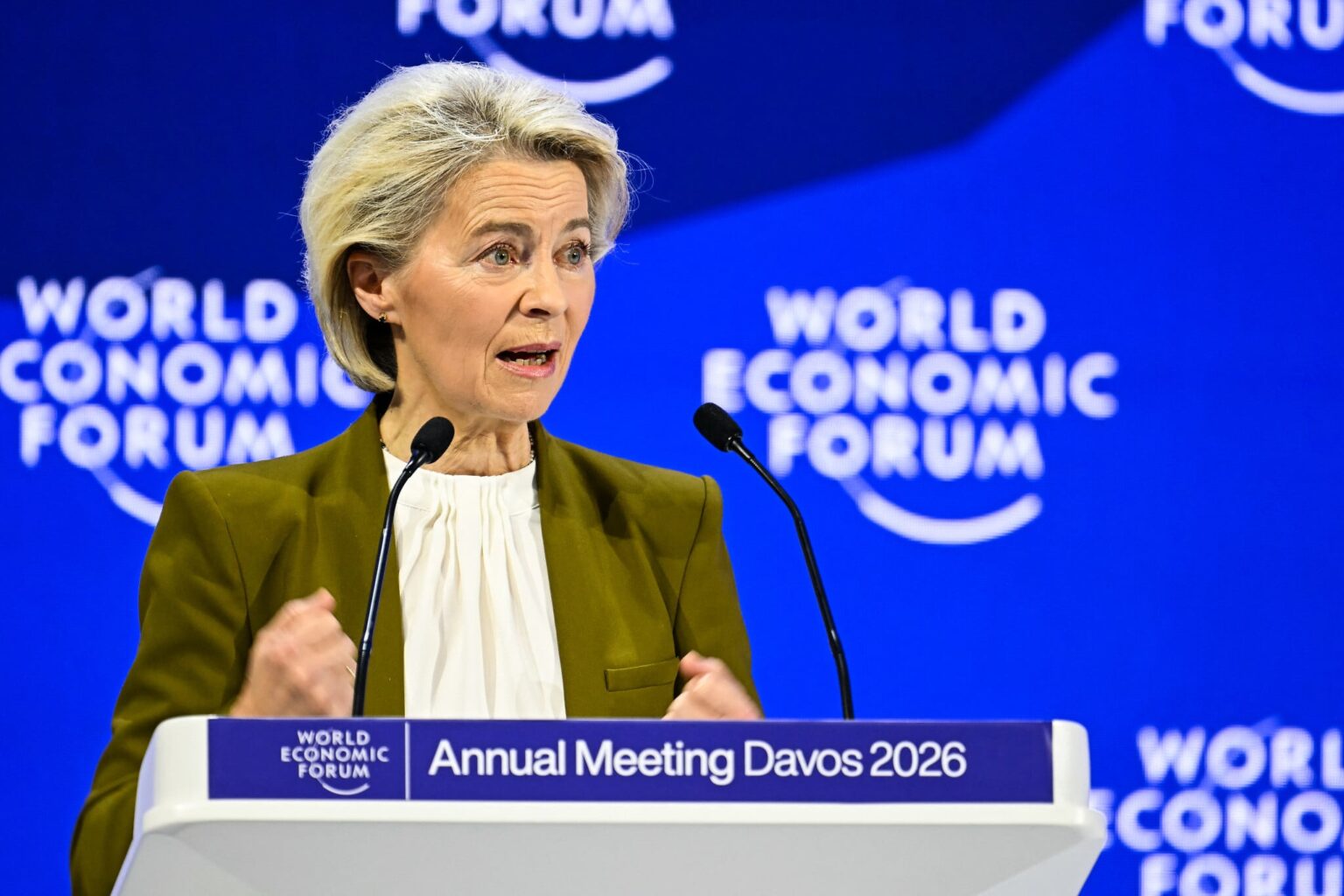
The European Union on Tuesday proposed banning the export of more drone and missile tech to Iran after a deadly crackdown on protesters, European Commission head Ursula von der Leyen said.
“Europe stands in full solidarity with the brave women and men of Iran who are risking their lives to demand freedom for themselves and future generations,” von der Leyen wrote on X.
“Today, we are proposing to ban additional exports of critical drone and missile technologies.”
Von der Leyen said the EU was also readying other sanctions on those responsible for the “continued and brutal repression” of protests that rocked the Islamic Republic.
European Union foreign policy chief Kaja Kallas told MEPs in the European Parliament that the drone and missile measures “will further limit Iran’s ability to feed Russia’s continued aggression against Ukraine.”
Kallas reaffirmed that the EU was also preparing new sanctions in response to the violence used by Tehran against protesters.
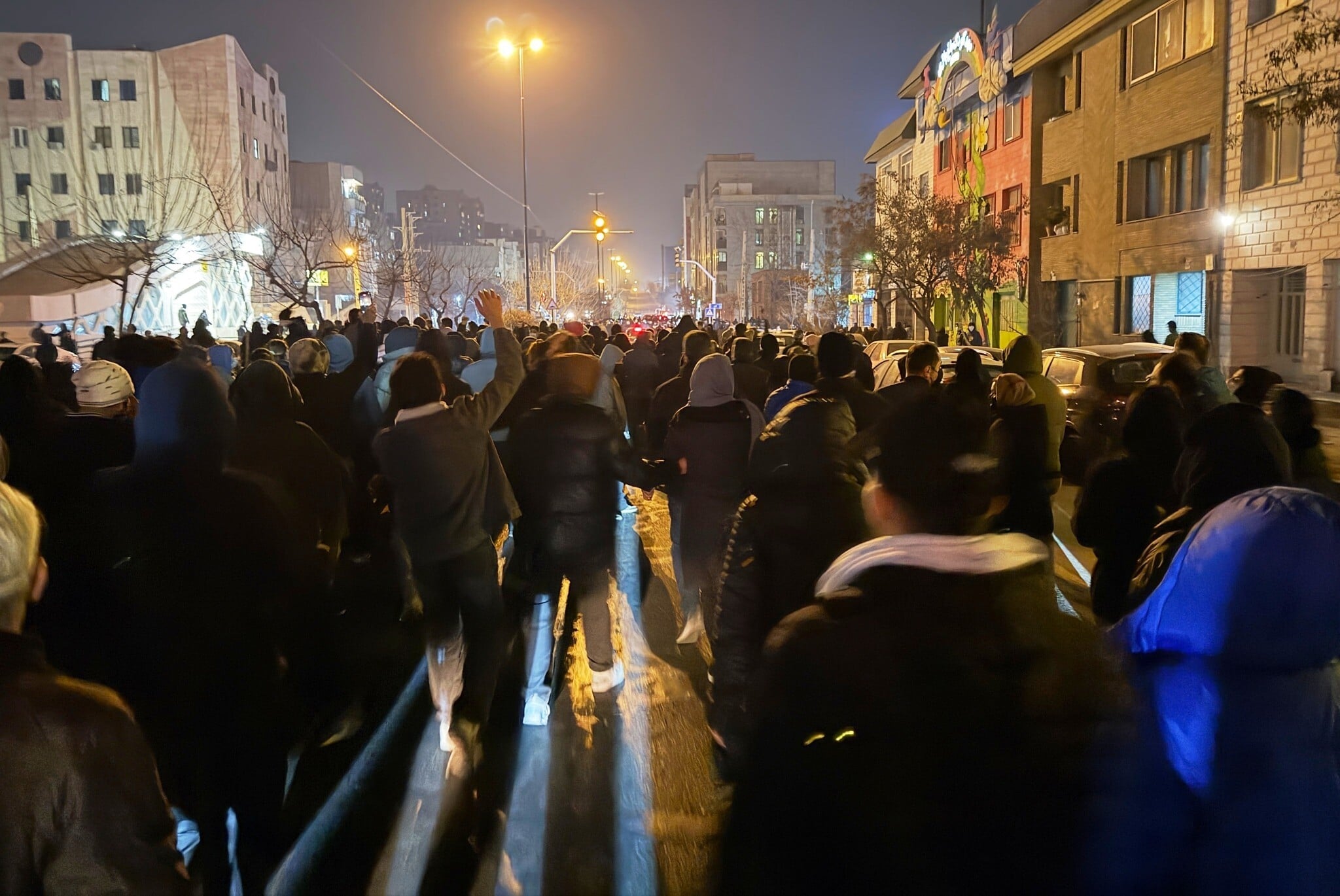
In this photo obtained by The Associated Press, Iranians attend an anti-government protest in Tehran, Iran, January 8, 2026. (UGC via AP)
Protests in Iran sparked by economic strain in late December exploded into the biggest challenge to the Iranian leadership in years, with the full scale of the violent crackdown yet to emerge due to an internet blackout that is now in its 11th day.
Despite difficulty accessing information, the Iranian Human Rights NGO says it has verified that 3,428 protesters were killed by security forces. Iran’s Supreme Leader Ayatollah Khamenei has said “several thousand” were killed, while the Sunday Times newspaper this week cited a tally from a network of Iranian doctors that said at least 16,500 were slain.
Iranian authorities have been pressing ahead with mass arrests following the wave of demonstrations, according to local media and monitors, despite international pressure.
The EU has already sanctioned several hundred Iranian officials over crackdowns on previous protest movements and Tehran’s support for Russia’s war on Ukraine, which began in February 2022.
The bloc has also banned the export to Iran of a raft of components that could be used in the country’s drone and missile manufacturing. Iran has supplied Russia with attack drones that have dive-bombed infrastructure and other civilian targets across Ukraine.
In April 2024, EU leaders agreed to impose new sanctions on Iran’s drone and missile producers over Tehran’s unprecedented attack on Israel at the time.
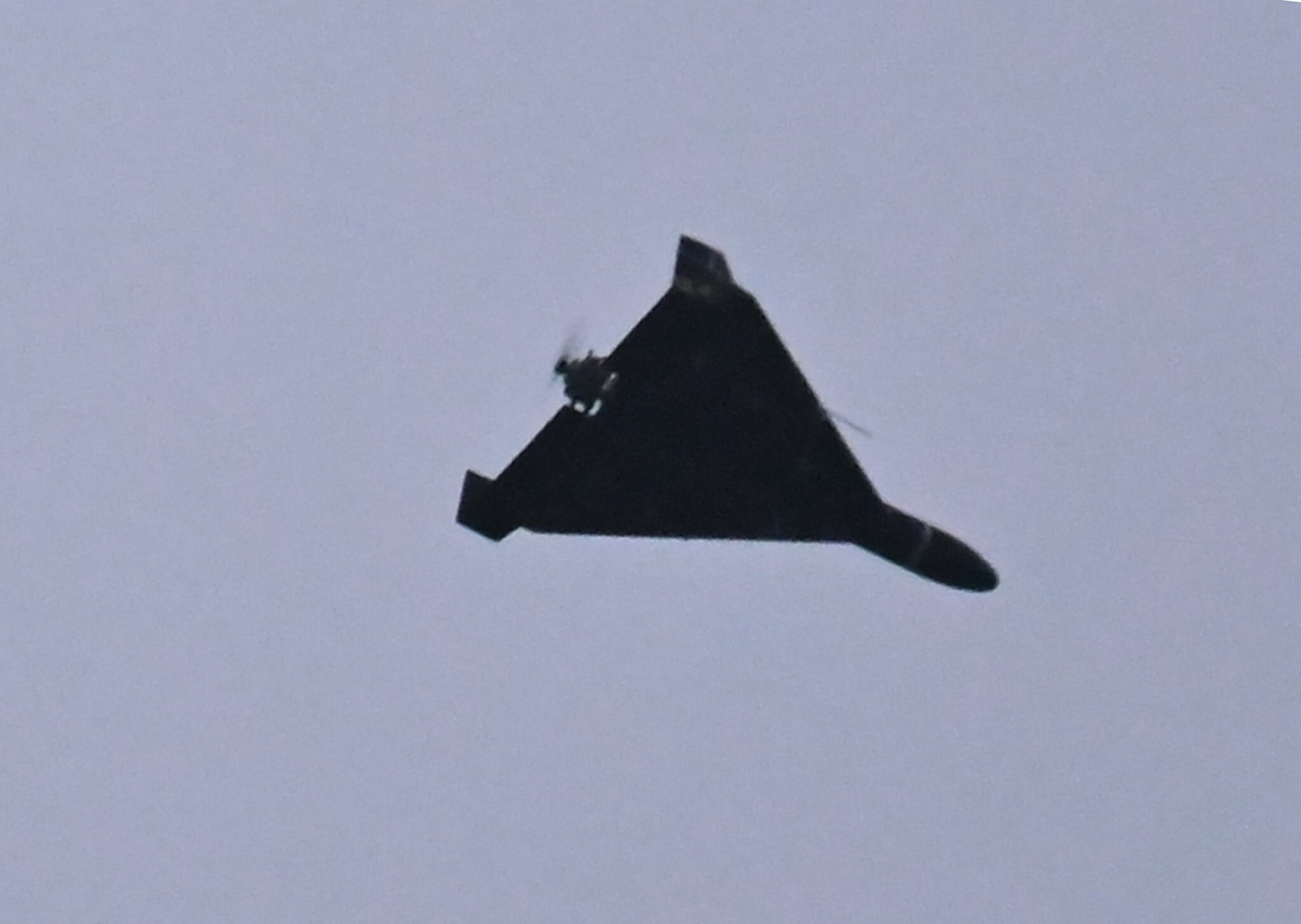
A photograph taken on December 27, 2025, shows an Iranian-designed Shahed 136 (Geranium-2) drone used by the Russian Army flying over Kyiv during a Russian drone and missile attack, amid the Russian invasion in Ukraine. (Sergei SUPINSKY / AFP)
Iran launched a drone and missile onslaught against Israel, which caused little damage after most of the projectiles were intercepted. Tehran’s first-ever direct assault on Israeli soil was in retaliation for an alleged Israeli attack on the Iranian consulate in Damascus that killed seven Islamic Revolutionary Guard Corps members, including two generals.
The sanctions have been renewed each year since then, mostly recently on July 25 last year, when they were extended until July 2026.