
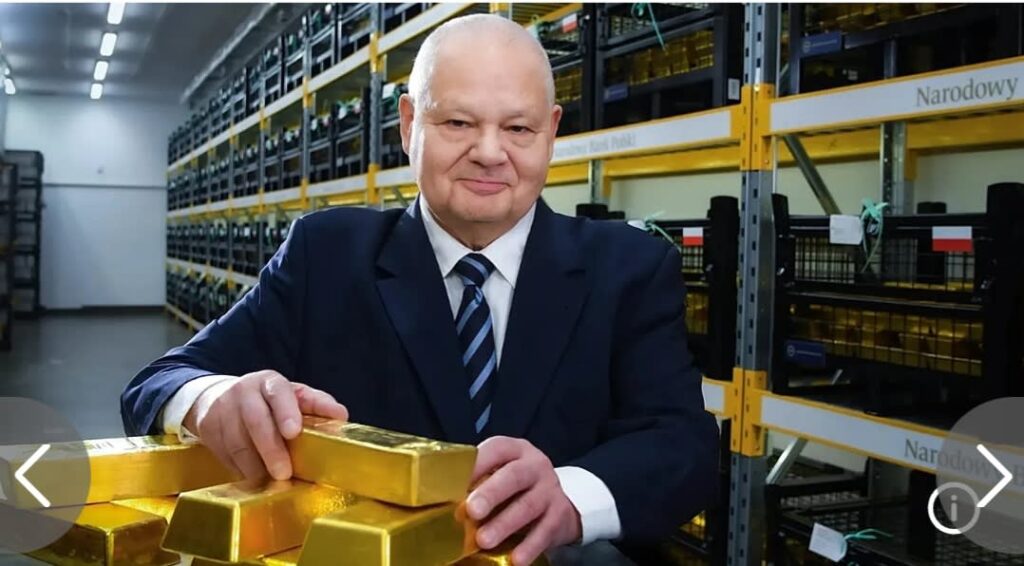
In an era marked by financial uncertainty, geopolitical tension, and shifting monetary priorities, gold has re-emerged as a strategic asset for nations seeking long-term stability. Among the most striking examples of this renewed focus is Poland. In recent years, the country has quietly but decisively accumulated gold reserves to the point where it now holds more gold than the European Central Bank (ECB) itself—a remarkable milestone for a single EU member state. More importantly, Polish officials have made it clear that this is not the end of the road. Poland’s gold-buying campaign is far from over.
A Strategic Shift in Reserve Management
For decades, central banks treated gold as a passive legacy asset—valuable, but secondary to foreign currency reserves such as the US dollar or the euro. That perception has changed dramatically since the global financial crisis, and even more so after the pandemic-era stimulus wave and subsequent inflation surge. Poland’s central bank, the Narodowy Bank Polski (NBP), has been one of the most proactive in adapting to this new reality.
By steadily increasing its gold holdings, Poland has reshaped the composition of its foreign exchange reserves. Gold now plays a central role as a store of value that is free from counterparty risk, immune to default, and historically resilient during periods of crisis. In contrast to paper assets, gold cannot be frozen, devalued by monetary policy, or undermined by political pressure.
Outpacing the European Central Bank
The fact that Poland’s gold reserves exceed those of the ECB is symbolically powerful. The ECB represents the monetary authority of the entire eurozone, yet it holds gold primarily as a legacy asset inherited from predecessor institutions. Poland, on the other hand, has made a conscious and deliberate choice to expand its holdings in the modern era.
This comparison highlights a philosophical difference. While the ECB focuses on interest rates, liquidity tools, and currency stability across multiple economies, Poland has emphasized balance sheet strength and long-term resilience. The result is a national reserve strategy that prioritizes sovereignty and credibility in an increasingly fragmented global financial system.
Motivations Behind Poland’s Gold Push
Several factors explain why Poland is so committed to gold accumulation.
First, there is the issue of economic security. As a country located at the crossroads of Eastern and Western Europe, Poland is acutely aware of geopolitical risks. Gold provides a form of insurance against external shocks, sanctions, or disruptions to global financial markets.
Second, inflation concerns have played a role. The post-pandemic period saw sharp price increases across Europe, eroding purchasing power and raising questions about the long-term value of fiat currencies. Gold’s historical role as an inflation hedge makes it an attractive anchor for national reserves.
Third, there is a strong element of institutional confidence-building. By holding substantial gold reserves, Poland signals financial strength to investors, credit rating agencies, and international partners. This can translate into lower borrowing costs and greater trust during periods of market stress.
Repatriation and Domestic Control
Another notable aspect of Poland’s gold strategy has been the emphasis on physical control. In recent years, the country has repatriated significant portions of its gold from foreign vaults, ensuring that a large share is stored domestically. This move reflects a broader global trend among central banks that want direct access to their bullion in times of crisis.
Domestic storage is not merely symbolic. It reinforces the idea that gold is a national asset meant to serve the country’s interests under any circumstances. For Polish policymakers, this aligns with a broader narrative of economic independence and prudent risk management.
No Signs of Slowing Down
What truly sets Poland apart is its clear communication that gold accumulation will continue. Central bank officials have repeatedly emphasized that gold will remain a cornerstone of the country’s reserve strategy. This long-term commitment suggests that Poland views gold not as a short-term trade, but as a permanent pillar of financial policy.
Future purchases are likely to be paced to avoid market disruption, but the direction is unmistakable. As global central banks compete for limited physical supply, Poland’s continued buying could further reinforce gold’s role in the international monetary system.
Implications for Europe and Beyond
Poland’s gold-heavy approach may influence other countries, particularly in Central and Eastern Europe, to reassess their own reserve strategies. If more nations follow suit, gold could regain a more prominent role in Europe’s financial architecture—even without any formal return to a gold-backed system.
For private investors, Poland’s actions send a clear message. When central banks—arguably the most conservative financial institutions—prioritize gold, it underscores the metal’s enduring relevance. While individual investors face different constraints and goals, central bank behavior often reflects deep concerns about long-term stability.
A Modern Case for an Ancient Asset
Poland’s rise as one of Europe’s largest official gold holders is not an accident. It is the result of deliberate planning, clear-eyed risk assessment, and a willingness to challenge conventional reserve management norms. By surpassing the European Central Bank in gold holdings and committing to continued accumulation, Poland has positioned itself as a leading example of how nations can use an ancient asset to navigate modern financial uncertainty.
In a world where confidence in currencies can shift rapidly, Poland’s golden strategy shines as a reminder that, even in the digital age, some foundations of financial security remain timeless.