
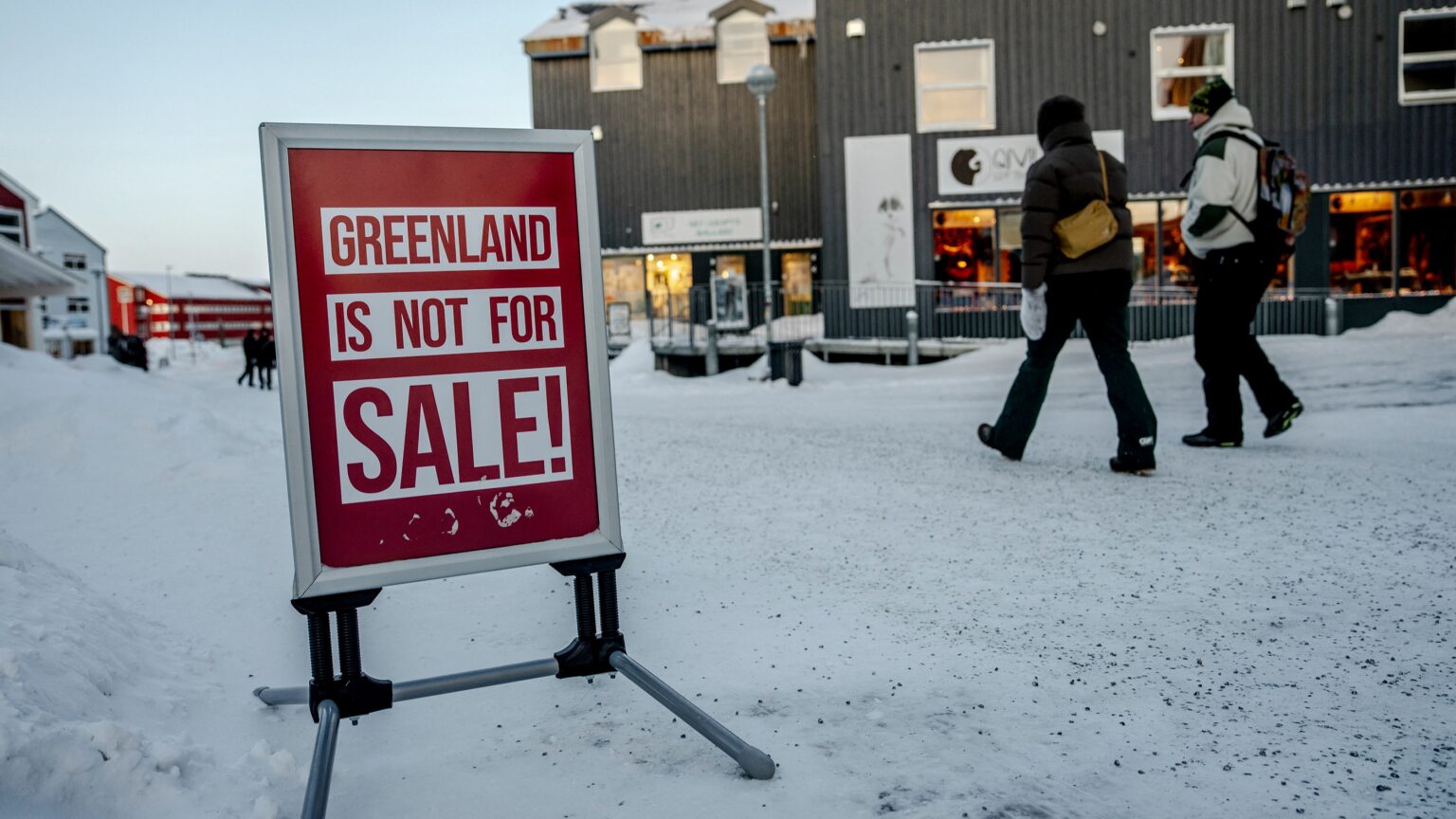
EU leaders are facing the strongest calls yet to debut the powerful Anti-Coercion Instrument against the US, as President Donald Trump escalates his tariff threats against Europe if it doesn’t relinquish sovereignty over Greenland.
The ACI grants the EU sweeping powers to restrict a range of economic activities — including FDI — in response to tactics by foreign governments designed to coerce the bloc to change its policies.
Support within the European Council, which is the ultimate decision-maker on using the ACI, currently falls short of the high threshold needed to greenlight its use. But French President Emmanuel Macron has called to deploy the tool — dubbed a regulatory bazooka — and Brussels insiders say patience among other EU leaders who make up the council is wearing thin.
“The political assessment is that there is currently not a majority in favour of triggering the ACI, but this could change quickly if diplomatic solutions are not found,” a commission official told fDi.
Council under pressure
On January 17, Trump threatened an extra 10 per cent tariff on six EU countries plus the UK and Norway in retaliation for sending troops to Greenland amid the president’s insistence that the US acquire the mineral-rich island.
The tariffs, which to date have only been announced via social media, would take effect on February 1 unless a deal on Greenland is reached. David Kleimann, a Brussels-based trade expert, understands that in an emergency meeting on January 18, representatives of EU governments “broadly supported the consideration of the ACI”. EU leaders are reportedly meeting again to discuss Greenland on January 22.
Activating the ACI requires approval by a qualified majority in council, meaning at least 15 member states representing at least 65 per cent of the EU population. Ignacio García Bercero, non-resident fellow at Bruegel and former EU trade official, is among those who believe the countries most likely to support ACI use are Greenland’s owner Denmark plus its fellow Nordic countries.
Support from Germany could be the tipping point, given its sway over small member states and its population combined with France’s amounting to 34 per cent of the EU’s. But its buy-in is hindered by it being a large exporter to the US, which makes it vulnerable to any retaliatory tariffs from the White House.
Chancellor Friedrich Merz has said he wants to “avoid an escalation” but “will protect European interests”. Finance minister Lars Klingbeil has taken a tougher stance, declaring the EU must not allow itself to be “blackmailed”.
“An important minister coming out is an important first step” towards council adoption of the ACI, MEP Kathleen Van Brempt of Belgium’s Progressive Alliance of Socialists and Democrats told fDi.
She is among the chorus of MEPs calling on EU leaders to unleash the ACI if Trump’s threatened tariffs take effect on February 1. “If diplomacy does not work in the coming weeks, then the ACI must be triggered,” said Renew Europe’s Barry Andrews.
Anna Cavazzini of Germany’s The Greens said: “If threatening annexation and using illegal tariffs to bully an ally isn’t coercion, what is?” Brando Benifei of Italy’s Democratic Party described using the ACI as “a matter of asserting our own credibility”, adding that the move has “significant” MEP support across the political spectrum with the exception of some conservative and nationalist parties.
Trump’s latest tariff threat has prompted the European parliament to pause its approval of the EU-US trade deal agreed last July.
Further reading on the Anti-Coercion Instrument:
Two-track solution
EU leaders are expected to discuss the Greenland crisis with Trump at Davos this week. If no compromise is reached, they face calls to adopt a two-track response.
First, to unleash the EU’s €93bn tariff package on US imports, which was prepared in response to Trump’s ‘liberation day’ and safeguard levies. This was shelved when they struck a trade deal in July, but will automatically take effect on February 6 once the six-month suspension expires, unless council votes to continue the suspension.
Second, the commission can initiate the ACI by starting an investigation to decide if the US’s actions amount to coercion. Council approval is not required for this preliminary step, but rather for subsequent steps, which determine the EU’s response.
“The right strategy is to combine both tools [in case] the US decides to further escalate,” said García Bercero. Tomasz Wlostowski, managing partner of Brussels-based advisory EU Strategies agreed, arguing: “It’s not like the $93bn retaliation takes care of the problem,” because it was devised in response to tariff threats in mid-2025.
If the ACI wins council approval, it can impose restrictions on US businesses in 10 areas including FDI, intellectual property rights, public procurement and services trade. Kleimann says the choice will be driven by the need to maintain EU leaders’ support, and minimise fallout for the EU economy. He expects the first measures would include bans from EU public tenders, export restrictions on pharmaceuticals, and financial services restrictions.
This story was updated on 21 January to reflect that Trump said he won’t use force to acquire Greenland in a speech at the World Economic Forum in Davos.