
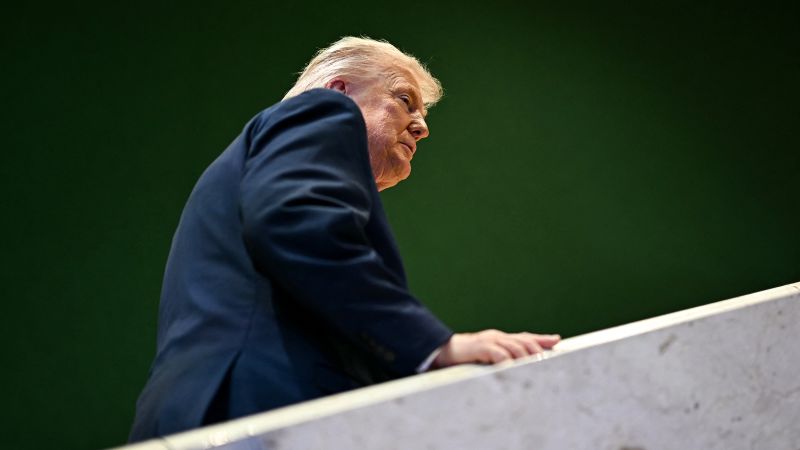
US Trade Secretary Howard Lutnick didn’t mince his words.
“If you’re going to be dependent on someone, it darned well better be your best allies,” he told an audience at the World Economic Forum in Davos as he trash-talked globalization, European partners and the forum itself.
America’s allies in Europe – wary of further Russian aggression, shouldering the burden of backing Ukraine and facing an increasingly hostile world order – have come to the same realization.
US President Donald Trump’s designs on the Danish territory of Greenland have forced Europe to confront an uncomfortable question: How much do they need Washington’s money, military might and ultimately its friendship?
From energy to defense, Ukraine to trade, Europe is reliant on the United States. But the geopolitical turbulence flowing from the White House is prompting many European leaders to consider the previously unthinkable – a future squarely on their own two feet.
Some US officials have framed ties with Europe as, “You want our help in Ukraine, you want a strong NATO? Give us Greenland,” one European diplomat told CNN.
“I think in Europe, it’s perceived as the other way around. If you’re pushing ahead on Greenland, no one would believe that the US would be willing to defend Estonia.”
Here’s a look at the issues at stake:
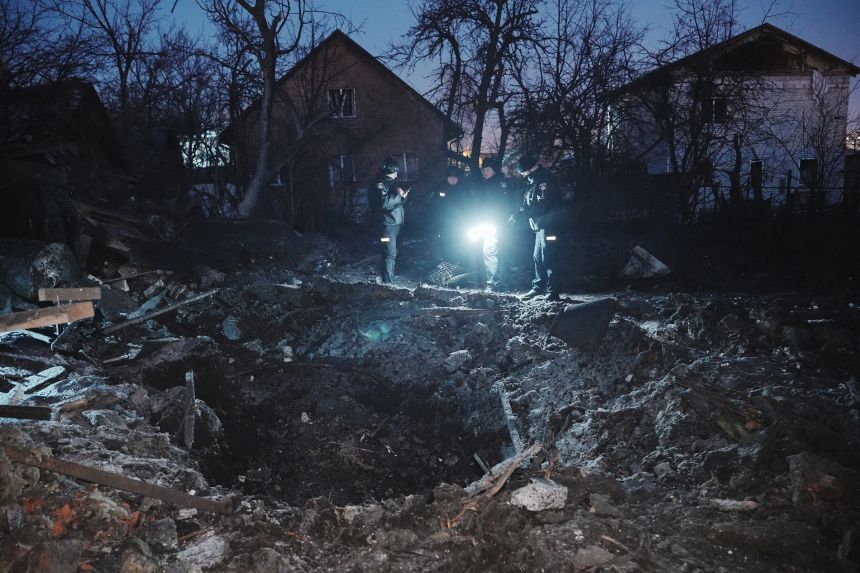
While Trump has stepped back from threatened tariffs to try and force US control over Greenland, for Ukraine the timing could hardly be worse. Intensive rounds of peace negotiations had brought Ukraine and the US close to a final agreement on post-war security guarantees and a so-called “prosperity plan” for Ukraine’s post-war economic revival.
And yet, with Greenland threatening to overshadow the biggest war on European soil in 80 years, instead of rushing to join Trump in Davos, Ukraine’s President Volodymyr Zelensky initially chose to wait in Kyiv and deal with a mounting energy crisis – though Trump has said he will meet Zelensky Thursday. As Trump doubled down on his Greenland demands, 60% of the Ukrainian capital was still without power after a massive Russian attack on Monday night.
The crisis in Ukraine alone is a measure of why Europe has to tread carefully. Had a package of patriot interceptor missiles been delayed “even by one more day,” Zelensky warned this week, the results of Monday night’s attack would have been “much more severe.”
Europe has been accelerating efforts to reduce military dependence on the US. French President Emmanuel Macron claimed last week that France now meets two-thirds of Ukraine’s intelligence needs, reducing the “crushing burden” of dependence on the US. Europe has already had a year to get used to life without direct supplies of US weapons for Ukraine – they are now purchased by other NATO allies.
There’s also diplomacy to consider. US peace efforts have so far failed to push Russia to compromise but Ukraine has not given up hope. “Can America do more?” Yes, it can. And we really want that,” Zelensky told journalists this week. Without the US, Zelensky has long maintained there can be no credible post-war security guarantees for Ukraine.
For decades, Europe has lived under the security of an American nuclear umbrella: under NATO mutual defense agreements the US deterred Russian aggression with the massive destructive power of its nuclear arsenal. Some critics believe that’s no longer a concern to Moscow.
“The current administration is so beholden to Putin that Putin does not believe that America would use it,” retired Gen. Michel Yakovleff, former deputy commander of NATO forces in Europe told CNN, “The US nuclear umbrella is a memory.”
France and the UK also maintain nuclear arsenals, with both Poland and Germany expressing interest last year in coming under the French nuclear umbrella, a move that Europe’s deteriorating ties with Washington will only hasten. Even in new NATO member Sweden, there is debate about whether Stockholm should resurrect its nuclear weapons development program.
The case for European nukes is clear to some. “The trigger in Paris is much more sensitive than the trigger in Washington,” ex-NATO General Yakovleff said. “Berlin is more vital to Paris than it is to Washington.”
In practice, France holds the only truly independent nuclear arsenal in Europe, with Britain’s Trident nuclear missiles made and stored in the US, a fact British Prime Minister Kier Starmer said this week limits his hand vis-à-vis Washington.
“Our nuclear deterrent is our foremost weapon,” he told journalists and that, “requires us to have a good relationship with the United States.”
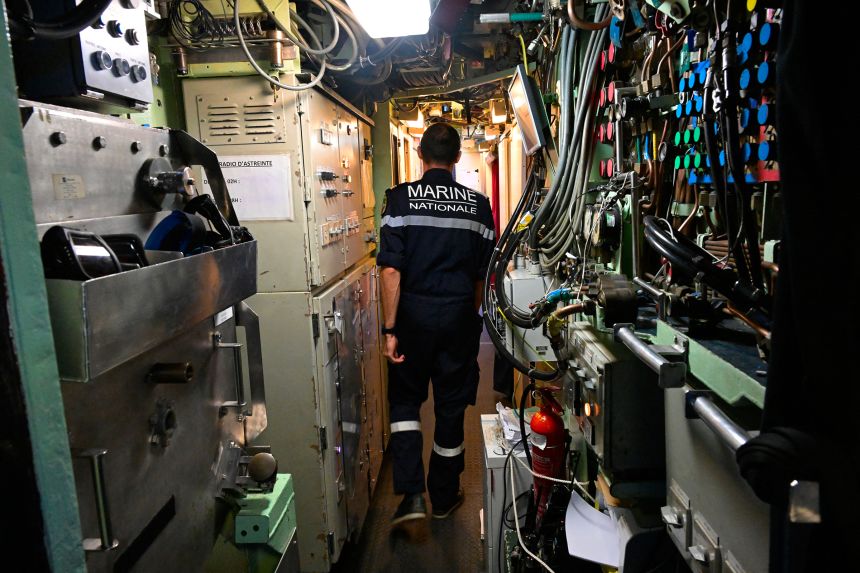
Today, the military muscle in Europe is still decidedly American. Tens of thousands of US troops are based in, or rotate into, the European theater, with many of the US military’s top assets calling Europe home.
From stealth jets to nuclear-powered submarines, “everything that America has in practice, we have, except by far, not at the same scale,” former NATO General Yakovleff said.
As a former top European Union official put it, Europe’s militaries are now “bonsai armies,” shrunk and diminished since the Cold War.
“We have to consider what Donald Trump wants to say about security because he is responsible for security in the world,” Polish President Karol Nawrocki said at Davos Wednesday, noting that the US funds 65% of NATO, and Europeans only 35%.
NATO General Secretary Mark Rutte knows that European dependence only too well. Over the past year he’s championed a conciliatory – some might say fawning – tone toward Trump, whom he famously called “Daddy” at last year’s NATO meeting.
Sitting beside him, Europe’s leaders shrugged off the importance of the US to European security. Poland’s President Nawrocki reeled off examples of Polish, Finnish, Japanese and even Afghan victories against Russia as evidence. Finnish President Alexander Stubb expressed confidence that Europe could “unequivocally defend itself” without the US, although he trusted Washington to keep Finland’s dozens of US-made jet fighters flying during any conflict.
In a recent speech to troops, France’s Macron said that, after a decade of it seeming unthinkable, “the ‘Europe of defense’ is becoming a reality,” with EU funding programs to boost defense purchases.
Macron has been the loudest proponent for purchases of equipment to be from European suppliers, despite current industry backlogs and limited capacity.
Relying almost exclusively on its homemade defense industry, France is an outlier in Europe. Thirteen European countries fly the US-made F-35 jet, one of a handful of fifth-generation jets globally. These countries are tied to US manufacturers, American software and even munitions to keep these jets airborne. Key US-made anti-aircraft and rocket artillery systems, like the PATRIOT or HIMARS systems, are also tied to US supply lines and have few European-made alternatives.
But it’s the unpredictability of the Trump administration that has shattered some long-standing taboos in Europe.
The European Union’s defense commissioner raised the prospect of a 100-thousand strong European army in a January speech, an idea previously dismissed as unworkable and political unacceptable in the bloc. He also called for the creation of a European Security Council to speed up and streamline military decision making.
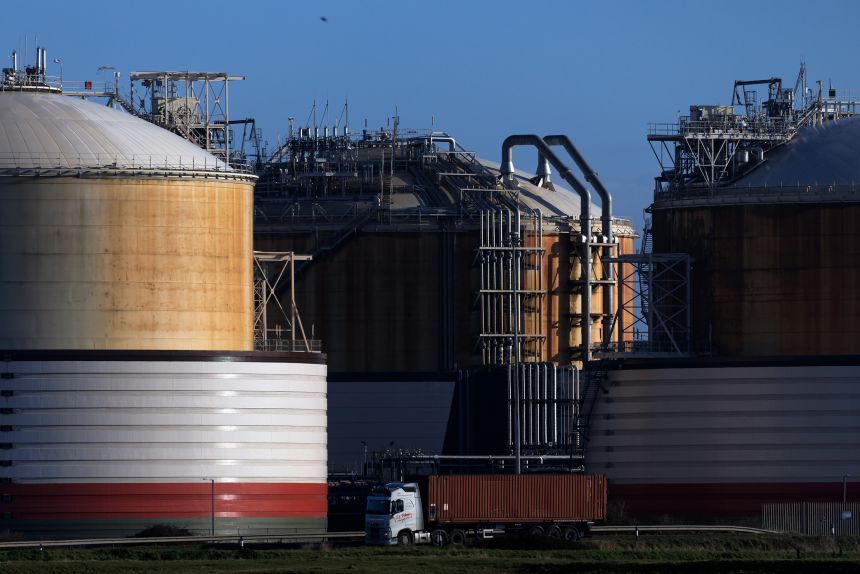
When the EU weaned itself off cheap Russian gas in the wake of the 2022 invasion of Ukraine, US hydrocarbons were an obvious way to keep the lights on.
In the first 11 months of 2025, US Liquid Natural Gas made up 58% of imports to the EU, up from 21% in 2021, according to analysis by the Bruegel economic thinktank.
Europe’s transition from Russian gas was a painful move in the winter of 2022 and one that the continent wouldn’t be keen to repeat. Even as Trump looks to boost American hydrocarbon profits in Venezuela, the gas tap for Europe is a simple – and likely effective – tool that could be used as leverage by the White House.
“Being a happy vassal is one thing. Being a miserable slave is something else,” Belgium’s Prime Minister Bart De Wever said of Europe’s outlook on dependence on the US.
Some analysts have pointed to Europe’s large holdings of US Treasuries and equities as a potential weapon in its arsenal should it want to retaliate against Trump’s threat of tariffs.
“Europe owns Greenland, it also owns a lot of Treasuries,” wrote Deutsche Bank’s Head of FX Research, George Saravelos, in a note to clients this week. His point: that European countries, which collectively own around $8 trillion in American bonds and equities, do, in theory, have the power to punish one of the central pillars of American economic dominance – the dollar.
And yet, while a “sell America” sentiment has been evident in both the US stock markets and the dollar’s performance this week, most experts believe Europe will hold fire. “There may be scope for de-escalation,” wrote ING analysts in a note Wednesday.
It’s not that Europe is less scared of Trump’s threats, but the threats are higher now, a European diplomat told CNN. Losing support for Ukraine over 10% or 15% tariffs last year perhaps wasn’t worth it, the diplomat said. Now, “we are speaking about fundamental elements of international world order.”
As the sun set Wednesday on the mountains of Switzerland, it was clear that the mood in Europe has soured and the continent’s options are stark.
As Serbian President Aleksandar Vučić put it, “No one is laughing, no one is smiling. Because no one knows what tomorrow will bring.”