
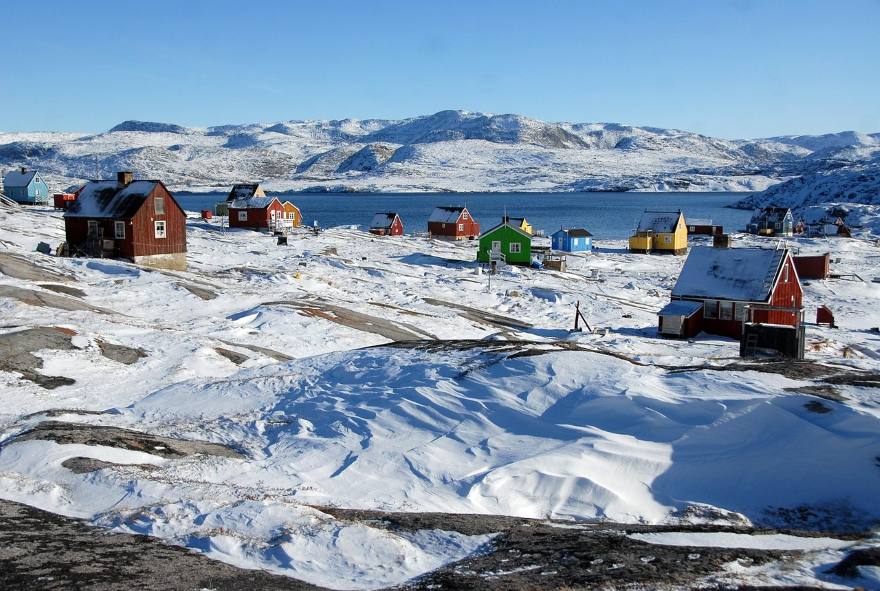
The biggest island in the world is, metaphorically, on the map “like never before.” Tucked away in plain sight, Greenland remains a mysterious, ice-covered landmass to many citizens of the world. Despite its enormity, the semi-autonomous territory’s population only tallies up to just under sixty-thousand people. For reference, that is a ratio of six-thousand Americans to every one Greenlander. Its small number of inhabitants allow for a strong sense of shared community, with a common sentiment of pride in the heritage that bands the Inuit people together.
Greenlanders, who are largely accustomed to a peaceful and somewhat isolated lifestyle, now find themselves the subjects of a rather sudden and existential threat. As journalists and media outlets from around the world flock to its southern capital of Nuuk, locals are experiencing a sense of exhaustion from constant requests by tenacious journalists, and local officials’ inboxes are drowned with interview requests from inquisitive researchers. The University of Greenland has since added pop-up banners to its website, warning against unauthorized building entries from journalists and the press. Some university staff now have email autoreplies indicating that they do not have enough bandwidth to respond to the high volume of media inquiries they are receiving.
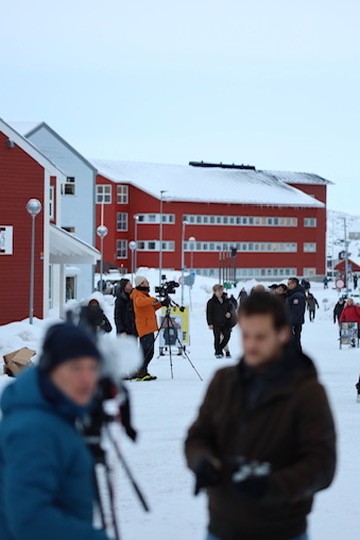 Figure 1: Reporters lined along Nuuk Center on Imaneq Street.
All of this frenzy because of a superpower, and long-time ally, that has flaunted charged rhetoric sounding all too much like colonialism from an outdated era.
While many journalists and reporters have their own media agenda concerning the American administration’s alarming verbal impositions, one common question both interviewers and interviewees are asking is: “but what is the purpose of all this?”
I sat down with Professor Jeppe Strandsbjerg of Ilisimatusarfik’s Nasiffik, or to outsiders, the University of Greenland’s Center for Foreign and Security Policy. Strandsbjerg, also an assistant professor at the Royal Danish Defense College in Denmark, believes that all matters related to Greenland’s ambitions to become an independent sovereign nation, should be negotiated amongst the coalition between the Danish government and the Greenlandic government. He believes the inflammatory comments coming from the White House are only pushing Greenland and Denmark closer together and further alienating the United States from its trans-Atlantic allies. Assertions that the United States is increasingly sowing distrust amongst its European relationships can be leveraged by the contents of the U.S. National Security Strategy (NSS) released in December.
Strandsbjerg believes that the world is witnessing a reinvigoration of geopolitics marked by colonialism from the 1800’s. He admits that “superpowers have a tradition of wanting to control their neighbors – but this time is different.” The United States is conveying a different and more aggressive expression in their approach and a different way of justifying their control.
In light of the recent U.S. military operation in Caracas, Venezuela, Greenlandic locals told me the comments coming from the Trump administration seem significantly more plausible than they were a year ago. “People are no longer capable of laughing off what used to be a ridiculous notion – the idea that Greenland might become part of the United States,” one Danish journalist told me. There is an overwhelming consensus from Greenlanders that they do not want to become Americans. Not only do they reject the unsolicited predatory remarks of President Trump and top White House aids, but they are offended and scared. One local woman said “I fear for my child if the American military decides to march into Greenland.”
Prime Minister Jens Frederik Nielsen and other members of the Naalakkersuisut, the Government of Greenland, have released several statements with very direct messages: “As Greenlandic party leaders, we once again wish to emphasize our desire that the United States’ contempt for our country come to an end. We do not want to be Americans; we do not want to be Danes; we want to be Greenlanders.” The government’s words seem to accurately capture the overwhelming public sentiment.
There is little doubt surrounding the question of whether Greenland is of strategic importance. The Arctic is rightfully being regarded as a serious matter of national security for several countries. It’s not a new idea either. But, up until now, it is a topic that has not received enough attention. Bloomberg has referred to the Arctic as the “trillion-dollar ocean”. The northern cap is not only ripe with resources, but with appropriate regulation, it stands to produce an immense amount of value through new infrastructure that enables energy production, resource extraction, maritime transportation and even tourism. The United States, China and Russia are all currently increasing their fleet of icebreaking ships to help capitalize on these benefits in this slow-thawing, ice-covered region of the world. In October, the United States and Finland signed a deal to help construct eleven icebreakers for the U.S. Coast Guard.
At present, Russia owns more than half the coastline of the Arctic and has significant military presence with their Northern Fleet. China, in 2018, declared itself a “near-Arctic state” in the Chinese Communist Party’s first-ever Arctic policy. And in October 2025, a Chinese cargo ship carrying solar panels and electric cars completed its maiden voyage through the Arctic’s Northern Sea Route (NSR) to the United Kingdom in less than half the time if it had taken traditional shipping routes.
Sure, there are very legitimate arguments as to why the United States “needs Greenland” to ensure the safety of its national security interests – but those arguments fall far short of any plan of action that involves the acquisition or annexation of Greenland. NATO and Europe are also committed to the idea of Arctic security that safeguards the interests of all Europeans, Canadians, and Americans alike. But Greenland’s government already allows for increased American military presence on its territory and has indicated that it is open to signing deals with the United States related to mining and sourcing other commodities. The 1951 Defense of Greenland agreement states that the U.S. “shall be entitled to […] improve and generally to fit the area for military use,” and “control landings, takeoffs, anchorages, moorings, movements, and operation of ships, aircraft, and water-borne craft and vehicles.” The comments of acquiring Greenland, “whether they like it or not,” by President Trump are a gross miscalculation that undermines American values and does not justify any type of imperial behavior or otherwise unlawful acts of annexation.
Professor Jeppe Strandsbjerg told me he believes that, in the past year, “The most remarkable development is the fallout between Europe and the United States.” In Europe there is an alarming concern that their superpower friend who helped build and lead the international rules-based system is now the one deviating from those norms. There is a growing worry of which direction Europe can turn to when its primary ally has uprooted the system it helped champion.
Speaking with a prominent Danish journalist, Emil Jørgensen, about how the headlines were affecting Danes, he told me that “Back home, Denmark feels as though it is in a state of panic. At the state and diplomatic levels, officials are beyond panic. They are asking: ‘How do you play the game when there are no rules anymore. Usually, the allies you call upon, are not there anymore.’” A Swiss war journalist with extensive experience in Iran, Sudan and Ukraine told me that there is a “growing perception that through the White House’s rhetoric, its actions, and its disregard for its neighbors, America is becoming the enemy.”
But most of all, Greenlanders feel insulted, hurt, and belittled, and the Danes feel betrayed and offended by the words of the U.S. administration. Historically, both loyal allies of the U.S., these countries have come to America’s support time, and time again, over the course of their longstanding diplomatic relations. “Enough is enough,” one local told me – “Greenlanders are not a commodity and the rhetoric from the United States is disrespectful.” Greenlanders told me they are seeking recognition as an independent sovereign state primarily out of their desire for equal status amongst other nations, respect, and identity. Trump’s words only strip Greenland of its dignity.
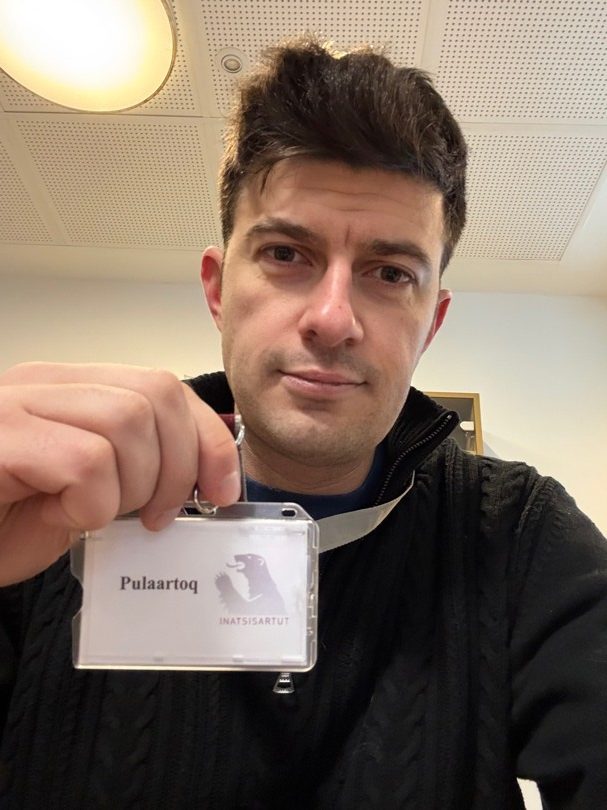 Figure 2: A visit to Inatsisartut, the Parliament of Greenland.
The United States, a nation rooted in the values that formed the Constitution, needs to pursue its goals through traditional diplomatic practices, working with, not against, the recognized governments of Greenland and Denmark. This concept was so important for Americans in the 1700’s that they fought a war for their independence. Surely, this perspective should lend empathy to Greenlanders who wish for their own independence. Deputy Chief of Staff Stephen Miller’s comments that “we live in a world, in the real world […] that is governed by strength, that is governed by force, that is governed by power,” seems to neglect a level of responsibility and accountability for a country as capable as the United States of America. Former U.S. Deputy Secretary of State, Robert Zoellick, famously called upon China to become a “responsible stakeholder” in the global, rules-based system – now a concept that the United States needs to keep front and center as its trust continues to falter on the global stage. Governance through strength, force and power allows the geopolitical “Law of the Jungle” to grow back.
Despite the media chaos, my time in Nuuk was pleasant. As I navigated the snow-covered streets, I felt welcomed by all the smiles I received on my walks to coffee shops or to my meetings. Not intending to offer cliché travel blogger comments like: “this country has some of the nicest people I have ever met,” I found that, even as a citizen coming from the nation that is causing this country anxiety and headache, I was warmly welcomed. In a world of growing illiberalism, we are at an inflection point where it is more important now than ever to recognize that Greenland deserves its right to decide its own future. As a world power, the United States is tasked with upholding the multilateral rules-based system and setting the example as a country that does not forsake it allies, just as they have not forsaken us.
[Header Image by Thomas Ritter from Pixabay]
The views and opinions expressed in this article are those of the authors.

Brian Moscioni is a researcher at Harvard Kennedy School’s Belfer Center for Science and International Affairs. He received his Master of Public Administration from the Harvard Kennedy School of Government and Master of International Development from the Geneva Graduate Institute (IHEID). Previously, Brian served in the US Navy as a fighter pilot and worked with Goldman Sachs.