
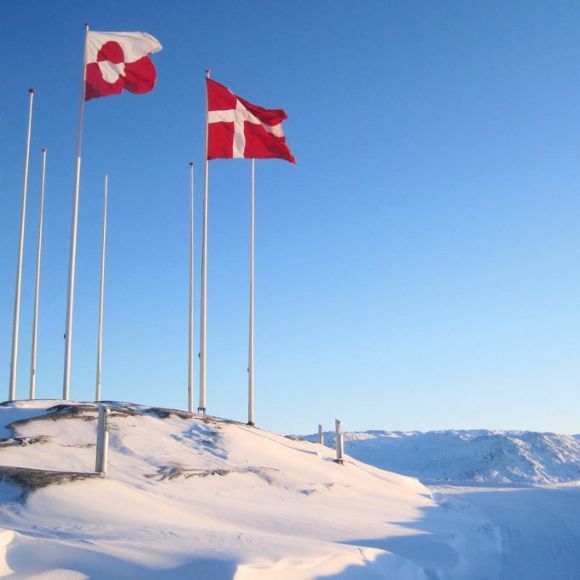
Denmark’s Prime Minister, Mette Frederiksen, has firmly stated that the country cannot engage in negotiations regarding its sovereignty. Greenland’s leadership has also stated that this matter constitutes a “red line.” This discussion follows US President Donald Trump’s recent acknowledgement of a potential “framework for a future deal” on Arctic security with NATO’s Secretary General. However, significant details regarding this prospective agreement remain unclear.
In a Fox Business interview, President Trump remarked, “We’re going to have total access to Greenland,” and expressed intentions for “all the military access we want.” Additionally, on Wednesday, he unexpectedly withdrew the tariffs he had threatened to impose on eight European nations to advocate for US control over Greenland, which is a semiautonomous territory under the sovereignty of NATO ally Denmark. This decision represented a significant reversal of his earlier claim to “right, title, and ownership” of the island. At the same time, he maintained that such aspirations would not involve the use of force.
Greenlandic Prime Minister Jens-Frederik Nielsen expressed cautious relief but said he was unaware of the specifics of the agreement Trump mentioned, stating, “I don’t know what this deal regarding my country entails.” Trump claimed the deal could allow the US to install part of his multibillion-dollar “Golden Dome” missile defence system in Greenland.
Danish prime minister emphasised that Arctic security concerns all of NATO and stated it is “good and natural” for the US president to discuss this with former Dutch Prime Minister and NATO Secretary-General Mark Rutte. She affirmed, “We cannot negotiate on our sovereignty,” and clarified that NATO does not have the authority to negotiate on behalf of Denmark and Greenland.
Denmark has indicated that the US, which already has a military presence in Greenland, may expand its bases there, as per a 1951 treaty that allows the US to establish military bases with Denmark’s consent.
NATO spokesperson Allison Hart affirmed that Rutte “did not propose any compromise on sovereignty during his meeting with President Trump.” She emphasised that negotiations involving Denmark, Greenland, and the United States will continue with the objective of preventing Russia and China from establishing an economic or military presence in Greenland.
Nielsen, the leader of Greenland, indicated that Rutte said Greenland is prepared to increase its contributions and host a NATO mission. “Until yesterday, we could not exclude any options,” he stated to reporters in Nuuk, the capital of Greenland. “We have consistently sought respectful dialogue through the appropriate channels, and I believe that this intention is now shared by other parties, which I find encouraging.”
When queried about the potential for US sovereignty over select areas of Greenland, Nielsen clarified, “We are open to negotiating a more robust partnership; however, sovereignty remains a non-negotiable matter.”
German Chancellor Friedrich Merz highlighted the need for European NATO allies to enhance security in the Arctic, calling it “a common transatlantic interest.” At the World Economic Forum in Davos, he stated, “We will protect Denmark, Greenland, and the north from the threat posed by Russia,” emphasising sovereignty and territorial integrity.
Merz supported discussions between Denmark, Greenland, and the United States aimed at closer cooperation, noting, “I welcome President Trump’s remarks from last night — this is the right way to go.”
Danish prime minister met with British Prime Minister Keir Starmer, who said the efforts to strengthen Arctic security can now begin, crediting Trump’s “pragmatism“ for withdrawing tariff threats.
This article used information from The Associated Press.