
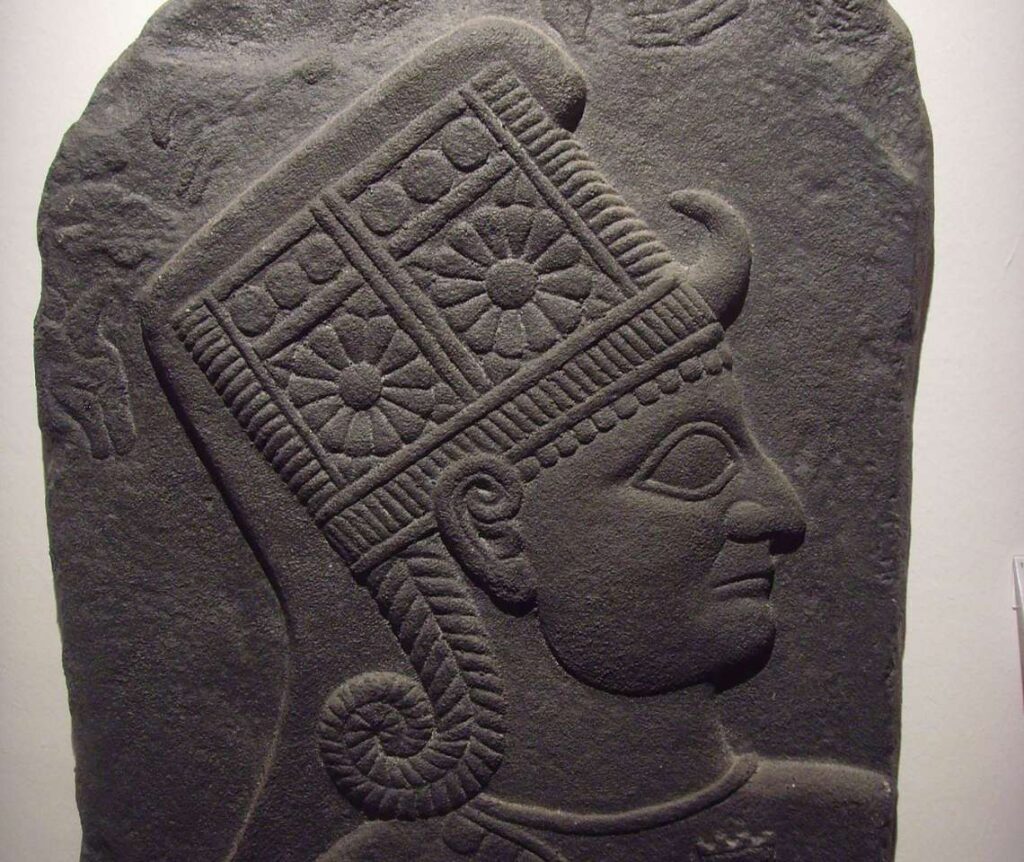
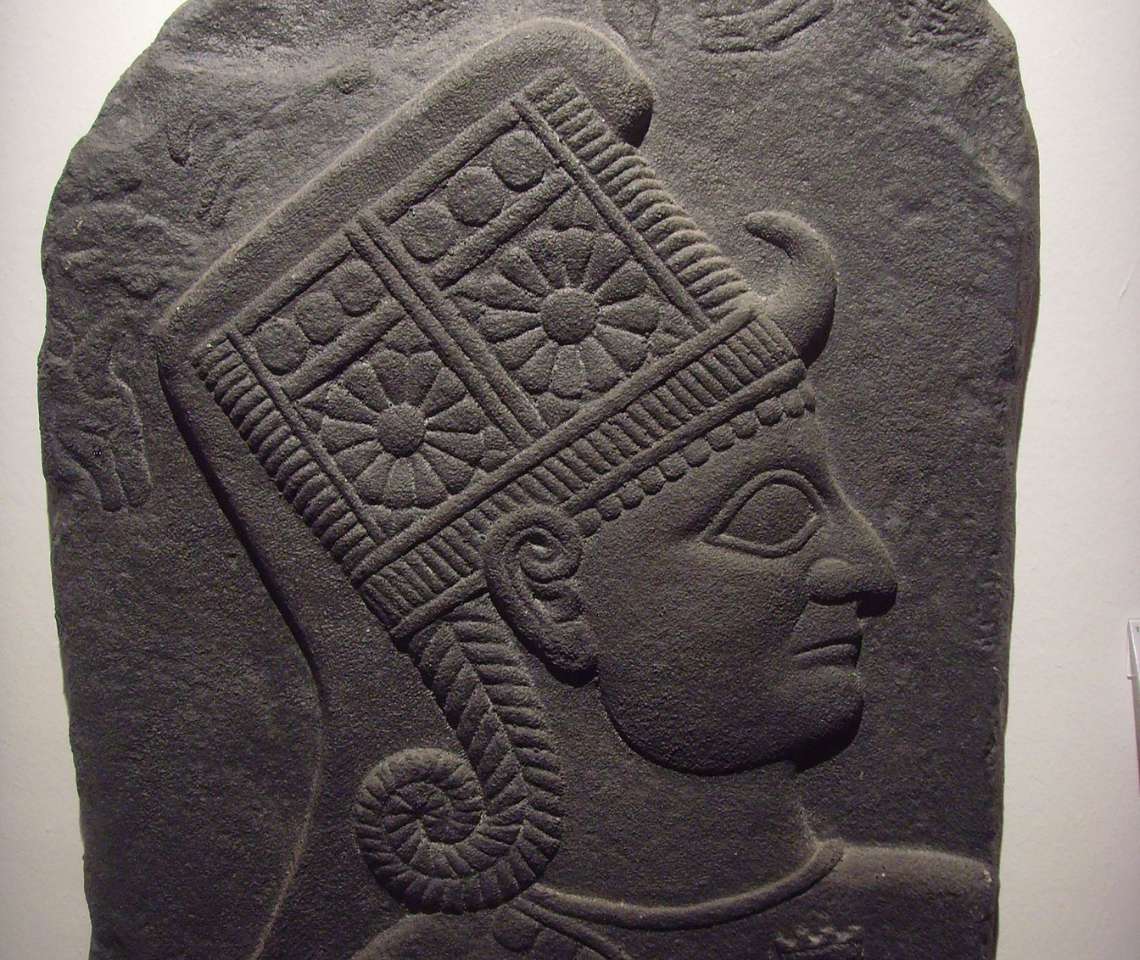
Basalt relief of the goddess Kubaba from Carchemish, Late Hittite period, 8th century B.C. Credit: Homonihilis / Wikimedia Commons / Public domain
Archaeologists in northern Turkey say they have uncovered the long-lost Temple of Kubaba, a 2,600-year-old religious complex that is reshaping understanding of belief and ritual in ancient Anatolia.
The discovery was made at Oluz Mound, a significant settlement mound located in the Göynücek district of Amasya Province. Researchers say the temple dates back to the Phrygian period of the Iron Age and served as a major center of organized worship of the goddess.
Kubaba was one of Anatolia’s most prominent deities. She was revered as a mother goddess associated with fertility, protection, and political authority, particularly during the Neo-Hittite and Phrygian eras. While ancient texts referenced her cult, archaeologists had long lacked clear physical evidence of a dedicated temple. Researchers say the newly uncovered structure fills that gap.
Sacred landscape shaped by rivers
Oluz Mound lies near the Çekerek River, known in antiquity as the Skylax. The river is a tributary of the Yeşilırmak, called the Iris in ancient sources. These waterways once linked inland Anatolia with the Black Sea, supporting trade, movement, and cultural exchange.
Archaeologists believe the temple’s location was deliberate. Proximity to rivers may have reinforced symbolic links between water, fertility, and divine power, themes commonly associated with mother goddess worship.
Evidence of organized ritual practice
Excavations show the temple was carefully planned rather than informally constructed. Stone foundations, altars, and defined ritual spaces point to repeated and structured religious activity. Researchers say the layout reflects an institutional form of worship rather than household devotion.
Artifacts recovered from the area include cult-related architectural elements and ceremonial objects, suggesting the site functioned as a regional religious center. The evidence also indicates continuity in belief systems, even as political control in Anatolia shifted over time.
Excavations
The work is being carried out under the leadership of Şevket Dönmez, a faculty member in the Department of Archaeology at Istanbul University and the excavation director at Oluz Mound.
Dönmez said the site has a much deeper history than the newly uncovered temple alone. Settlement at Oluz Mound stretches back about 6,500 years, reaching into the Hittite period. While researchers have not yet fully excavated those layers, they have already found objects dating to the Hittite age.
Many of these early finds depict bulls. Dönmez said the bull was sacred to the Hittite storm god, one of the most powerful figures in Hittite religion. The material suggests that a large Hittite city lies buried beneath later occupation layers.
Fire altars and Phrygian worship
Excavations have also revealed fire altars and architectural remains linked to the Medes, pointing to ritual practices associated with this ancient Iranian people. Researchers say these findings demonstrate that Oluz Mound remained a sacred and culturally active site across multiple periods.
According to Dönmez, the Kubaba Temple was uncovered in a stratigraphic layer identified as “4-B,” associated with the Phrygian period. Years of careful excavation have exposed the temple’s sacred chamber, including a stone that symbolized the goddess herself.
Archaeologists also recovered numerous perforated bone objects around the temple. These include sheep phalanges and vertebrae. Researchers believe they were once strung together and attached to whip-like instruments used during rituals.
Dönmez said priests likely struck their bodies with these objects while dancing and circling the sacred space. The movement appears to have formed a ritual procession around the temple, reinforcing its spiritual focus.
A rare window into ancient belief
Researchers describe the Kubaba Temple as one of the clearest examples of organized mother goddess worship yet found in Anatolia. The discovery provides direct evidence of how ritual, movement, and sacred architecture came together in Iron Age religious life.
Excavations at Oluz Mound are ongoing. Archaeologists say future work may reveal more about how ancient communities expressed faith, identity, and power at one of Anatolia’s longest-lived sacred landscapes.