
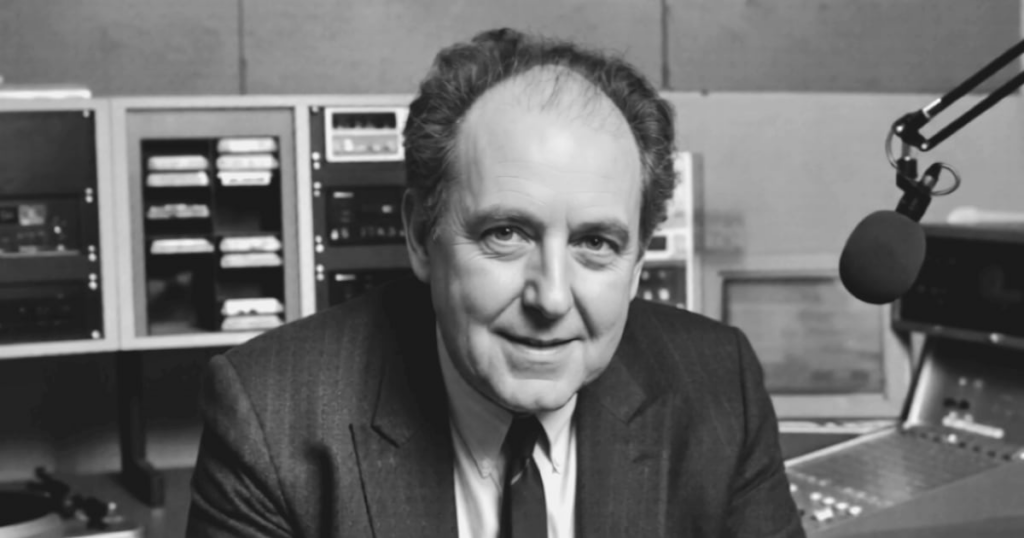
Born December 11th, 1941
Died January 1st, 2026
Goodnight Ballivor, I’ll Sleep in Trim, John Quinn’s radio documentary and subsequent book on growing up in the Co Meath village, is one of Ireland’s most simply sophisticated pieces of social history.
Like many other of his single-subject documentaries and The Open Mind series he presented and produced for RTÉ Radio for more than a decade, it earned Quinn a reputation as one of Ireland’s most sensitive and perceptive broadcasters.
Quinn, who died aged 84 on New Year’s Day, was also an acclaimed author of fiction and nonfiction.
He was the youngest of four children of Garda sergeant Hugh Quinn and his wife, Bridget (nee Ryan), and attended national school in Ballivor before going to the Patrician Brothers school in Ballyfin, Co Laois, for secondary school. Decades later he made a Jacob’s Award-winning radio documentary on his five years as a boarder at the school.
Quinn trained to be a teacher AT St Patrick’s College, Drumcondra, in 1959-1961, followed by almost a decade of teaching. While working in a school in Finglas, he completed a BA and higher diploma in education in the evenings.
He met his future wife, Olive McKeever, when they were both long-stay tuberculosis patients at Blanchardstown sanatorium in 1965. Once discharged from the sanatorium, romance blossomed between the glamorous young Meath woman, who had worked as a ground hostess for Aer Lingus, and later on the Cunard Cruise Line ships, and the shy teacher. They were married in Trim in September 1968.
[ John Quinn, author and broadcaster, dies aged 84Opens in new window ]
In their first year of marriage, the couple moved to Co Sligo while Quinn worked at a secondary school there. They returned to live in Meath when Quinn got a teaching job at St Patrick’s Classical School in Navan. Their first daughter, Lisa, was born in 1969.
In 1970 he left teaching to become general editor at Fallon’s educational publisher. Their second daughter, Deirdre, was born in 1972. In 1975 he joined RTÉ first as education officer, tasked with the evaluation of Radio Scoile, a primary-schools radio pilot project. Based in schools in the Connemara Gaeltacht for this work, the family rented a house in Oranmore, Co Galway, for the duration of the project.
Once Quinn returned to RTÉ in Dublin, they sold their Navan home and moved to Greystones, Co Wicklow. Quinn pursued a master’s in education at University College Dublin the following year while still working at RTÉ.
Their son, Declan, was born just after their move to Greystones in 1976. He said his father was a very hands-on dad who did his share of the cooking, food shopping and cleaning. He also built a mini-golf course and a playhouse for his children in the garden of their Greystones home. “He was always there for us. He was our rock,” Declan said.
In 1977 John became a radio producer and went on to produce award-winning documentaries that brought him recognition at home and across Europe, and in the US and Japan. His interview series included the 1988 Jacob’s Award-winning Ewan and Peggy, about the lives and music of Ewan MacColl and Peggy Seeger; and Sweetbreads in Soho, a 1999 documentary on Meath-born chef Richard Corrigan.
From 1979 to 1989, Quinn produced and presented The Education Forum, a weekly education magazine programme. But the series most people associate him with is The Open Mind, a probing series of interviews with prominent people in public life.
“He crafted some of the finest public service radio about education, place and ideas,” Robert Canning, a retired RTÉ Radio archivist, said. “In what now might be considered ‘slow radio’, he followed the broadcasting maxim to inform and educate but he also entertained his listeners.”
Quinn was behind the Open Mind guest lecture series, whose contributors included Gordon Wilson, John Hume and George Mitchell. The book of these lectures from 1989-1998 was published by Veritas in 1999.
One critic described Quinn’s documentaries as “idea-centred works of art, crafted with precision”. Vincent Greaney, a former primary-school teacher and retired education specialist at the World Bank, was one of Quinn’s many lifelong friends. “He was kind, very creative, open to new ideas, deeply religious in a quiet way yet opposed to dogma,” Greaney said.
In an Irish Times interview in 1999, Quinn explained how his lifelong passionate interest in Ireland fuelled everything he did. “I love the wonderful extraordinary ordinariness of its people. I love who we are, the way we are, the way we use language.”
For many years during the summer months, he produced documentaries on people’s links to Irish heritage spots such as The Mark of Men, Where Has Ireland Come From and This Place Speaks to Me. He also participated in and contributed to the cultural and educational life of the communities he lived in.
His fiction included a children’s novel, The Summer of Lily and Esme, which won the 1992 Bisto Children’s Book of the Year and was later adapted for a five-part radio drama. Duck and Swan was another of his children’s books. His first adult novel, Generations of the Moon (1995), was a family saga of sectarian struggle along the Border during 1926-1975.
In the 1980s Quinn interviewed 10 female Irish writers about their childhood influences. This resulted in A Portrait of the Artist as a Young Girl (1985). From 1991-1996, he interviewed poets, philosophers, politicians, civil servants, comedians and artists for a radio series, My Education. Edited versions of these interviews were published in 1997.
In 2002 Quinn made A Letter to Olive, a deeply personal documentary on his 33 years with his wife until her death in 2001.
In the documentary and the subsequent book, Sea of Love, Sea of Loss (Townhouse, 2003), he shared early love letters between the couple and recounted his utter devastation when she died of a heart attack while swimming in the sea at Rosslare strand during the couple’s romantic summer break. As part of his grieving, he began again to write letters to his beloved wife and these letters are also published in the book.
Quinn retired from RTÉ in 2002 and soon after moved to a house near Clarinbridge, Co Galway, from Otterbrook, the rural Galway home the family had moved to in 1991. In 2003 he received an honorary doctorate in literature from the University of Limerick.
His writing continued unabated in the following years. The former Meath GAA manager Seán Boylan chose Quinn to cowrite his autobiography, The Will to Win (2006). And in 2008 he wrote his memoir, Goodnight Ballivor, I’ll Sleep in Trim, based on his earlier radio documentary.
Latterly, Quinn published smaller reflective books: Gratiais: A Little Book of Gratitude, A Book of Beginnings, Daily Wisdom (Leánn an Lae), Stolen Moments and in 2025, The Passing Year: Reflections, Recollections and Ruminations.
And in Homage: A Salute to Fifty Memorable Minds (2023), Quinn wrote about 50 high-profile people from the arts, education, politics, business, science and economics, all of whom he interviewed over the course of his career in broadcasting.
In 2024, to mark the opening of the new St Kinneth’s library in the old Church of Ireland building in Ballivor, Quinn attended a special night to celebrate his memories of the Meath village. The event included a special showing of TG4’s documentary on Goodnight Ballivor, I’ll Sleep in Trim.
John Quinn is survived by his daughters, Lisa and Deirdre, his son, Declan, his grandchildren, Eva, Georgina, Riley, Callan and Senan and, his sister Mary.
He was predeceased by his wife, Olive, his brother Noel and his sister Kay.