
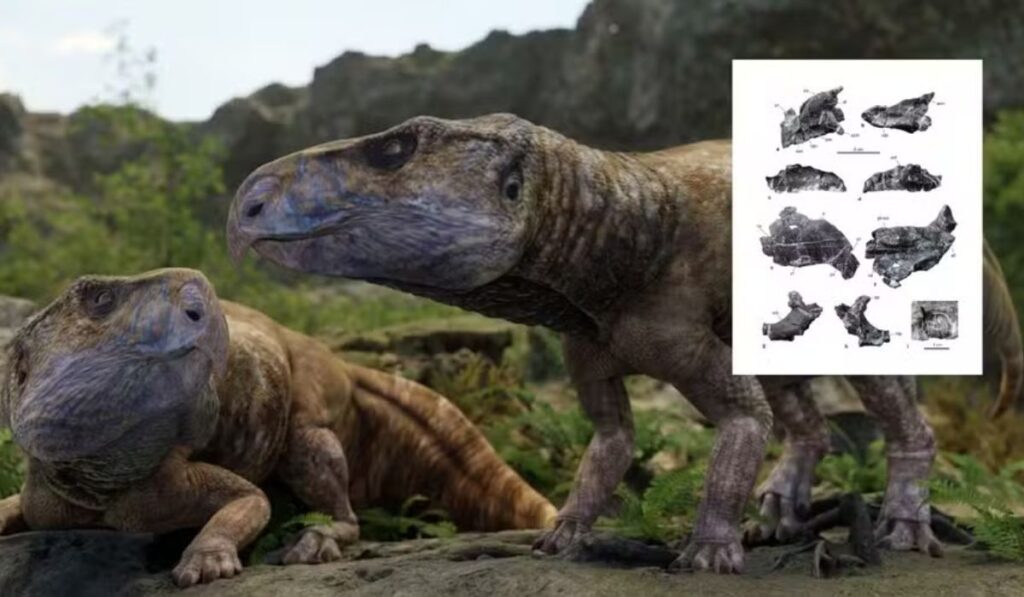
A set of skull bones found in western Hungary reinforced the interpretation that Ceratopsian dinosaurs were present in Europe at the end of the Cretaceous period..
The analysis of the material, attributed to the small herbivore Ajkaceratops kozmai, is part of a study published in magazine Nature It provides new elements for a debate that has remained open since the animal’s initial description and leads researchers to re-evaluate European fossils previously associated with other groups.
Based on this evidence, paleontologists began to revise classic models of dinosaur paleobiogeography.
See also other features
-
Viruses adapt in space; an experiment on the International Space Station indicates that they infect bacteria more quickly and could help fight difficult-to-treat superbugs.


-
One person saved a river after a mysterious disaster killed millions of fish in the Oder River by returning gravel, recreating natural nurseries, saving migratory species, exposing industrial pollution, overcoming a political impasse, and proving that river restoration works in Europe.
-
The United States wants to restore the Old West by buying ranches, tearing down fences, releasing bison, saving forgotten prairies, capturing carbon in the soil, protecting pronghorn antelope and prairie dogs, and assembling one of the largest ecological restoration projects on the planet with historic private community support.
-
A 12-year-old boy invented flashing lights that tricked lions in Kenya, stopped attacks on livestock, saved Maasai families, spread to 14 properties, helped recover the feline population, and proved that coexistence works better than traditional African spears.
Among them is the idea, widely accepted for decades, that ceratopsians — a group popularly known as “horned dinosaurs,” represented by forms such as Triceratops — were distributed almost exclusively throughout Asia and North America during their evolutionary history.
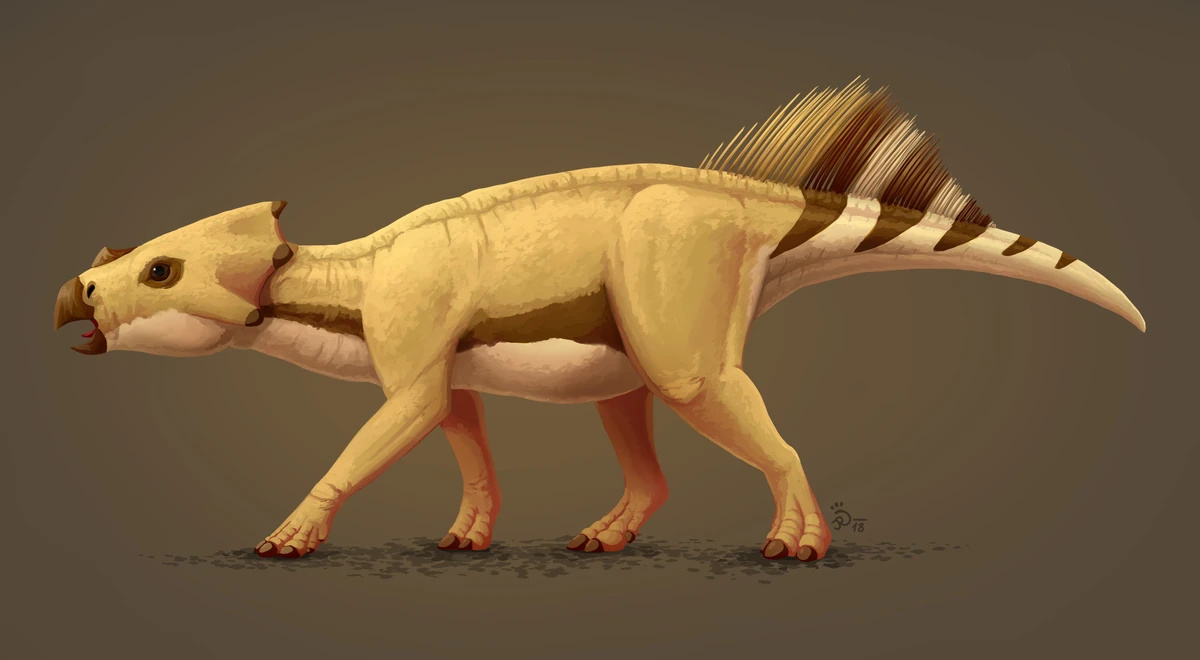 herbivorous Ajkaceratops (Image: Reproduction/Wiki Index)
Ceratopsian dinosaur fossil and skull analysis
The fossil analyzed in Hungary contains cranial parts considered more informative than those available in previous studies on Ajkaceratops.
In this type of research, the skull is often central to the classification, as it concentrates… anatomical features used to differentiate closely related lineages, which may share similar traits in teeth or limbs, but diverge in cranial structures.
According to the study’s authors, the material was examined using imaging techniques, including tomography and digital reconstructions, which allowed for the observation of internal details and hard-to-reach regions in fragmented fossils.
This information was compared with data on ceratopsians already described in other regions, especially Asia and North America, where the group is better documented.
Based on this comparison, the researchers point out that Ajkaceratops presents a set of characteristics compatible with ceratopsians, such as aspects of the beak and the internal anatomy of the skull.
According to the team, This combination supports the animal’s assignment to the group., reducing the uncertainties that persisted due to the fragmentation of previous findings.
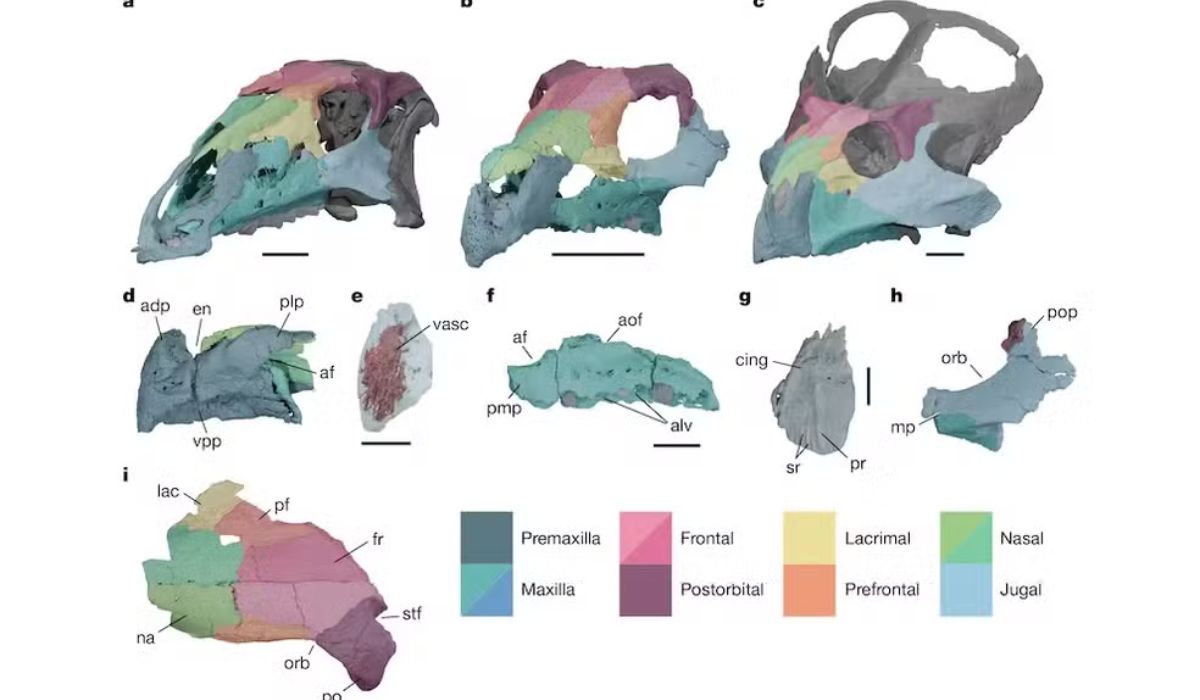 (Image: Courtesy of Nature)
Europe in the Cretaceous period and island environment
Estimates indicate that Ajkaceratops lived in the Late Cretaceous, approximately… 84 million years.
During that period, the configuration of Europe differed substantially from the current one, with much of the continent consisting of islands separated by arms of the sea associated with the ancient Tethys Ocean.
This geographical setting helps to contextualize the uneven distribution of fossils in the region.
Island environments tend to produce more fragmented and localized fossil records, making it difficult to identify specific groups.
Even so, The presence of a ceratopsian in this European context broadens the debate. about how these dinosaurs dispersed among different landmasses during the Cretaceous period.
In the specific case of Ajkaceratops, it is a small animal, unlike the more well-known images of large ceratopsians.
Experts emphasize, however, that this difference does not alter the relevance of the finding, since the main point lies in confirming the group to which the animal belongs, and not in its body dimensions.
Reclassification of European fossils
Until recently, the presence of ceratopsians in Europe was considered uncertain, supported only by fragmentary fossils and contested interpretations.
With the new cranial evidence, the debate gains a more consistent anatomical basis, according to the study’s authors.
This discovery has led researchers to consider reassessing European fossils that were classified over the past century as belonging to other groups of herbivores, such as iguanodonts or rhabdodontids.
The overlapping characteristics among these dinosaurs may have influenced earlier classifications, especially when available material was limited.
According to the experts involved, some of this European material may represent a greater diversity of ceratopsians more than what was previously recognized.
This possibility, however, depends on further analysis and careful review of specimens preserved in scientific collections, a process that is usually gradual and subject to technical debate.
Dispersal of ceratopsians across continents
The central discussion revolves around the history of the dispersal of ceratopsians.
The abundant fossil record in Asia and North America has long supported the interpretation that the group developed and diversified primarily in those regions.
The confirmation of a ceratopsian in Europe adds a new element to this scenario, indicating that The group reached the continent sometime during the Cretaceous period..
According to the researchers, this does not, by itself, define the routes or frequency of these dispersals, but it expands the set of hypotheses that need to be considered in future studies.
Another point highlighted in the work is the role of modern imaging techniques.
Methods such as computed tomography allow for the extraction of anatomical information from incomplete fossils, increasing the potential of materials previously considered to have poor diagnostic value and contributing to more detailed taxonomic revisions.
Gaps in the European fossil record
Despite the advance represented by the Hungarian fossil, the history of ceratopsians in Europe remains incomplete.
The scarcity of specimens attributed to the group limits estimates regarding diversity, geographic distribution, and possible regional lineages.
Furthermore, taxonomic revisions often require extensive re-analysis of previously described material, frequently involving divergent interpretations among specialists.
Some fossils can be confirmed as ceratopsians, while others may remain unclassified due to a lack of preserved diagnostic features.
With the new material, Europe is taking a more active role in discussions about the evolution of ceratopsians..