
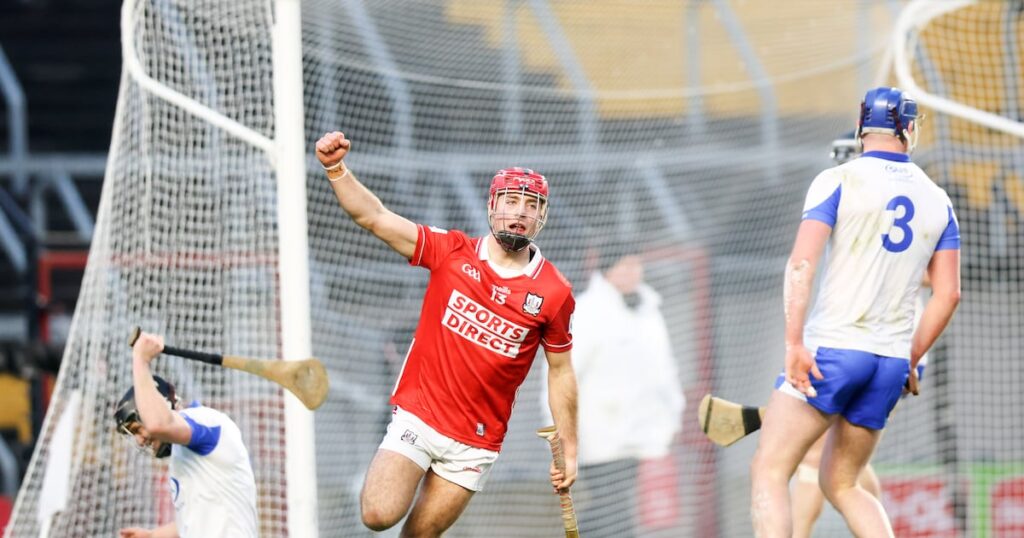
Six months after going under in Croke Park, Cork hurlers jumped into the shallow end wearing armbands. No sharks, no blood in the water, no treacherous waves, just harmless splashing. They had to start somewhere.
Everyone wondered what they would be like. How would they come back? How traumatised, how damaged, how haunted, how reduced? Answers to those questions are not available yet and won’t be for months, until they face a game they must win and the mended fracture is tested at breaking point.
For what it was worth, Cork produced the kind of performance against Waterford on Sunday that had illuminated their best days last season, full of expression and exuberance.
Their opponents came to Páirc Úi Chaoimh with a skeleton team and couldn’t keep up. Cork scored with their first nine shots at the target in the opening nine minutes. They were 14 points in front after 21 minutes, just as they were at the end.
It was like a game of paintball: loads of shooting but nobody was hurt. Cork took 42 shots to rack up 3-25 and, in that sense, at least, the new government had inherited a policy direction from the old administration. The Rebels were top goalscorers in last year’s league and championship and the emphasis is still on directness in the red zone.
How much will Ben O’Connor change about Cork’s approach? How much needs to change? His reputation is for pragmatism. He said during the week that he would have no problem playing a sweeper if the circumstances demanded and he will be true to his word.
He will demand aggression too. When he led the Cork under-20s to an All-Ireland title three years ago, they played with an unrepentant edge. If Cork need elements of that now to win the All-Ireland, he won’t do without it.
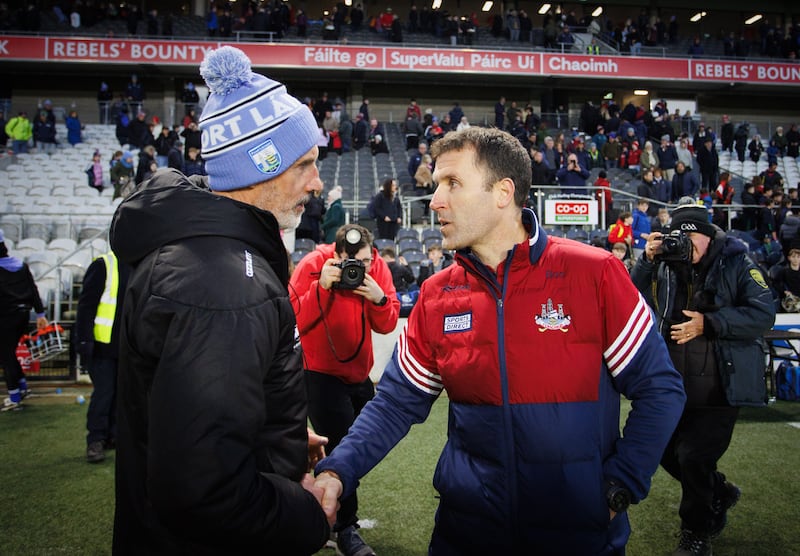
Waterford hurling manager Peter Queally (left) shakes hands with Cork counterpart Ben O’Connor after Sunday’s National League match at Páirc Uí Chaoimh. Photograph: Tom Maher/Inpho
This wasn’t that kind of game, though. The tackling was tepid. Tip-rugby with sticks. There was space to run and freedom to pick a pass. The pitch was bouncy and generous and on a surface like that, the pace in the Cork attack is lethal.
William Buckley was a Cork under-20s star when O’Connor managed those teams and he made a sparkling senior debut. He is small, though not as light as he was when he first appeared on the fringe of the senior panel a couple of years ago. Buckley grabbed his chance with both hands.
The last point of his 1-4 was scored on his knees, just like Brian Corcoran years ago, and Cian Lynch not that long ago. Buckley has the touch and speed and imagination to be an intercounty player, and maybe he will make a breakthrough that nobody really expected this year. Either way, there will be sterner tests ahead.
There is bound to be at least one change in the Cork attack, though. The team’s last full-time free-taker before Patrick Horgan was Ben O’Connor. The baton was passed during O’Connor’s final full season on the team in 2011. In the 14 years that followed, Cork never needed to worry about pressure frees or awkward frees; it was built into the budget.
Every elite team needs a free-taker that lands more than 90 per cent of their shots. Horgan’s conversion rate from dead balls dropped off in his last season but his shooting was still a bankable commodity. As a priority, Horgan’s output needs to be replaced.
But by whom? Declan Dalton is the best dead-ball striker in Cork and one of the best in the country, but he wasn’t a guaranteed starter in last year’s championship and that will probably be the case again this year.
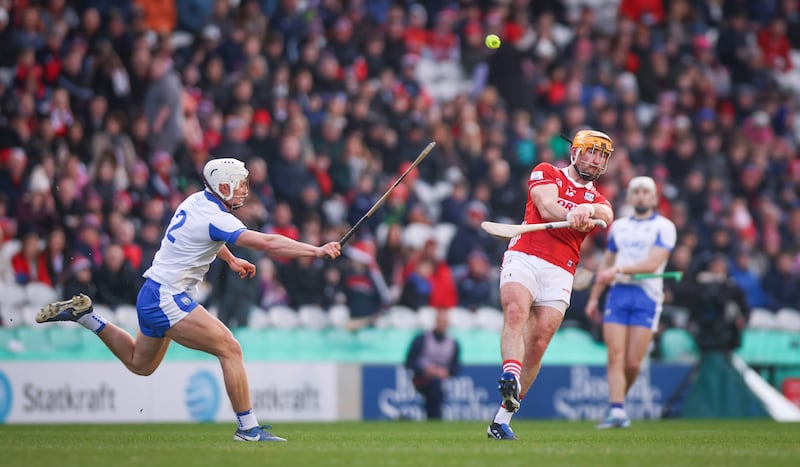
Cork’s Declan Dalton gets a shot off despite the best efforts of Daniel Lalor during Sunday’s National League game at Páirc Uí Chaoimh. Photograph: Tom Maher/Inpho
In the last two All-Ireland finals he was replaced without playing anywhere close to his potential. Like a bunch of other Cork players, there is only one arena in which that failure can be addressed. Can a player like that be the frontline free-taker?
For now, Horgan’s old dead-ball duties have been divided up. Dalton buried a first-half penalty; Alan Connolly was assigned to the frees and missed the only two difficult ones he faced; Darragh Fitzgibbon and Mark Coleman took a couple of long-range frees, as they often would have even when Horgan was playing. Replacing Horgan was always going to be a collective exercise.
People wondered too if the Cork crowd would hang tough. In the weeks and months after last year’s All-Ireland final, Cork supporters wallowed in anger and condemnation and self-pity. “Never again” was a common pledge. That positioned softened over the winter. For every home game in the group stages of last year’s league, Cork attracted crowds in excess of 20,000 and that trend continued here.
They came to be entertained and reassured and they probably were.
“There’s nothing here to be afraid of,” sang Lyle Lovett. “It’s just the morning.”
A new day. Go again.