
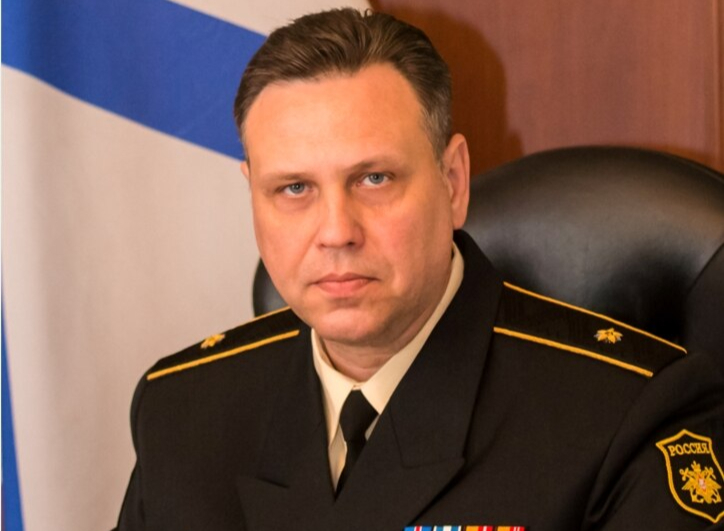
The Russian Armed Forces command is reportedly preparing to replace the commander of the Black Sea Fleet, Admiral Sergei Pinchuk, over systemic defense failures and ineffective countermeasures against Ukrainian naval drones, according to the Atesh partisan movement.
“There are rumors among officers that the Russian military leadership is considering replacing the current commander of the Black Sea Fleet, Admiral Sergei Pinchuk,” Atesh said in a statement.
Follow our coverage of the war on the @Kyivpost_official.
According to the partisans, the reason is “systemic failures in ensuring the security of bases and ships, as well as the extremely low effectiveness of measures to counter Ukrainian unmanned boats.”
Atesh sources within the fleet headquarters claim that several candidates for Pinchuk’s replacement are being discussed behind the scenes. His first deputy, Vice Admiral Ildar Akhmerov, is reportedly among those being considered.
The movement also said its agents are actively involved in operations targeting Black Sea Fleet infrastructure.
“Since 2022, we have systematically scouted ships, repair facilities, military units and naval bases of the Black Sea Fleet in Crimea and Novorossiysk. This information helps the Defense Forces of Ukraine destroy the fleet,” the report said.
According to Atesh, recent Russian losses demonstrate a lack of a coherent maritime defense system protecting key naval infrastructure.
Despite official Russian claims that the situation is under control, the threat from Ukrainian naval drones continues to materialize, the group said.
Other Topics of Interest
What Is Russia’s ‘Shadow Fleet’ and How Does It Work?
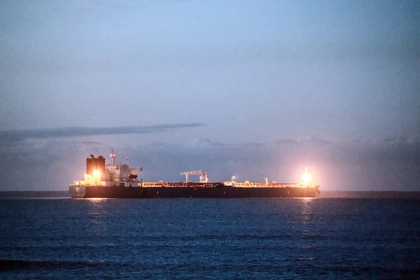
After France intercepted a suspected sanctions-busting tanker, attention has turned to Russia’s “shadow fleet” and how it keeps oil exports flowing despite Western pressure.
Over the past six months, at least eight successful attacks by Ukrainian unmanned boats on Black Sea Fleet facilities have been recorded, including strikes on Sevastopol and bases in occupied Crimea.
“In a number of cases, detection systems failed entirely, while on-duty forces responded with delays of 20 to 40 minutes, leading to damage to ships and infrastructure,” Atesh said, adding that these incidents were reflected in internal reports and prompted discussions at higher command levels about a change in leadership.
On Friday, Jan. 23, Atesh reported that its agents approached what it described as the “nerve center” of the Russian Black Sea Fleet in Novorossiysk.
According to the movement, its operatives have been conducting long-term surveillance of the 37th Separate Special Communications Node (military unit 09920), a key facility through which the Black Sea Fleet receives direct orders from Moscow and coordinates with other branches of the Russian military.
“This facility is essentially the fleet’s nerve center,” Atesh said, adding that its agents recorded the arrival of high-ranking officials from Moscow, likely linked to an inspection of the unit.
The movement emphasized that dissatisfaction within the Russian General Staff with Pinchuk’s performance is high and that such visits often precede a rapid leadership change.
During reconnaissance, Atesh agents also observed significant upgrades to the facility’s security, including the deployment of new electronic warfare systems, additional short-range air defense assets, reinforced engineering barriers, and an increased number of security personnel.
The group reported heightened activity among key specialists at the unit, leadership changes, increased movements of communications repair teams, and the arrival of civilian cryptography experts.
According to Atesh, if the special communications node were to be disrupted or disabled, the Black Sea Fleet would immediately lose its ability to receive orders from Moscow and coordinate with other forces.
“In such a case, it would cease to function as a unified force and turn into a collection of disconnected units,” the movement said, adding that all collected intelligence has been passed to Ukraine’s Defense Forces for further operational planning.
Pinchuk was appointed commander of the Black Sea Fleet in April 2024. A native of Sevastopol in now occupied Crimea, he is a graduate of the Nakhimov Higher Naval School.
In 2011, he was appointed commander of the Novorossiysk Naval Base, and in 2016 he became commander of the Caspian Flotilla. In 2021, he was named chief of staff and first deputy commander of the Black Sea Fleet.
The European Union imposed personal sanctions on Pinchuk on Feb. 28, 2022. Similar measures were later adopted by the United Kingdom, Switzerland, Australia, Japan, Ukraine, and New Zealand.
Pinchuk has received multiple state awards, including the Order of Military Merit, medals “For Military Valor” of the first and second degrees, “For Strengthening Combat Solidarity,” and “For Distinction in Military Service” of all three degrees, as well as a medal commemorating the 300th anniversary of the Russian Baltic Fleet.
He has also been awarded the Order “For Merit to the Republic of Dagestan” and medals for participation in military operations in Syria and for involvement in Russia’s Main Naval Parade. On Feb. 21, 2025, Russian President Vladimir Putin awarded him the rank of admiral.
Russia has tightened camouflage and security measures at key Black Sea Fleet logistics facilities in the port city of Novorossiysk, amid mounting pressure from Ukrainian strikes on Russian naval infrastructure.
According to Atesh, Russian military command in Novorossiysk has shifted to heightened readiness following multiple Ukrainian attacks on Black Sea Fleet facilities.
During reconnaissance of the 61st Support Ship Detachment, partisans reported that the site’s entire perimeter had been covered with dense camouflage nets, apparently to conceal the loading, unloading, and movement of military supplies.
Atesh also said Russian forces installed additional video surveillance systems around the base, expanding technical monitoring in an effort to reinforce security.
Partisans dismissed the new camouflage measures as ineffective, claiming its agents continue to track all movements in and out of the base.
The reported security overhaul follows a mid-December strike in 2025 in which Ukraine’s Security Service (SBU) announced it had damaged a Russian submarine in Novorossiysk.
According to the SBU, the vessel – armed with Kalibr cruise missiles – was critically disabled. Ukrainian Navy officials later said the operation was complex and demonstrated Kyiv’s growing ability to strike Russian naval assets far from the front line.
As Ukraine has degraded Russia’s traditional Black Sea Fleet bases in occupied Crimea, Novorossiysk has become increasingly important for Russian naval logistics, making the port both strategically vital and more exposed to attack, Atesh said.