
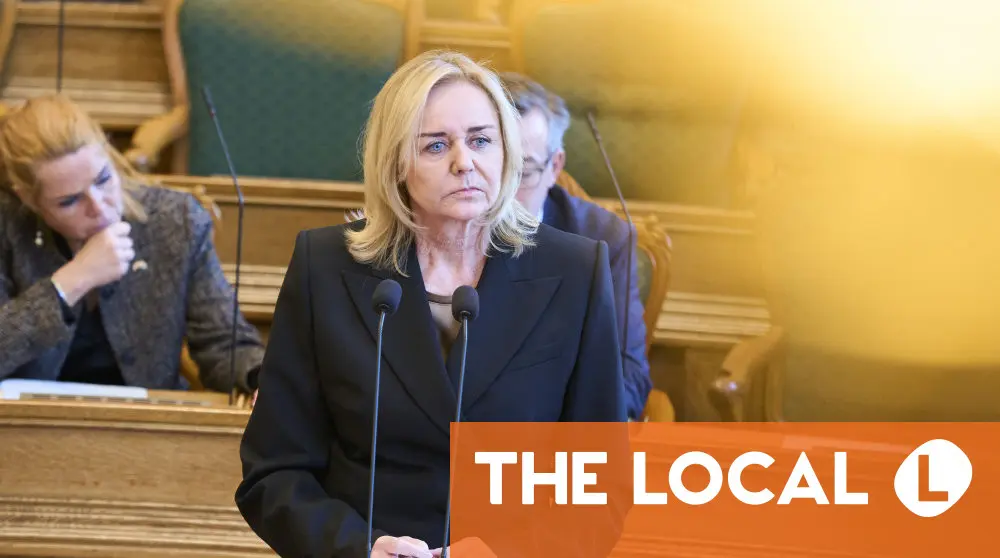
The Danish Conservative party wants to deport all foreign nationals who receive unconditional prison sentences of any kind.
The Conservatives say that neither the strength of an individual’s personal connection to Denmark, nor the length of their sentence, should act as mitigating factors and that all persons with unconditional prison sentences should be deported.
Sentences of three or six months in prison can be given for serious crimes and should therefore result in deportation, party leader Mona Juul said in an interview with newspaper Berlingske.
“I’m not talking about a bicycle theft or a minor mistake someone has made. But when I look at the sentences being handed down today of three or six months in prison, these are serious crimes,” Juul said.
The Conservative leader’s comments come after the government recently proposed deporting foreign nationals who are given a one-year sentence or more after a criminal conviction.
But Juul said she wants stricter measures than those proposed by the government and presented in Prime Minister Mette Frederiksen’s New Year speech.
READ ALSO: Danish PM prepared to challenge ECHR by deporting foreign nationals with convictions
The government is also expected to present a new “deportation reform” for negotiation with opposition parties including the Conservatives in the first half of 2026.
Juul told Berlingske her party will seek to use those negotiations to secure a Danish exit from the Council of Europe Convention on Nationality, a goal shared by coalition member the Liberal (Venstre) party.
Advertisement
The Conservatives also want offshore processing of asylum seekers and forced repatriation of Syrian nationals after criminal convictions. This is currently not possible because Denmark does not have a reciprocal agreement with Syria.
However, expanded deportation of convicted persons could mean Denmark risks falling foul of the existing interpretation of the European Convention on Human Rights (ECHR).
Frederiksen recently said the government is prepared to overstep the conventions after 27 countries, including Denmark, last month announced joint backing for a reformed interpretation of the ECHR.
Denmark will therefore initiate a new approach on the area even though no change to the convention’s interpretation has yet been adopted, she said.