
Vicarious trauma — the stress reaction that can come from watching others be seriously hurt or killed — is surfacing for many people after deadly shootings involving U.S. Immigration and Customs Enforcement agents in Minneapolis, according to a West Des Moines mental health counselor. Katrina Serfling, a licensed mental health counselor at Human to Human Counseling, said repeated exposure to graphic images and nonstop updates can leave people feeling overwhelmed, on edge and unsure how to respond.“(People are struggling) knowing what to do … knowing who to talk to about it,” Serfling said. She urged people to accept what they’re feeling instead of trying to push it away, noting that talking through reactions can be a key first step toward coping.Serfling said the best option is to sit down with a mental health professional, but she emphasized that support can also start with someone you trust. A family member, friend or other safe person can help, she said, especially when people feel isolated or stuck after witnessing traumatic content online.In counseling, Serfling said she often focuses on helping clients regulate their nervous systems so their bodies don’t stay locked in a fight-or-flight response. “We talk a lot with our clients about regulating their nervous systems,” she said, adding that preparation and grounding can help people feel steadier “when or if something does come to your door.”Serfling also shared her own emotional response to the video in which Renee Good was killed, saying she cried when she saw it. She said people shouldn’t shame themselves for strong reactions to disturbing footage. “This is how I am supposed to feel … when I see a video like that,” Serfling said. “This (is) appropriate for what I just saw.”She said tragedy can also bond communities, bringing people together in shared grief and determination. Serfling said anger, when channeled constructively, can be a force for change rather than something to fear. “Anger is not negative. It’s a positive thing. It’s what creates change,” she said, pointing to large protests in Minnesota on Jan. 23 as an example of what collective anger can look like.
Vicarious trauma — the stress reaction that can come from watching others be seriously hurt or killed — is surfacing for many people after deadly shootings involving U.S. Immigration and Customs Enforcement agents in Minneapolis, according to a West Des Moines mental health counselor.
Katrina Serfling, a licensed mental health counselor at Human to Human Counseling, said repeated exposure to graphic images and nonstop updates can leave people feeling overwhelmed, on edge and unsure how to respond.
“(People are struggling) knowing what to do … knowing who to talk to about it,” Serfling said.
She urged people to accept what they’re feeling instead of trying to push it away, noting that talking through reactions can be a key first step toward coping.
Serfling said the best option is to sit down with a mental health professional, but she emphasized that support can also start with someone you trust.
A family member, friend or other safe person can help, she said, especially when people feel isolated or stuck after witnessing traumatic content online.
In counseling, Serfling said she often focuses on helping clients regulate their nervous systems so their bodies don’t stay locked in a fight-or-flight response.
“We talk a lot with our clients about regulating their nervous systems,” she said, adding that preparation and grounding can help people feel steadier “when or if something does come to your door.”
Serfling also shared her own emotional response to the video in which Renee Good was killed, saying she cried when she saw it.
She said people shouldn’t shame themselves for strong reactions to disturbing footage. “This is how I am supposed to feel … when I see a video like that,” Serfling said. “This (is) appropriate for what I just saw.”
She said tragedy can also bond communities, bringing people together in shared grief and determination.
Serfling said anger, when channeled constructively, can be a force for change rather than something to fear.
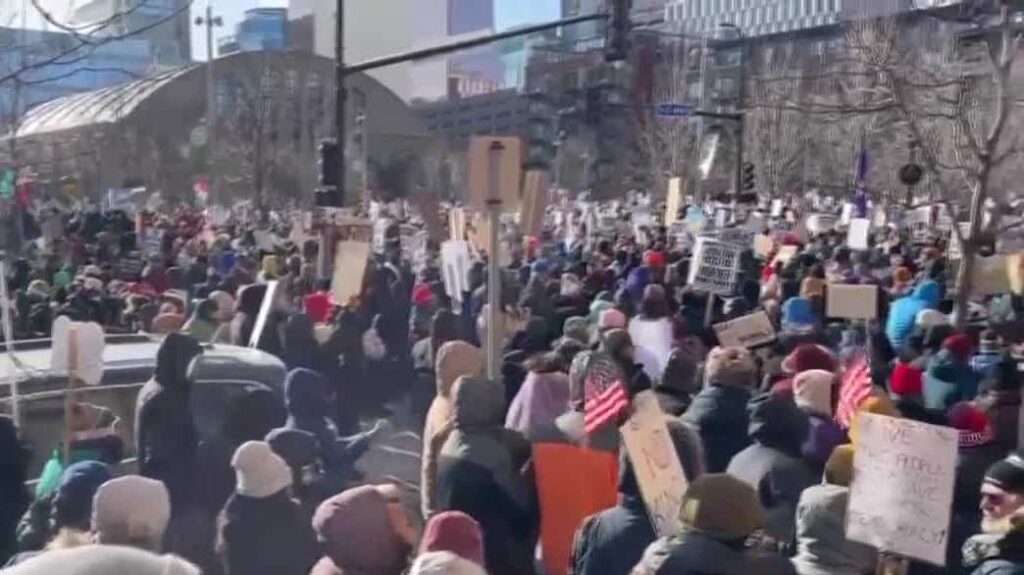
“Anger is not negative. It’s a positive thing. It’s what creates change,” she said, pointing to large protests in Minnesota on Jan. 23 as an example of what collective anger can look like.