
By Danielle Goldwert and Madalina Vlasceanu
The severe winter storm hitting the United States this week, described as “once-in-a-lifetime,” has prompted prominent figures to ask how global warming fits with this chilly weather event. Of course, scientists have long explained that climate change causes not only global warming, but also global weirding: A phenomenon by which extreme weather and natural disasters increase in frequency and intensity, displacing millions of people around the world. In our research at the Stanford Climate Cognition Lab, we focus on promoting solutions to climate change.
Do you know what matters most when it comes to addressing the climate crisis? If not, you’re not alone. Many Americans think recycling is one of the most effective ways to fight climate change. They’re wrong by at least a factor of 10. One fewer transatlantic flight cuts more emissions than a year of perfect recycling—yet most people misjudge these impacts by an order of magnitude. And one well-placed vote can cut about 10 times more carbon than living car-free for a year.
Such widespread misunderstandings uncover a larger problem with how we think about climate action. For decades, the mainstream narrative has urged us to change our lightbulbs, recycle diligently, and feel guilty about our carbon footprints. But our research, involving more than 35,000 Americans across two major studies, suggests this approach is backfiring.
Personal Versus Systemic Actions
The first reason is that most people don’t know which actions truly make a difference for climate and which don’t. In a new study, we found that when people are told which personal actions matter most for reducing emissions, they commit to more actually effective behaviors, like avoiding a flight or shifting diets away from red meats. However, a potential downside of focusing on personal behaviors as climate solutions is the shifting of attention away from even more impactful collective and systemic action. In our study, people who learned about the efficacy of their personal actions became less willing to engage in the collective actions that could systemically transform our energy infrastructure, like voting for climate-friendly candidates or joining advocacy groups. This is the second mechanism through which the current mainstream narrative on climate action is backfiring—focusing exclusively on personal carbon footprints can distract us from the systemic changes we need to address this crisis.
Environmental groups spend millions on campaigns urging people to recycle more, skip meat on Mondays, or carry reusable bags. While these campaigns aren’t directly harmful, they may unintentionally undermine support for the systemic changes that actually bend the emissions curve.
Motivation Factors
So what can trigger these systemic changes? In another new study, we found that shaming people about their carbon footprints, or frightening them with apocalyptic scenarios does not motivate them to take action. Instead, people are motivated to engage in collective actions when they understand how such actions can help solve the problem. Encouragingly, some motivational approaches even reached across the partisan divide and regardless of the information source. Appeals to keeping America’s landscapes sacred and pristine motivated both Democrats and Republicans to engage in climate advocacy, suggesting that climate action doesn’t have to be a partisan issue when framed in terms of shared values rather than through a political lens.
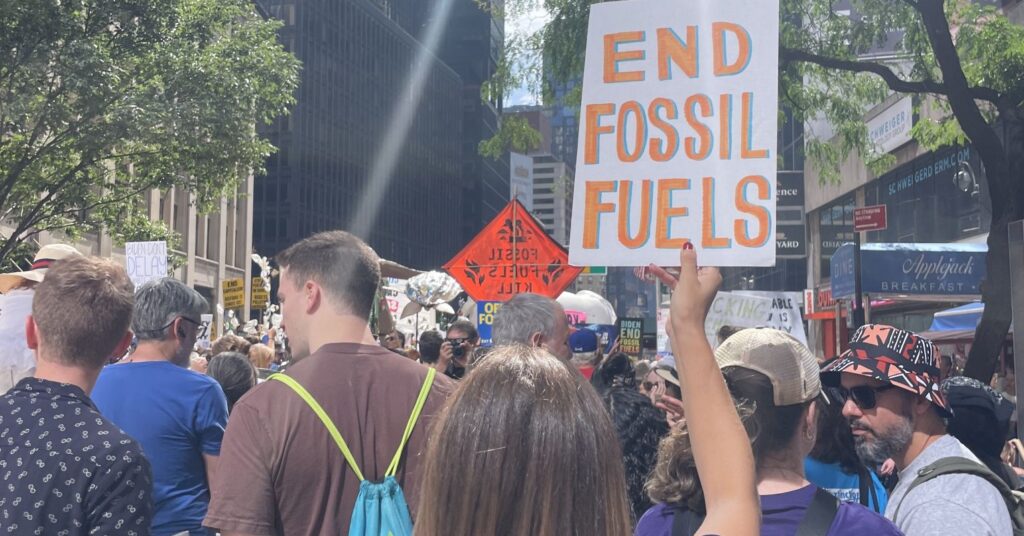
If we want meaningful climate progress, we cannot treat climate action as a lifestyle checklist. Recycling is fine, but it won’t solve the crisis. History tells us that collective action, from civil rights to suffrage to labor rights, changes systems. And our research shows that climate messaging can either pull people toward that collective work or accidentally push them away.
That means our communication needs to do two things at once: correct misperceptions about which personal actions matter and inspire people to see themselves as part of an effective, hopeful movement. People should know that skipping one flight helps, but also that voting, organizing, and pressuring institutions can create change at a scale no individual choice ever could.
This doesn’t mean personal actions don’t matter. Individual choices can model new norms, create market demand for sustainable products, and demonstrate commitment to shared values. But they shouldn’t be the primary focus of climate strategy. Instead, imagine if the climate movement put as much energy into making collective action feel accessible and rewarding as it has into promoting individual lifestyle tweaks. Picture campaigns that celebrate real climate wins, connect people to local groups, and highlight the social joy of working together toward a shared goal.
The stakes are too high for well-intentioned messaging that misses the mark. Americans are ready to act on climate change; it’s time to channel that motivation toward collective solutions, so that “once-in-a-lifetime” climate events don’t become a yearly occurrence.