
The protests that shook Iran in late December and January were met with unusually harsh repression by the Islamic Republic, resulting in more than ten thousand deaths and mass arrests. This wave of violence reveals not only the regime’s readiness to use lethal force, but the extent to which Iran’s system of repression is becoming more technologically advanced, institutionalised, and sustained.
A regime security effort that once leaned mainly on domestic security forces, improvised internet shutdowns, local filtering, and informal human intelligence networks now depends increasingly on surveillance systems, network control architectures, and counter-connectivity methods linked to China and Russia. The key shift is localisation. Imported tools are being adapted to Iran’s institutions and fused with the regime’s existing security infrastructure.
This shift is not abstract. It has had lethal consequences. Since late December, demonstrations across multiple provinces have been met with unusually intense force. At the same time, connectivity collapsed across large parts of the country. Messaging platforms went dark, and in some areas satellite links that had previously functioned as a partial workaround were disrupted. The informational darkness was not incidental. It reduced coordination among protest networks, slowed the circulation of evidence, and limited external visibility precisely when repression was most violent.
Iran’s system of coercion has always adapted. Since the Islamic Republic’s early years, each wave of unrest has served as a testing ground for new techniques. After the Green Movement in 2009, digital monitoring and internet filtering became integral to crowd control rather than a temporary emergency measure. Those tools were refined during the 2017–2019 protests and expanded again during the 2022 Women Life Freedom uprising. Each major challenge produced a more layered response that combined street tactics with control of networks.
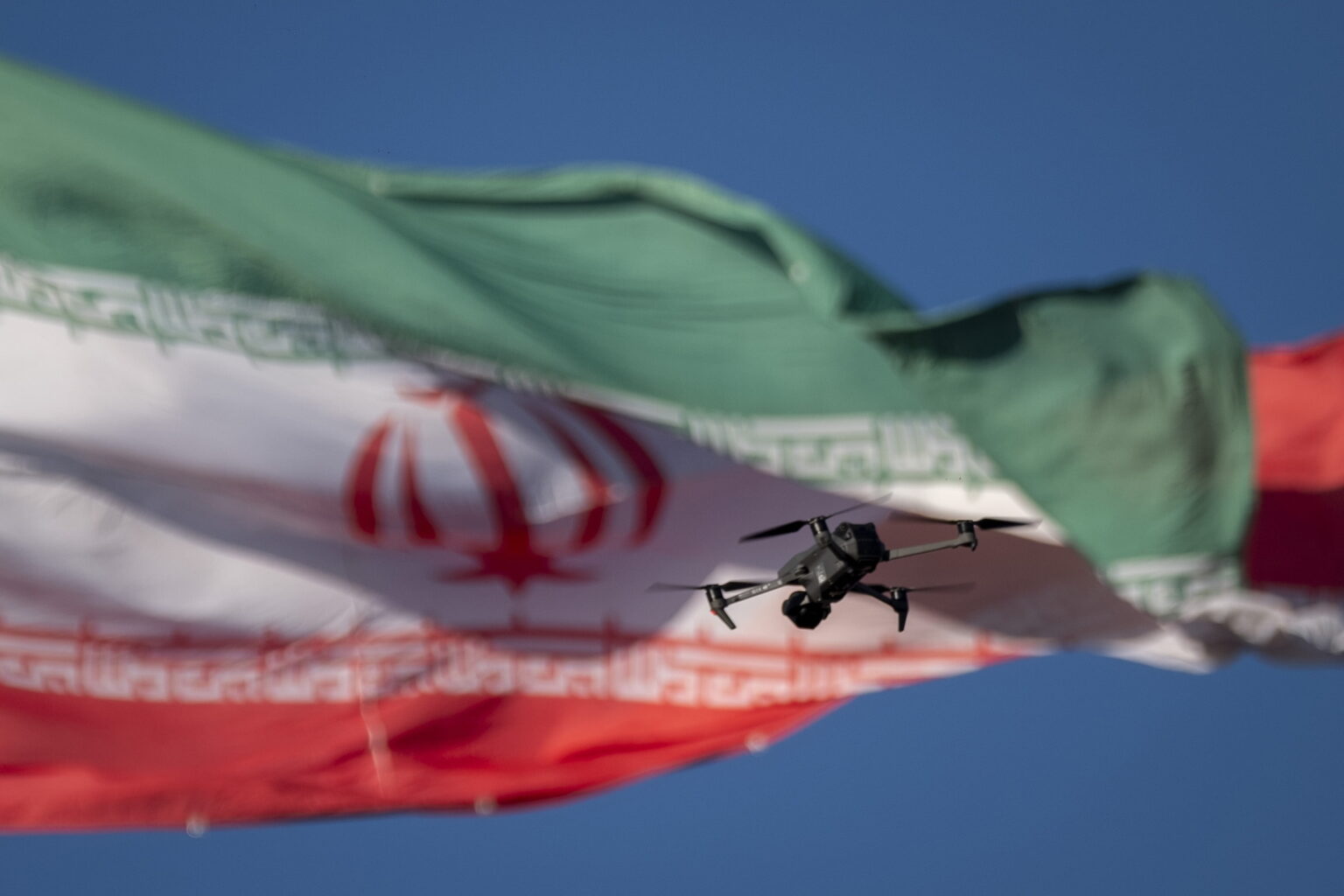
What distinguishes the present phase is the convergence of scale, lethality, and technical depth. Security forces have paired violence with faster identification and broader disruption. Urban camera networks and biometric tools have been used to identify participants, including those who appeared briefly. Small drones have been used for crowd monitoring and tracking movement. Near total shutdowns and selective throttling have fragmented coordination and slowed the spread of footage and testimony.
This approach aligns with Iran’s longstanding ambition to build a national internet insulated from global platforms.
China’s role is most visible in physical surveillance. Chinese-manufactured cameras and associated analytics have entered Iran through local intermediaries and resellers, feeding into city-level monitoring systems. What matters is not only the import of hardware, but the creation of a domestic ecosystem that can install, integrate, and maintain it. When surveillance becomes infrastructure, it becomes scalable and routine. Identification shifts from manual review to networked systems that can match faces across time and space. That changes the cost of participation for ordinary citizens. Visibility itself becomes dangerous, even outside moments of mass mobilisation.
Russia’s influence sits deeper in the network layer. Technologies and operational logics associated with Russian practice emphasise granular traffic control and state visibility into communications. Deep packet inspection and lawful interception enable selective throttling, service specific blocking, and metadata mapping. These tools are designed to identify protest networks rather than merely disrupt them. They also enable reconstruction after a blackout, connecting digital traces with physical surveillance and making arrests possible long after a street protest ends.
This approach aligns with Iran’s longstanding ambition to build a national internet insulated from global platforms. Instead of dramatic nationwide blackouts that draw international attention and impose heavy economic costs, authorities can degrade connectivity unevenly and quietly, keeping basic services and parts of the economy functioning while isolating protest networks. That model resembles the logic of Russia’s sovereign internet experiments more than Iran’s earlier improvisation. It points to a maturing capacity for precision control.
The satellite layer shows a further escalation. During earlier protest waves, satellite internet, particularly Starlink, was framed as an escape route from state chokepoints. That route has now been deliberately targeted. Reports from multiple provinces described interference, GPS disruption, and seizures of terminals. Russian precedent matters here. Russia has used GPS jamming, spoofing, and satellite interference in Ukraine to degrade communications and disrupt coordination.
Iranian officials have repeatedly portrayed unrest as foreign-backed, including claims involving the CIA and Mossad. Within that worldview, investments in electronic warfare and signal disruption are not only domestic policing tools. They are dual-use capabilities that serve internal control while also supporting deterrence in a crisis.
What is unfolding is not simply a more advanced crackdown but a re-engineering of repression.
Iran’s technological turn in repression has three structural consequences. It makes protests harder to organise and easier to suppress violently by isolating protest sites through granular filtering, biometric surveillance, and satellite disruption. The recent deaths were not only the product of brutality, but of informational isolation. It also weakens international pressure, as sanctions and diplomacy are poorly suited to a system in which repression is enabled through opaque vendor networks and locally maintained surveillance infrastructure. Finally, it deepens Iran’s integration into a non-Western authoritarian technology bloc, embedding it in a shared model of digital control.
What is unfolding is not simply a more advanced crackdown but a re-engineering of repression. Instead of dramatic blackouts, Iran is building quieter and more durable systems of control. Instead of improvisation, it is institutionalising surveillance. This shift will outlast any single protest wave, reshaping both the risks of dissent and the limits of external leverage.