
How to cite:
Wong M. Hair, hydration and water: the real science. Lab Muffin Beauty Science. January 28, 2026. Accessed January 28, 2026.
https://labmuffin.com/hair-hydration-and-water-the-real-science/
Should you hydrate your hair? From all of the hydrating hair products out there, you’d think the answer is obviously, yes.
But quite a lot of hair experts (including scientists) say that water is bad for hair, and causes damage.
Neither of these are entirely true!
Water is one of the most confusing topics in hair science. It’s a huge source of myths – not just from marketing and regular people, but also hair experts and cosmetic scientists. But once you understand how water and hair interact, haircare makes a lot more sense!
The video version is here – keep scrolling for the article version.
“Hydrated hair” is a myth
Lots of hair products claim to hydrate, so you’d think adding water makes hair feel soft, smooth, and “healthy”.
This is one of the weirdest myths the entire haircare industry has kind of agreed to support. I’ve attended lectures where scientists have said that hydration is too hard to explain, your job is just to sell hair products – don’t bother trying to undo years of ingrained beliefs, because people will just get turned off and buy someone else’s products.
So against all advice, here’s my attempt to explain the actual science…
Water and hair bonds
To understand hair and water, we first need to talk about bonds.
Hair is made of proteins, stuck together with bonds, which give hair its strength and shape. There are 2 main categories of bonds:
- Permanent bonds like disulfide and ionic (salt) bonds only significantly break with chemical treatments.
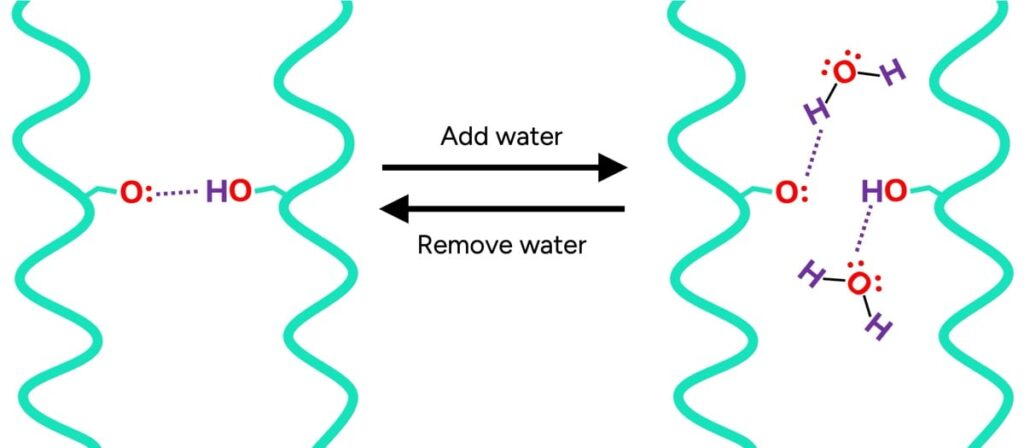
- Temporary bonds (mostly hydrogen bonds) break and reform all the time – water is really good at breaking them.
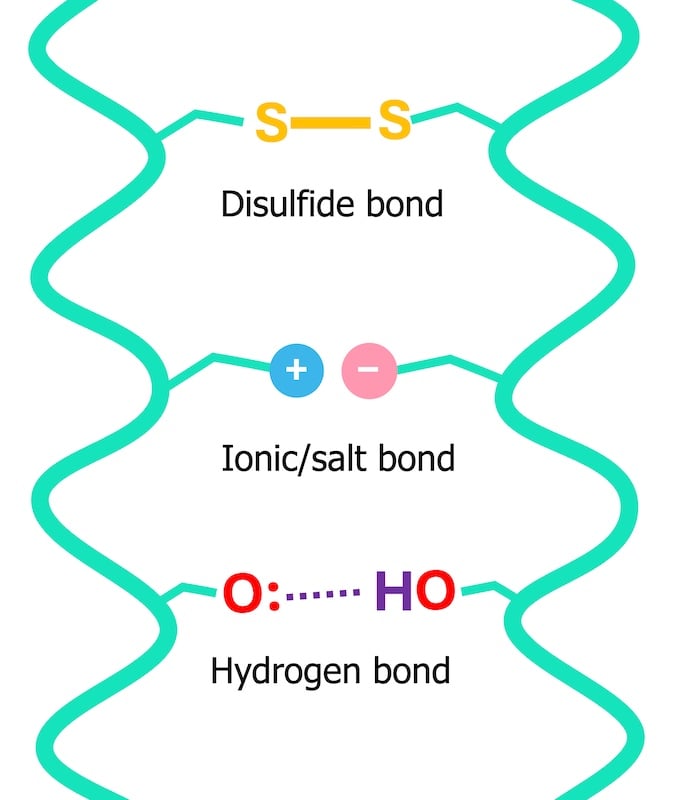
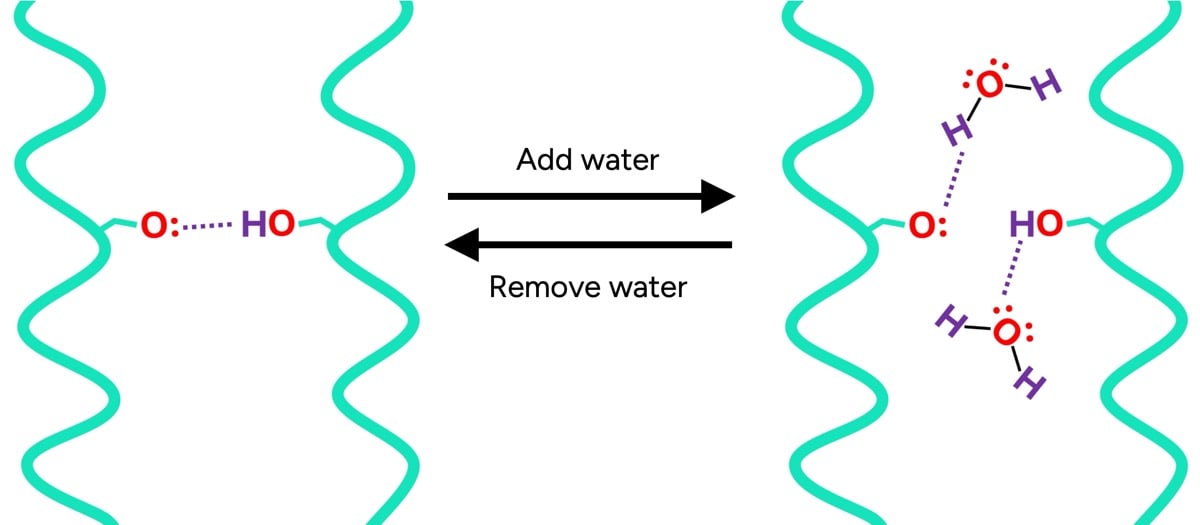
The inside of hair – especially the cortex – is very sensitive to water. In dry hair, temporary bonds stick proteins to each other like glue. These bonds are the proteins essentially holding hands at a molecular level.
But proteins can also hold hands (form hydrogen bonds) with water. If you add water to hair, the proteins end up holding hands with water molecules, instead of each other – this means wet hair has less bonds holding it together.
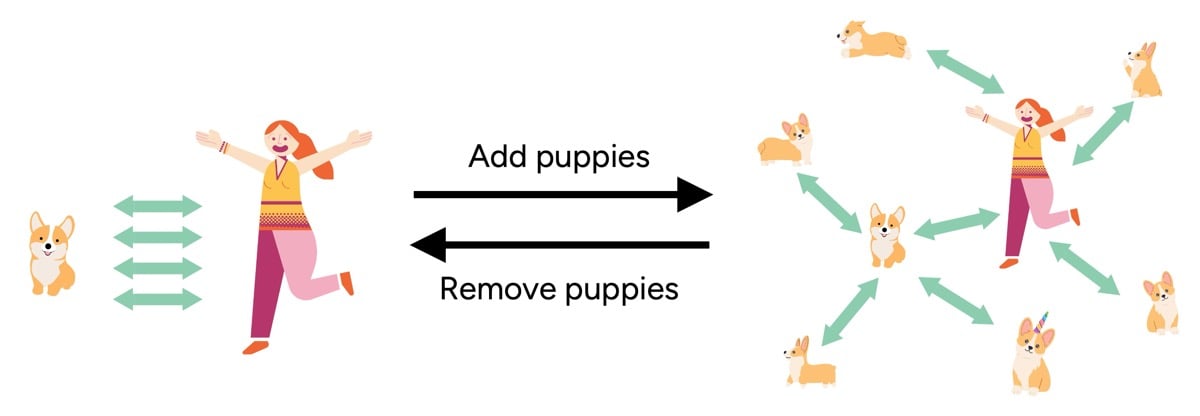
It’s like you and your dog Felix are at a dog park. If it’s just the two of you, you can only really interact/bond with each other. But if you add a bunch of water, it’s like you’re adding lots of friendly puppies. You and Felix are interacting with them, so you’re not interacting with each other as much – you and Felix are more weakly bonded. When the dogs leave, you have more interactions with Felix again, and you’re more strongly bonded.
Wet detangling can be good or bad
This difference in temporary bonding is why dry hair (more bonds) is stiffer and more brittle, while wet hair (less bonds) is stretchier and more elastic.
Water breaking hair bonds also means:
- Wet hair is a lot weaker, so it stretches more easily, and less force is needed to break it compared to when it’s dry. This is mostly why hair scientists sometimes say “water is bad for hair”.
- Wetting hair also loosens the shape of curly, coily and kinky hair, so it’s floppier and has less tight bends.
This means it’s more damaging to comb straight hair when it’s wet. It’s the same shape but weaker, plus there’s more friction between strands because water sticks them together. Everything is worse in the wet state for straight hair.
Related post: Sulfate-Free Shampoo? The Science
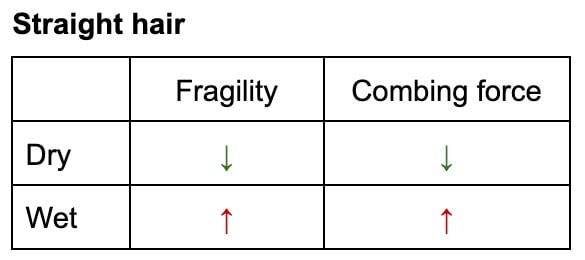
But it’s less damaging to comb curly hair when it’s wet! Even though it’s weaker, the looser shape means less resistance and less tangling, so overall the damage is lower.
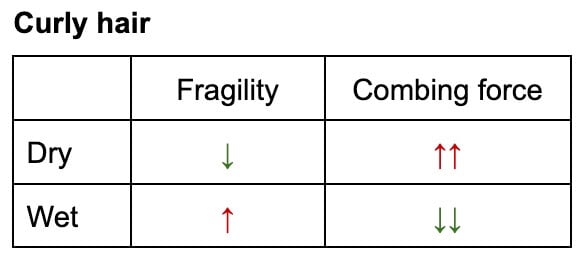
This weird conundrum even happens when hair isn’t properly wet, and it’s just in a humid environment!
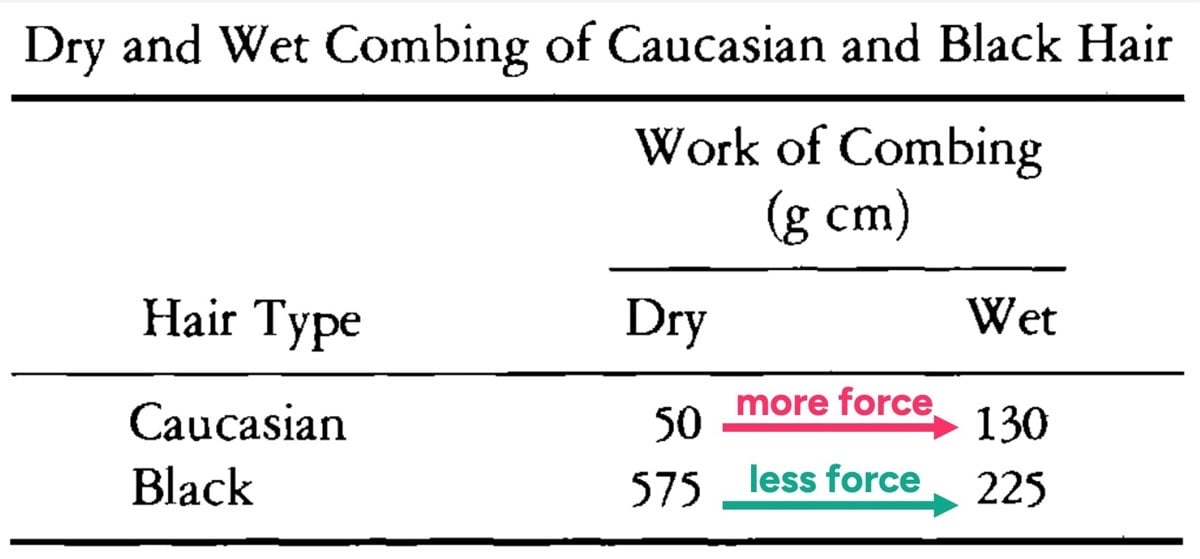 original from Epps J, Wolfram LJ. J Soc Cosmet Chem. 1983;34:213-214.
If your hair isn’t quite straight or curly, the science here pretty much supports what your personal experience would tell you – it’s less damaging to detangle your hair in a way that needs less force, whether wet or dry. Conditioner will also make your hair smoother and reduce force and damage.
But personal experience is more misleading when it comes to other effects of water…
Hair with more water feels worse
Hair that feels soft, smooth and “healthy” (what we’d think of as “hydrated”) actually has lower water content than hair that feels rough, “dry” and damaged.
There’s a famous study where scientists asked 50 people to rate hair with more water and less water. Most people said the hair with less water felt more moisturised, smoother, less tangled, and less damaged.
To understand this, let’s zoom into the cuticle on the surface – the part of hair we touch. This is made of overlapping scales, which lie relatively flat when dry.
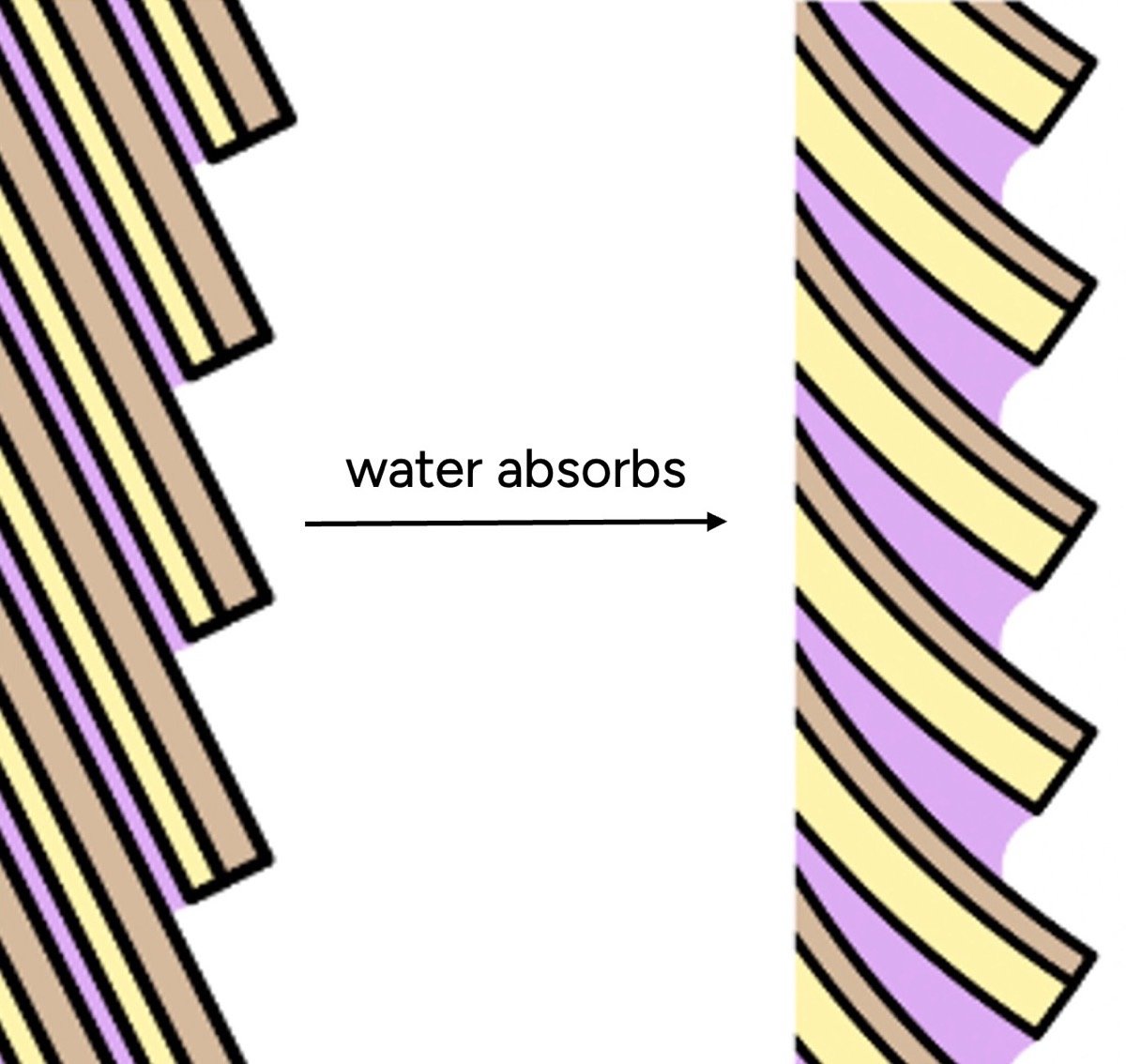
When there’s extra water/puppies, the cuticle scales swell up, and some parts swell up more. The underside of each scale (yellow – the endocuticle) and the glue between the scales (purple – the cell membrane complex) absorb much more water than the top. This makes the scales stick up, creating a surface that feels bumpy and rough.
Water itself is also sticky and adds friction (we use this when we wet our fingers to get better grip on a grocery bag).
So when there’s more water around, the hair surface is bumpier and grippier on a microscopic level. To us, that roughness makes us think it’s “dry” – unlike hair, most things we encounter don’t go rougher and bumpier when they’re wet.
Related post: The Science of Hair Products: Shampoo and Conditioner
How “hydrating” products work
Most “hydrating” hair products mostly just condition your hair. Conditioners contain oily ingredients like silicones or fatty alcohols that form little deposits on the cuticle. These smooth out the bumpy surface and protect it, and make it less grippy – less friction makes the surface feel smooth and soft.
Undamaged hair actually starts off with its own natural oily layer on it, called the F-layer. This comes off as your hair gets damaged – conditioners essentially try to replicate the F-layer.
Why does hair feel better after washing?
You might’ve noticed that your hair doesn’t feel as nice after using a leave-in conditioner, compared to properly washing and conditioning your hair. Surely this has to do with hydration?
Yes… and no.
There are a few things happening here:
1. Water is really good at spreading out conditioning ingredients.
Extra water means you have more stuff to spread out, so a rinse-off conditioner can coat your hair more evenly.
2. Water is really good at resetting the shape of your hair.
Other examples of this happening: washing your hair gets rid of any heat styling, humidity messes up your hairstyle faster.
Again, this is because of temporary bonds:
- Heat styling breaks temporary bonds with heat.
- You pull the hair into a different shape
- When the hair cools, new temporary bonds form to hold the new shape.
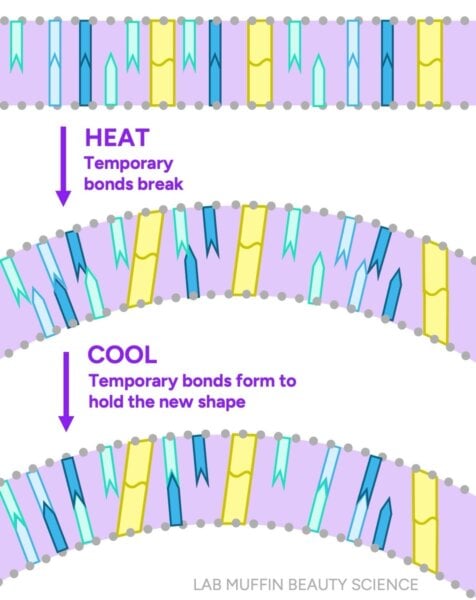
When water gets into your hair, it can also break these new temporary bonds, allowing the permanent bonds to pull your hair back into its original shape.
Washing your hair is very good at breaking temporary bonds. There’s heat and water involved, plus shampoo which decreases surface tension and lets more water get into hair. This puts your hair in a super floppy state, so it can be styled much effectively. It’s like candle wax – the softer and more liquid it is, the more flexibility you have to shape it.
3. Water is especially good at reshaping curly and coily hair
There’s an extra aspect for curly and coily hair: water is really good at helping strands align so they’re parallel. This is because of surface tension: water coats the outside of hair and makes it sticky, so when two wet strands touch, water can “zip” them together (this is called self-assembly). This means wet curly hair can clump together into nice curl formations.
These bigger clumps can also give the illusion of being “hydrated” when hair is dry. Larger aligned clumps have a larger surface area that touches your hand, so heat gets transferred faster – they feel colder and smoother than unaligned hair, and our brains can interpret this as “hydrated”. It’s similar to how satin feels colder than a rougher cotton fabric, and how it’s harder to tell if your laundry is dry when it’s cold.
4. Water can also reset shape at a microscopic level
If you dry your hair too quickly, like with a hot hair dryer, the cuticle scales can dry unevenly because some parts shrink faster than others. Some cuticle scales buckle, and the surface of your hair ends up looking like this:
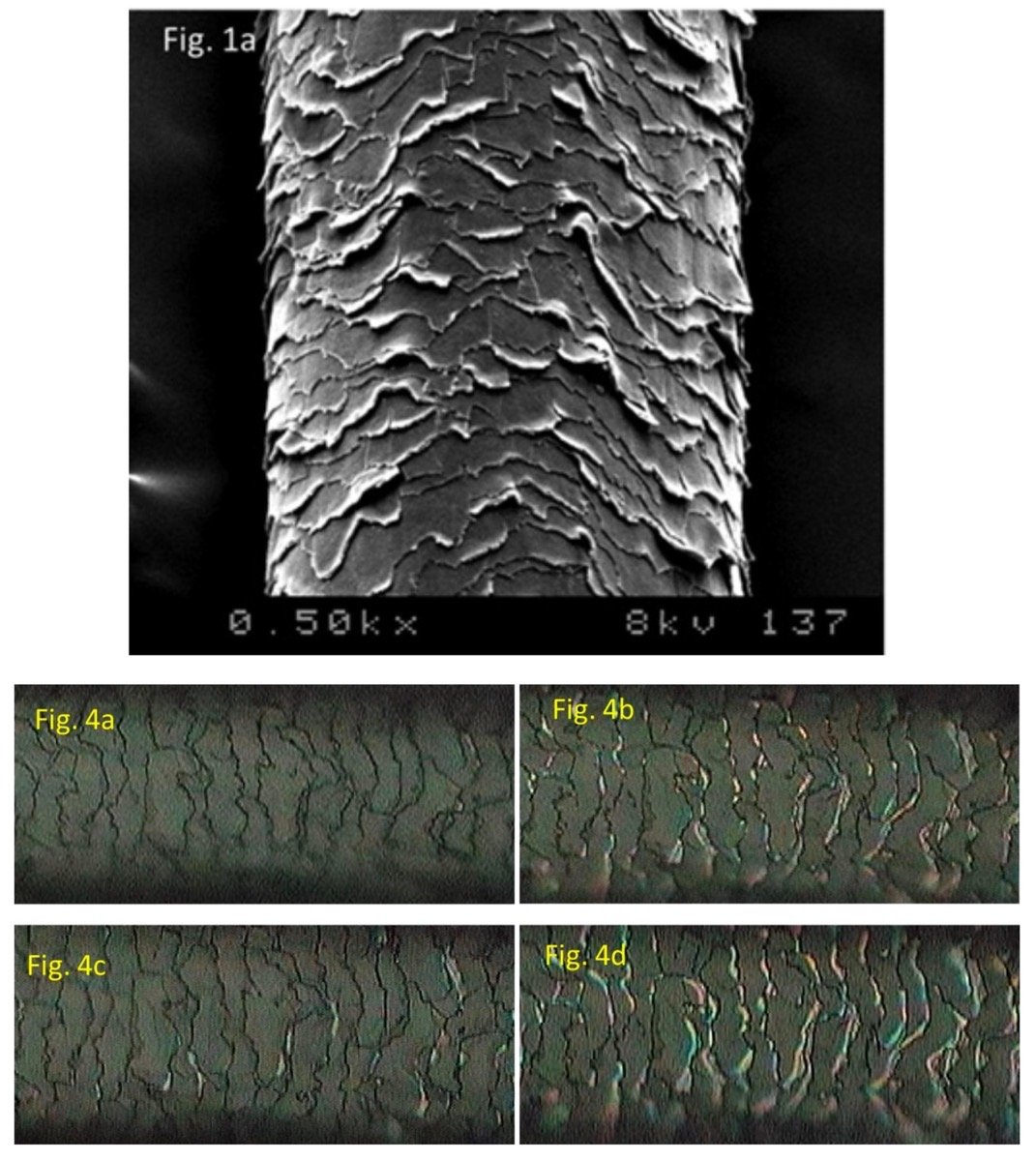 Gamez-Garcia M. J Cosmet Sci. 2021;72:687-696.
This buckling can also happen if your hair gets stretched a bit (about 15%). Soaking hair in water and letting it dry normally resets this buckling.
Note that none of these effects are about having more water in the hair, per se – it’s about how water can come in, transform hair’s shape, then leave.
Related post: Busting Hair Conditioner Myths: Build-Up, Silicones, Weighing Hair Down etc.
The ideal hydration level is in the middle
There’s a sweet spot for how much water hair should contain – it’s not that different from skin. Skin that’s too wet is fragile, and might crumble easily (like if you’ve been soaking in the bath for too long). But skin that’s too dry is stiff and can crack.
But there are two big differences between hair and skin:
- It’s a lot harder to adjust hair’s water level with products
- The ideal level of hydration is a lot lower for hair
We already talked about how wet hair is weaker and rougher, including at higher humidity.
But having too little water also has negative effects on hair:
1. Higher static build-up
If the humidity is really low (e.g. on a plane), static builds up more easily in hair, causing flyaways. This is because hair loses electrons when it rubs against other materials, but water can spread out electric charges.
2. Brittle and less shock absorbent
Hair that’s too dry is also more brittle. Too many bonds means the hair isn’t flexible enough to absorb shock (e.g. from brushing) without forming microscopic cracks – when the cracks build up enough, the hair breaks.
We can see this more easily with nails, which are made of similar proteins to hair. If you clip dry nails, the cracks keep travelling because the nails are more brittle. But if you clip nails after a shower, when they’re wet and flexible, the cracks don’t spread as much.
How can you adjust hair’s water content?
How do you get your hair into that happy medium of wateriness? There are a few things that can help, or at least they make your hair act like it has a more ideal water content – how some of these things work isn’t entirely settled.
- Bonding treatments (which will be covered in an upcoming post) – a lot of these seem to work by sitting in hair, and stopping water from breaking as many hydrogen bonds.
- Small molecules like glycerin might be able to get into hair and act like water, or it could potentially be increasing the humidity right next to the hair. A study found that relaxed Black hair at 65% humidity broke more easily than wet hair, and using humectants like glycerin reduced this effect.
- Oils like coconut oil might be able to get into hair a bit, increasing flexibility and reducing brittleness.
Takeaways
Water isn’t good or bad for hair. It’s a tool that can be used to soften hair’s structure – it can be good or bad depending on your hair and what you do to it.
If you want hair that feels smooth and soft and cold, it’s best to condition it and shape it so it’s smooth and more aligned. It doesn’t really matter if your products say “hydrating”.
You don’t need to worry about water itself damaging your hair (“hygral fatigue” is a myth). Just make sure you treat your hair gently when it’s wet, as it’s weaker – use lots of conditioner if you’re going to detangle it, wet or dry.
References
Robbins CR. Chemical and Physical Behavior of Human Hair. 5th ed. Springer Berlin Heidelberg 2012.
Evans T. Consumer vs. scientific language: relating in vivo to in vitro. Cosmetics & Toiletries. 2013;128(5):300-304.
Epps J, Wolfram LJ. Letter to the editor. J Soc Cosmet Chem. 1983;34:213-214.
Gamez-Garcia M. Moisture in the cuticle sheath: effects on hair mechanical and cosmetic properties. J Cosmet Sci. 2021;72:687-696.
Kamath YK, Hornby SB. Effect of chemical and humectant treatments on the mechanical and fractographic behavior of Negroid hair. J Soc Cosmet Chem. 1985;36:39-52.
Kaushik V, Chogale R, Mhaskar S. Single hair fiber assessment techniques to discriminate between mineral oil and coconut oil effect on hair physical properties. J Cosmet Dermatol. 2021;20(4):1306-1317. doi:10.1111/jocd.13724