
by Alimat Aliyeva
Germany and Denmark have signed an agreement at the North Sea
Summit in Hamburg to establish and jointly operate a major energy
hub on the island of Bornholm in the Baltic Sea,
Azernews reports.
The negotiations were attended by German Minister for Economic
Affairs and Energy Katherina Reiche and Danish Minister for
Climate, Energy and Utilities Lars Aagaard.
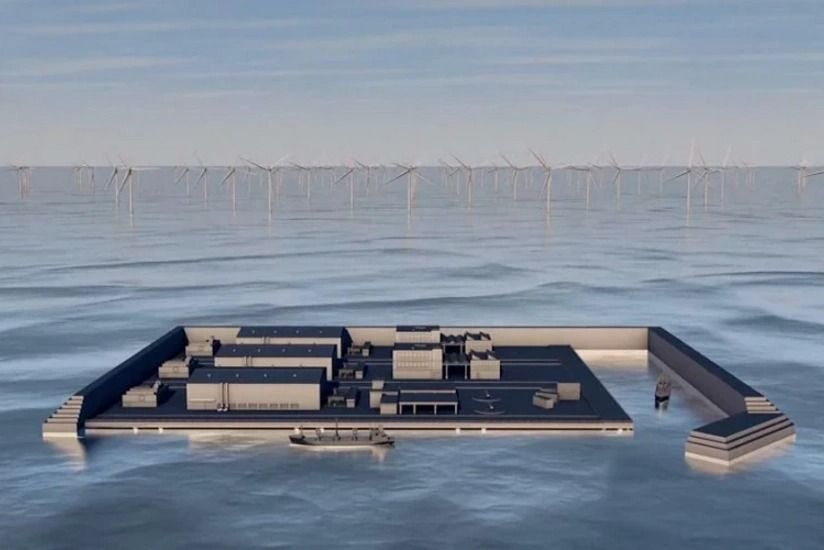
Under the agreement, an energy hub will be built on Bornholm to
transmit electricity generated by offshore wind farms in the Baltic
Sea to the national power grids of both Germany and Denmark. The
two countries agreed to share the costs of constructing and
maintaining the necessary infrastructure, including subsea cables
and grid connections.
The project is expected to play a key role in strengthening
energy security in Northern Europe and accelerating the transition
away from fossil fuels. Experts note that Bornholm’s strategic
location makes it an ideal junction point for cross-border energy
distribution, potentially allowing additional countries to connect
to the hub in the future.
In addition, according to DPA, energy ministers from Belgium,
Denmark, France, Ireland, Iceland, Luxembourg, the Netherlands,
Norway, and the United Kingdom signed a separate agreement at the
summit focused on the large-scale development of offshore wind
energy in the region. Investments in this sector are expected to
reach approximately €9.5 billion by 2030.
Analysts believe these initiatives could turn the North Sea and
Baltic Sea regions into Europe’s “green power plants”, supplying
renewable electricity to millions of households. Some observers
also suggest that such energy hubs may eventually support green
hydrogen production, further expanding their role in Europe’s
long-term climate strategy.