
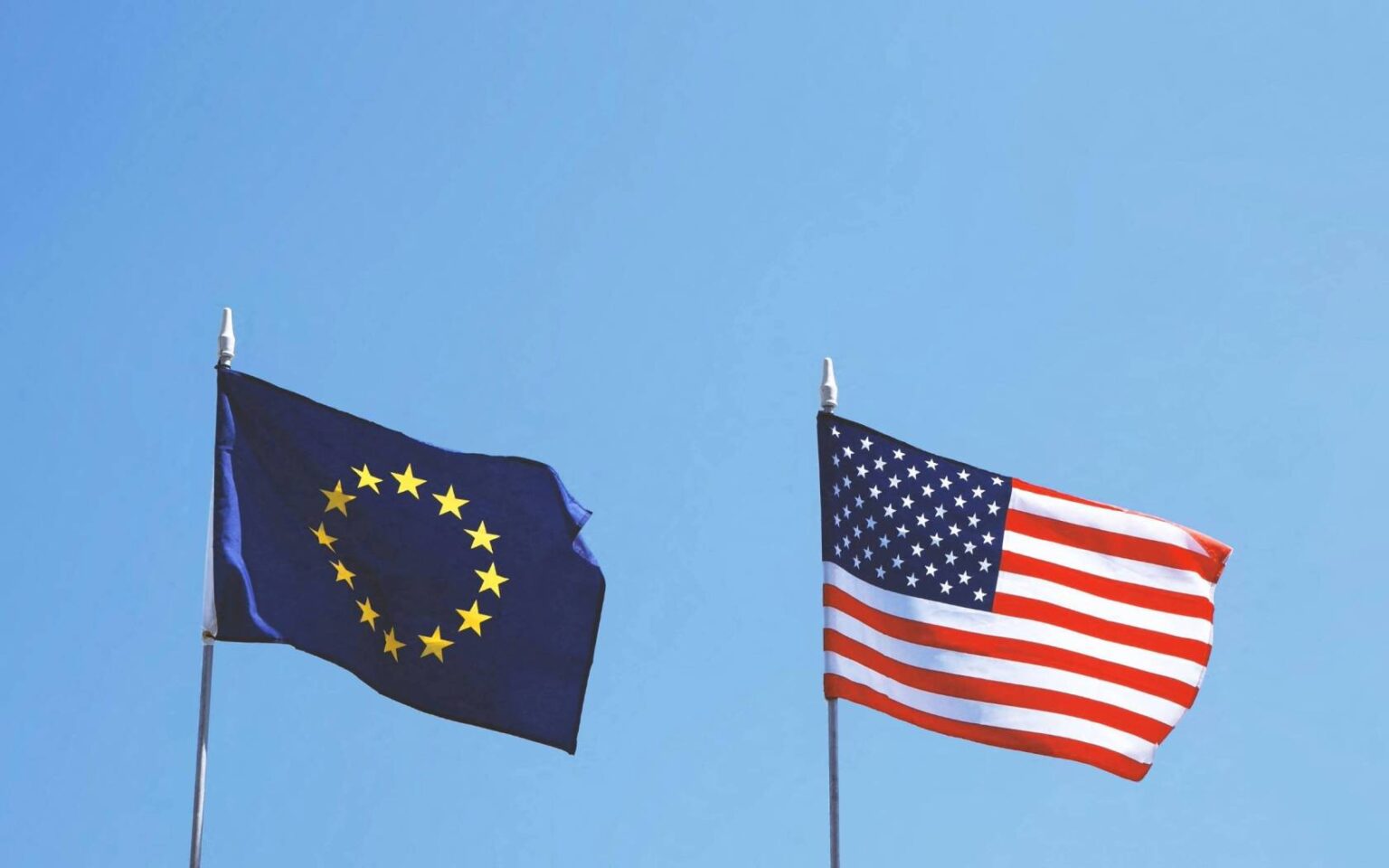
During President Trump’s push to acquire Greenland, he spoke of his readiness to take the territory by force or use tariffs to pressure European countries to hand it over. European leaders pushed back. After a year of relying on flattery and workarounds to manage a president whose personality they found to be as disruptive and bewildering as his policies, they became more direct and explicit. The security issues raised by Trump about the importance of Greenland could be addressed through normal channels: a land grab could not. This was a line that must not be crossed. Following a timely intervention by NATO Secretary-General Mark Rutte, and with one eye on the markets, Trump backed down. Yet the episode left the allies shaken.
Many argue that, in these circumstances, there is little choice but to accept that the Atlantic Alliance is over. So long as Trump is president, the US cannot be relied upon in an emergency. The levels of distrust created will take years to dissipate. Mark Carney, the Canadian prime minister, spoke of a time of rupture rather than transition, arguing that middle powers must work together to look after their own interests rather than assume that this can always be achieved in partnership with the United States.
There have been many crises afflicting NATO in the past, but this one feels different. The allies of the US have always been anxious about two possible developments – abandonment or entrapment. With abandonment, the US would cut Europe adrift and encourage it to fend for itself, leaving it vulnerable against the Soviet Union and now Russia. With entrapment, the US would stay fully committed to European security but in return expect the allies to support Washington’s foreign policy adventures, even if these risked a wider war.
With Trump both these concerns are evident, but three more have been added. The first, raised by Greenland, but also the proposal to turn Canada into the 51st state, is that the president talks about direct aggression against allies. The second, less spoken about but still present, is that the administration’s domestic policies are so anti-democratic that they disqualify the US from presenting itself as ‘the leader of the Free World’. Then, third, this concern is aggravated by the efforts being made by senior figures in the administration to turn alliance relations into a branch of the culture wars, claiming, for example, that immigration policies are diluting the strength of European nations.
For European governments, the issue goes beyond how best to respond to interference in their domestic affairs or outrageous demands. The bonds holding the alliance together seem tenuous. This is an alliance that has served them well, providing the foundation for their prosperity as well as security (for the two go together) for almost 80 years. They are loath to let it go, yet it can no longer continue as before. This is not just because of Trump. Previous presidents have also complained of the unbalanced nature of the relationship. Even without Trump, it was time to create a better balance and recognise the challenges of holding an alliance together when interests are not always aligned.
The issue may yet become even more urgent. Trump has not only disrupted the international alliances of the US (in the Indo-Pacific as well as Europe), but also the global economy. So far the markets have stayed relatively calm. It might not take much for the calm to turn into a tempest – whether because of the AI bubble bursting or liquidity problems with banks, insurers and mortgage lenders. Even while countries are drifting apart, their economies remain interconnected.
The starting point for a new grand strategy has been agreed for some time. Europeans must expect to take more responsibility for their own security, and this requires spending more on the armed forces. This is now a consensus view, but while defence expenditure is going up, this is not yet by enough. This is another reason to be wary of a financial crisis. The amounts required are significant but not excessive. During the Cold War, Europeans could not expect to cope with the combined strength of the Warsaw Pact on their own. Now, members of the Pact are in NATO. And while Russia spends substantially more of its GDP on defence than NATO countries, its GDP is still smaller than each of the major European powers. Europe does not need the US to the extent that it did in the past.
The situation would be even more manageable if Russia clearly failed to conquer Ukraine, which is why supporting Ukraine is the most immediate priority. If Russian aggression succeeded, there would be an even greater security crisis, felt immediately around the European periphery of the Russian Federation, and in particular in the Baltic states. European countries already do most of the heavy lifting on Ukraine. US policy on Ukraine has been inconsistent and frustrating, but, so long as the Ukrainian government can work with the US on peace plans and security guarantees, then so must the allies.
Ukraine is not the only reason why it is extremely important to sustain NATO, even with a reduced American contribution. Having such an inclusive alliance in place settles a vital strategic issue for its members. Without it, mini-alliances could form throughout Europe, possibly in opposition to each other. In addition, the integrated military command encourages inter-operability, shared operating procedures, joint commands and so on. Lastly, so long as the US is still part of the alliance, there is a deterrent effect. We may doubt that the US would commit to Europe in a crisis, but Moscow cannot be sure.
There are certain areas – nuclear, intelligence, logistics – where there is still dependence on the US, and a lot of existing military capabilities could not be maintained without American support. Despite all the tensions, the administration has not yet claimed that it intends to walk away from NATO. There would be substantial opposition in Congress and elsewhere should it attempt to do so. So while it makes sense to reduce dependence on US systems where possible, there are limits to how much and the speed with which this can be done. It is unrealistic to talk about Europe being totally independent from the US – as it is for the US to be totally independent of Europe.
The most important focus, and the priority for military expenditure, should be strong conventional forces to deter Russia from territorial aggression. It is important to have sufficient forces to deny Russia any gains, so that there is no question of resort to nuclear use. The British and French nuclear forces are significant and should not be dismissed. They have a deterrent effect. But they are best seen as a complement rather than a substitute for American forces.
Away from their own continent, Europeans should accept that there is less that they can do, certainly militarily, especially if they are acting without the US. If they have vital interests bound up with developments in particular regions, it will be necessary to work with (or at least not against) local powers. Non-military assets, such as overseas assistance, which have been cut in recent years to make space for increased defence budgets, may still be the most effective forms of influence.
This raises the issue of China. How much it should be seen as a security threat to Europe has been a big issue for over a decade. During the first Trump and then the Biden administration, the Europeans accepted that if the Americans took the threat seriously then they should, too. There are also real issues in terms of espionage and unfair trade practices, as well as competition for raw materials. But the second Trump administration seems less bothered about the military, as opposed to economic, threat from China. This is raising issues for its Indo-Pacific allies, but also lets Europeans off the hook. Because US trade practices have also been disruptive, a degree of hedging is already evident, with European leaders making their own visits to China. If the international economic situation becomes even more urgent then some policy coordination will be needed with Beijing.
No grand strategy can anticipate future events. Those that are unexpected often lead to the most profound strategic adjustments – 9/11, the financial crisis, Covid. By definition it is hard to prepare for these in advance. Whatever challenges to come they will have to be addressed with international institutions that have been damaged by the administration’s indifference. Multilateralism has been out of fashion. The responses are therefore likely to be ad hoc, without templates to provide guidance. Even in Europe, we are already seeing groups of states – for example, the E3 of France, Germany and the UK – coming together to provide leadership. This promises a much messier set of international relations, possibly made messier still as a result of changes in government following elections. For all these reasons, it may be hard to follow a consistent path.
And for all these reasons, too, we should recognise that a grand strategy predicated on the assumption of an unreliable and indifferent United States will be unsatisfactory and less effective than one in which relations with the US remain strong and mutually supportive. At some point there will be a more competent and trustworthy US administration. It will not be possible to simply pick up where we left off, to go back to how things were. The world will have moved on. But hopefully it will be possible to repair some of the damage and learn again the habits of cooperation based upon shared values and interests.