
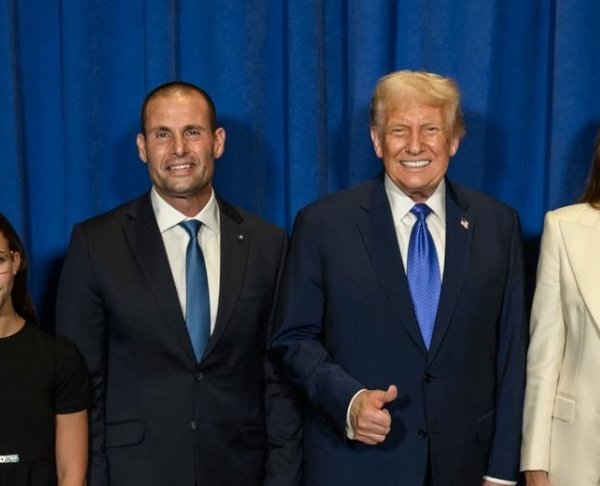
 Robert Abela with Donald Trump
A coalition of civil society organisations urgent called on government to reject membership in Donald Trump’s so-called “Board of Peace”, warning that participation would fundamentally betray the Malta’s constitutional neutrality and decades of principled foreign policy.
The stark intervention comes after prime minister Robert Abela casually informed Parliament on Monday that Malta had received an “informal invitation” to join the US-led body and was “actively considering” membership, even if it meant defying a collective European Union position.
“Malta’s freedom, neutrality, and commitment to peace, justice, and social progress are not bargaining chips,” the coalition declared in a statement signed by nine organisations, including Moviment Graffitti, Justice for Palestine, and the Group for Neutrality and Peace. “They are not for sale, and they must not be traded for short-term political alignment or external favour.”
In recent days, Abela has faced scathing accusations of entering a “Faustian pact” with Trump, prioritising narrow economic interests over human rights and international law.
The most vocal critics, including the centrist party Momentum and rule-of-law NGO Repubblika, argue that Abela is “placating” the Trump administration to protect foreign investment and maintain diplomatic favour. Momentum leader Arnold Cassola questioned if Abela is “a pawn in the hands of his puppet master,” suggesting the prime minister’s “pragmatic” consideration of Trump’s Gaza “Board of Peace” undermines the United Nations and Malta’s neutrality.
Critics further condemn Abela for branding human rights vigils as “dangerous” and “populist,” alleging he has abandoned core principles of sovereignty and justice to avoid the wrath of Trump’s threatened trade tariffs.
The Board of Peace, inaugurated by Trump at Davos on 22 January, has been condemned by experts as a “hostile takeover of global governance”. Originally conceived for Gaza’s reconstruction, the charter makes no mention of the Palestinian territory, instead describing a broad mandate with Trump as permanent chairman holding veto power.
The structure includes Israeli prime minister Benjamin Netanyahu – subject to an International Criminal Court arrest warrant for alleged war crimes – whilst relegating Palestinians to a subordinate committee. Critics describe it as “peace by diktat”, where the Israeli occupier dictates terms while continuing military operations.
For Malta, the stark contradictions are glaring. The country recognised Palestine as a state just months ago in September 2025, positioning itself within the international consensus for a two-state solution. Yet, critics argue this consensus is now “diplomatic theatre” for an order that is dead in the water.
Trump’s board explicitly serves US-Israeli interests, with property developer Jared Kushner unveiling a “New Gaza” vision that replaces the prospect of sovereign statehood with a “Gazan Riviera” of luxury high-rises and commercial zones. By omitting any reference to the two-state solution in its charter and conditioning Palestinian “aspirations” on a technocratic committee overseen by Trump himself, the board effectively signals the end of the two-state paradigm, replacing it with a corporate-led trusteeship that treats the territory as prime real estate rather than a national homeland.
Civil society groups warn that joining would expose Malta to “direct political and moral complicity” in Gaza’s devastation whilst eroding the country’s hard-won reputation as a neutral bridge-builder. “Neutrality is not passive silence; it is an active commitment to legality, restraint, and peaceful resolution of conflicts,” their statement emphasises.
The initiative operates entirely outside UN frameworks, despite Trump’s claims of cooperation, effectively creating a parallel structure where membership costs $1 billion for permanent seats and operates under what one analyst termed “nakedly authoritarian” governance. The charter grants Trump lifetime chairmanship with authority to appoint his successor, veto all resolutions, and modify the charter unilaterally.
Moreover, Abela’s embrace of membership has exposed fissures within his Labour Party, founded on anti-imperialism and neutrality.
The prime minister’s justification has proven equally contradictory and revealing. While defending his cautious stance on Trump’s Greenland annexation threats by citing concerns about “splitting” the EU, Abela simultaneously declared his willingness to join the board “even if the EU takes a position against joining”. He pointed to Hungary and Bulgaria, hardly beacons of democratic governance, as precedents worth following.
Most damningly, civil society argues any such departure from Malta’s constitutional neutrality requires “the highest level of democratic legitimacy” – including full parliamentary scrutiny, a two-thirds majority, and potentially a referendum. Instead, Abela appears poised to make the decision through executive fiat, prioritising what he narrowly defines as “national interest” whilst attacking domestic critics, including rule-of-law NGO Repubblika, for potentially “scaring off investment”.
The coalition’s message to government is unequivocal: “Rule it out.”
The statement was signed by:
- Alleanza ghall-Ġustizzja, Ugwaljanza u Paċi
- Moviment Graffitti
- Ġusitzzja għall-Palestina
- The Lebanese Advocates
- Blue Door Education
- SpeakUp! Malta
- Watermelon Warriors
- Grupp Newtralita u Paċi
- Front Maltin Inqumu

