
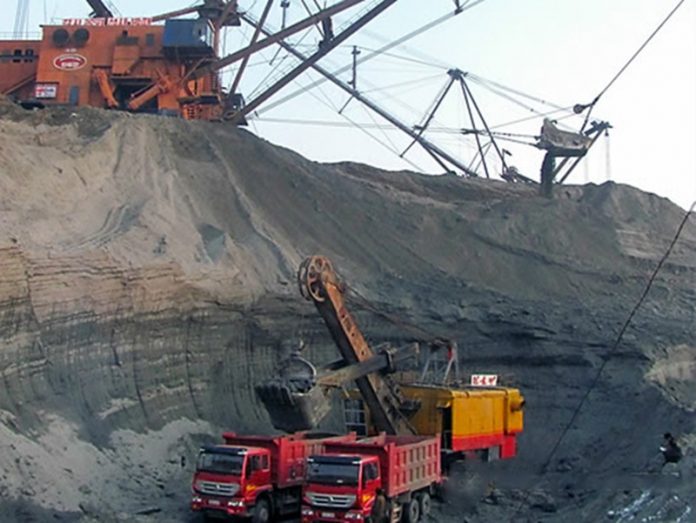
 The Kumya Youth Coal Mine. (Yonhap News)
The youth section of the Hyesan Youth Mine in Ryanggang province has been regularly distributing food to workers after switching to a joint management arrangement with the Chinese in October 2025.
This section of the mine is located in Hyesan’s Masan neighborhood, long known for its poverty. But the regular food rations have led to a noticeable improvement in the standard of living.
“The Hyesan Youth Mine is composed of four separate sections: the youth section, the joint-venture section, section one, and section two. The youth section, formerly known as the Masan section, came under joint management by the Chinese last October. Since the transition, workers have been receiving 25 kilograms of non-glutinous rice, 25 kilograms of wheat flour, and 5 kilograms of cooking oil every month,” a source in the province told Daily NK recently.
According to the source, the Masan neighborhood, located on a ridge on the outskirts of Hyesan, is regarded as one of the poorest parts of the city. Given the terrain, travel is challenging, which has the effect of hindering trade. Such meager business as there is used to consist entirely of alcohol and tofu sales.
“There wasn’t a single donju (wealthy entrepreneur) or major business operating in Masan, which used to be called a ‘beggar town.’ It was so backward that when the water was cut off, people would have to walk 10 leagues to draw some,” the source said.
From “beggar town” to “flower town”
But ever since the youth section of the mine came under joint management, the standard of living in the Masan neighborhood has changed for the better.
“Rations have become more regular since the Chinese got involved. The mood at the mine has improved, and miners’ faces don’t look as pinched as they used to,” the source observed.
Masan residents have even taken to saying that their neighborhood “finally feels like a decent place to live.”
“It’s not beggar town anymore—it’s flower town,” one joked. That is a pun on the North Korean term for beggar, or kkotjebi, which literally means “flower swallow.”
But some are worried about how long the rations will continue.
“Workers have never received rations like this before. So while they’re delighted to have them, they’re also worried they might stop. Everyone hopes the rations will continue,” the source said.
The joint-venture section of the mine was already operated by the Hyesan-China Mining Joint Venture, which was set up by the Hyesan Youth Mine and China’s Wanxiang Resources Company. That section of the mine was temporarily closed during the pandemic, but has apparently been back in operation since April 2023.
It has not been confirmed whether the same Chinese company is now jointly operating the youth section of the mine as well.