
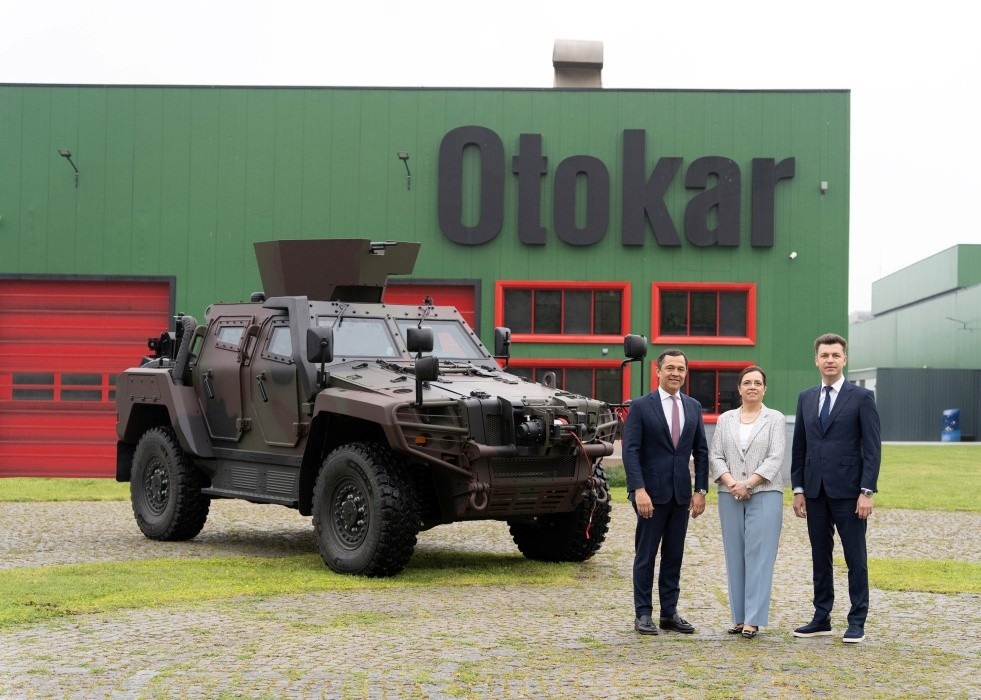
Otokar has returned to the agenda with a structurally significant move in Romania, following recent penalties imposed over delivery delays under an ongoing armoured vehicle programme.
According to a disclosure filed with the Public Disclosure Platform (KAP), the company has signed a Memorandum of Understanding with the shareholders of Automecanica for the acquisition of 96.77% of the company’s shares.
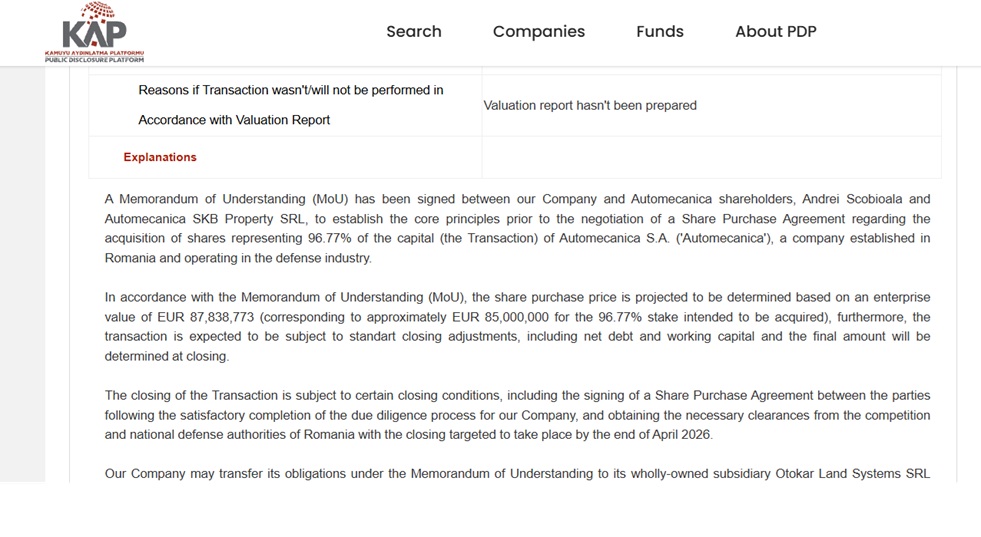
Under the MoU, the transaction is expected to be structured around an enterprise value of EUR 87.8 million, corresponding to approximately EUR 85 million for the stake to be acquired, subject to standard closing adjustments such as net debt and working capital. Completion remains conditional upon due diligence and regulatory approvals from Romanian competition and national defence authorities, with closing targeted by the end of April 2026.
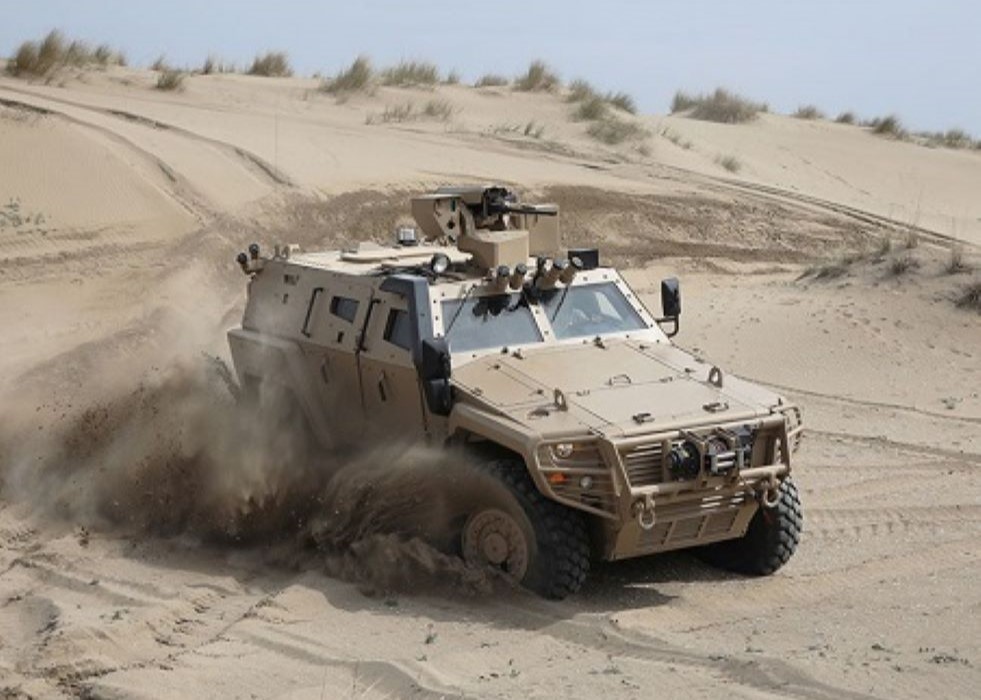
The transaction is directly linked to Otokar’s execution of Romania’s 4×4 Light Armoured Tactical Vehicle programme, awarded by Romtehnica under the Romanian Ministry of National Defence. The EUR 857 million contract covers 1,059 vehicles, of which 781 are required to be produced locally — making domestic industrial capability a binding contractual requirement.
To meet this obligation, Otokar had previously entered into a mandatory joint venture with Automecanica, establishing SAROM S.R.L. for local production, marketing and lifecycle support of the COBRA II vehicles. Automecanica currently holds 50% of SAROM’s capital. With the planned acquisition, however, Otokar is not purchasing the joint venture entity itself, but rather the local industrial partner that had been integrated into the JV structure. This effectively shifts the model from partnership-based compliance toward direct industrial control.
Founded more than 85 years ago, Automecanica already possesses established infrastructure, production facilities and defence-related licences in Romania. Its activities span both military and civilian domains, including armoured vehicle manufacturing, maintenance and overhaul, alongside trailers, semi-trailers, electric buses and specialised vehicle platforms. This dual-use industrial profile closely mirrors Otokar’s own structure, which similarly balances civilian vehicle production with military programmes, allowing each side to draw financial resilience from one domain while expanding capability in the other.
For Otokar, the move does not represent a greenfield investment, but the acquisition of an operational local manufacturer embedded in Romania’s industrial ecosystem. At the same time, it also reflects a recalibration following programme execution challenges, signalling a preference for tighter control over production, scheduling and compliance within a critical export contract.
By acquiring the local industrial partner — rather than remaining within a joint venture framework — Otokar secures direct control over an existing production base inside the European Union. This ownership-based structure may offer longer-term advantages in future European defence sales and industrial cooperation, while also reducing reliance on third-party execution in complex localisation-driven programmes.
Taken together, the move suggests a transition from contract-specific localisation toward a more controlled and durable European industrial posture — shaped as much by strategic ambition as by lessons learned on the ground.
The signing of the MoU itself suggests that Romanian authorities did not object in principle to Otokar assuming full control of Automecanica, despite recent contractual penalties. Rather than signalling a reversal or concession, the move appears to be viewed in Bucharest as a stabilising measure aimed at simplifying responsibility, tightening programme oversight and safeguarding delivery timelines.
This reading gains additional weight in the context of the EU’s SAFE instrument, under which Romania has secured access to approximately €16 billion in funding, with Category 1 explicitly covering ground combat capabilities and their support systems. As Bucharest seeks to align time-critical land systems programmes with SAFE-eligible categories, consolidating local production, integration and MRO under a single accountable industrial actor can be interpreted as risk mitigation rather than indulgence.
From this perspective, the acquisition is less about rewarding a supplier after delays and more about reinforcing local control, industrial continuity and execution certainty within a broader NATO- and EU-driven capability build-up.