
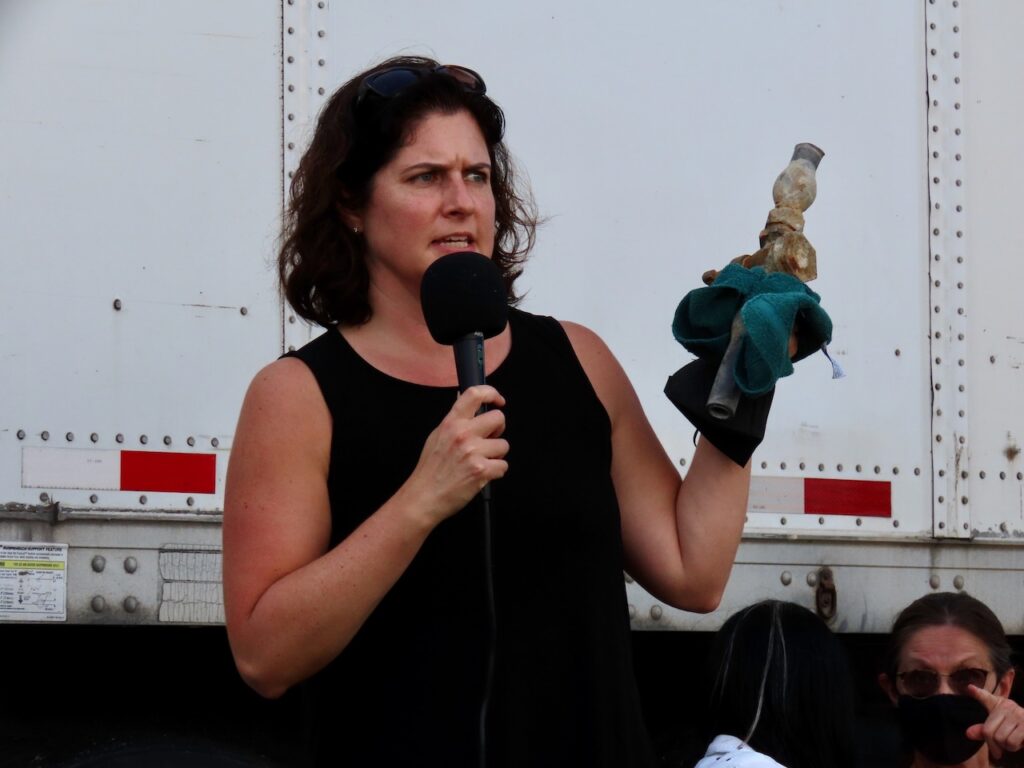
WASHINGTON, DC — The U.S. Environmental Protection Agency quietly removed a Michigan drinking water expert from a federal advisory council after months of unexplained suspension following her signature on a petition criticizing policy changes.
Elin Betanzo, a Detroit-based engineer and nationally known drinking water consultant, was informed last week that her service on the National Drinking Water Advisory Council (NDWAC) was “no longer needed” due to a council membership “reset.”
Betanzo has been barred from participating in council activities since July, when the EPA told her she was under investigation for her “potential signature on a petition” criticizing the Trump administration’s environmental policy direction.
She received a termination letter Jan. 21. The letter signed by Principal Deputy Assistant Administrator Peggy S. Browne cited a council “reset” but did not reference any misconduct, ethics violation or the investigation EPA invoked for suspending her.
Browne’s letter extended “sincere gratitude” for Betanzo’s time as a council member and stated that her “dedication has left an indelible mark on EPA.”
Betanzo said the letter is the first substantial communication from the agency since she was suspended last year.
“I’ve emailed them a few times saying, ‘Tell me about this investigation — what do I need to know, how long is it going to be, what’s the scope?’” she said. “The only communications I ever got was, ‘We don’t have any information at this time.’”
Betanzo, a consultant who owns the Safe Water Engineering firm, was several months into her second term on the council, which meets at least once a year to review federal drinking water regulations and give diverse stakeholder input.
A former EPA drinking water engineer, she her role as providing science-backed expertise and sharing “the realities of the communities that I’ve been working with who deal with unsafe water.”
She was among many who signed a petition last year criticizing the agency, whom signers say has abandoned its mission to protect human health and the environment.
Betanzo played a pivotal role in helping expose two drinking water crises in Michigan, both involving lead water service lines. In 2015, Betanzo was among the earliest technical experts to warn that Flint’s switch to the Flint River without corrosion control posed a serious lead risk and urged her childhood friend, Mona Hanna-Attisha, to test the blood of local children.
In Benton Harbor, Betanzo was a technical advisor to community advocates who petitioned the EPA in 2021 for federal intervention following several years of elevated lead levels, triggering a bottled water advisory and eventual city-wide lead line replacement.
As an EPA council member, she was classified as a “special government employee” and paid hourly on an intermittent basis for council meetings and workgroups. She did not sign the petition while on council time or using EPA resources.
The EPA declined to answer questions about what investigative steps were taken regarding Betanzo, the status of other council members, or what a membership ‘reset’ entails.
“The Trump EPA is committed to ensuring all Americans have access to clean drinking water,” the agency’s press office said in an email response sent four minutes after receiving detailed written questions. “In keeping with longstanding practice, EPA does not comment on individual personnel matters.”
Several other council members told Politico E&E News they hadn’t received similar “reset” notices.
“As far as I’ve been able to find, I’m the only individual that they’ve cut out,” Betanzo said. “It seems like I’m being singled out for saying that the EPA should use science in its work regulating and protecting public health.”
Neither the EPA website nor the Federal Register show evidence of a new council charter, or a formal reconstitution of the advisory panel. Instead, public records show that several member terms were set to expire in late 2025 and that the council is now operating below its authorized 15-member size. The EPA website listed 13 voting members as of Dec. 4.
The council only met once in 2025, to discuss the administration’s proposal to partly rescind enforceable national standards finalized in 2024 which severely limit the amount of toxic PFAS chemicals that water utilities can pass along in finished drinking water. Those standards remain legally in effect after a federal appeals court this month rejected a request to vacate portions of the rule and ordered EPA to clarify which elements it still intends to defend.
Betanzo said she’s reviewing her legal options moving forward.
“I never signed anything saying that I was giving up my First Amendment rights when I became a member,” she said.
In the meantime, she’s dismayed at the direction of the agency.
“They’re not prioritizing environmental protection and public health,” she said. “They’ve kind of restated their purpose to make things easy for business to operate and expand oil production — not valuing human life and environmental regulations anymore. This is not what Nixon created.”