
Over the last year, Japan’s approach toward foreign nationals has been a constant source of debate. It was driven by intensified public scrutiny due to an increasing number of foreign nationals, media attention, misinformation and disinformation, geopolitical tensions, overtourism, as well as growing political pressure.
Yet, the issue of how to better protect the rights of foreign nationals remains a missing piece in Japan’s policy response to be addressed during the Feb. 8 Lower House election.
Sanseito’s rhetoric during the July 2025 Upper House election propelled the topic of foreign nationals onto the national and international stage.
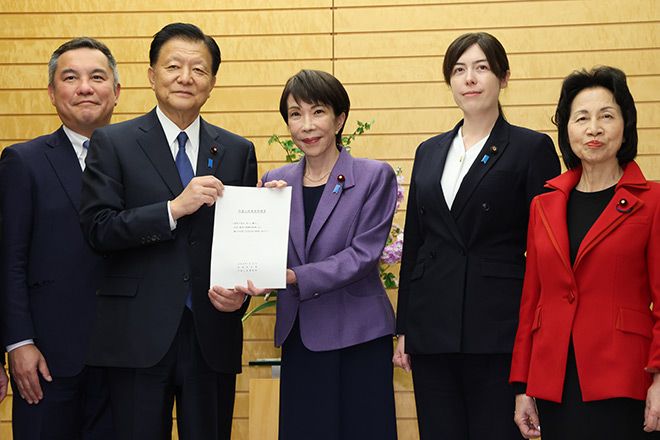
The Liberal Democratic Party responded to public concerns and political pressure by announcing a raft of new policies. A new government panel of experts was also established to consider rule compliance, and ministries were tasked with considering ways to ensure stricter compliance with rules by foreign nationals.
Meanwhile, just last week, on Jan. 23, a new policy package toward foreigners was approved by the Cabinet.
With Prime Minister Sanae Takaichi having called a snap election for Feb. 8, attention will be on whether the political gamble was worth it.
Takaichi is considered comparatively popular in her own right, being Japan’s first female prime minister, adopting a decisive leadership style, and having withstood a pressure campaign from China. However, cost of living challenges, taxes, national security, and political party machinations are likely to dominate headlines.
The outcome of the election is far from clear, yet the debate surrounding foreign nationals will continue.
According to data from the Justice Ministry, the proportion of foreign residents in Japan could surpass 10 percent of the population as early as 2040. This is faster than initial projections, which had suggested that the 10-percent figure would not be reached until 2070.
Much has been said of the widespread labor shortages across Japan and the need for more migrants. To date, much of the focus has been on topics such as visa conditions, dissemination of information, land acquisition, driving licenses, employment support, and Japanese language skills.
Attracting and retaining skilled migrants will require Japan to become a more appealing place so that they continue to come.
Even though Takaichi has said that the Japanese government draws “a clear line against xenophobia,” the policy actions and proposals so far have failed to directly address the issue of discrimination against foreign nationals.
Two actions should be undertaken.
Firstly, the establishment of an independent national human rights institution.
A national human rights institution in Japan could play a central role in developing human rights education programs and resources for schools, workplaces and the community, investigating complaints of discrimination and breaches of human rights.
Past attempts at establishing a national human rights institution in 2011 and 2012 failed due to the proposals failing to meet international standards and a lack of support. It is time for the Japanese government to restart that process.
In the 15 years since the foreign population has doubled, some of the institutional frameworks that could better protect foreign nationals have failed to keep pace.
The lack of a national human rights institution in Japan has been the subject of consistent concern by the international community.
In 2023, 29 countries, such as France, Ukraine and Australia, called for Japan to establish a national human rights institution at the U.N. Human Rights Council. The U.N. Human Rights Committee has also called for the Japanese government to establish a national human rights institution on several occasions.
Japan stands apart from other mature democracies and even many other Asian countries, such as South Korea, Nepal and Mongolia. An independent national human rights institution would go a long way to better protecting the rights of everyone in Japan, including foreign nationals.
Secondly, the passage of comprehensive anti-discrimination legislation.
Japan lacks overarching anti-discrimination laws prohibiting racial, ethnic or religious discrimination, discrimination based on sexual orientation or gender identity, or discrimination based on age.
While Article 14 of the Constitution guarantees equality, its application against private discrimination remains limited, and issues persist with its implementation. Foreign nationals consistently highlight discrimination when attempting to rent a property, challenges in accessing services, workplace discrimination, and racial profiling by police.
Racial profiling has received a growing amount of attention in recent years. It stigmatizes individuals and communities, making them feel no longer welcome in Japan.
About 70 percent of foreign nationals in Japan have been subjected to police questioning on the streets in the past five years, nearly six times more than Japanese nationals. This has led to civil legal action by Japanese residents of overseas ancestry challenging persistent police discrimination.
The rising number of foreign nationals in Japan has led to a series of many necessary policy and legislative measures. Yet, if the Japanese government truly aspires to create a society in which Japanese and foreign nationals mutually respect each other and can live safely and comfortably, then more needs to be done.
A national human rights institution and comprehensive anti-discrimination laws should be prioritized as policy measures by all parties during the Feb. 8 election.
* * *
Simon Henderson is an international human rights lawyer, foreign policy analyst, and academic based in Tokyo. He is a visiting lecturer at Japanese universities where he teaches human rights.