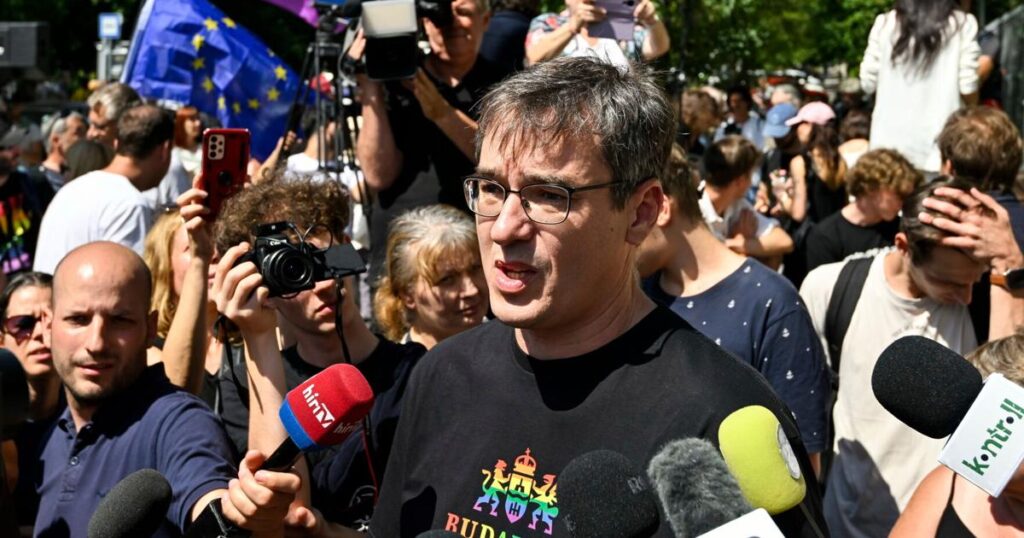
BUDAPEST, Hungary (AP) — Budapest’s liberal mayor was charged Wednesday for organizing a banned LGBTQ+ Pride event last year that was among the largest in Hungary’s history.
Police had been investigating Mayor Gergely Karácsony after the June 28 march went ahead despite a ban imposed by Hungary’s right-wing nationalist government. Organizers of the event said some 300,000 people participated.
Karácsony was charged for organizing the unlawful assembly despite a prohibition order, the Budapest Chief Prosecutor’s Office said. It recommended he face a fine without a trial.
Prosecutors said Karácsony defied the police order banning the Pride march, “repeatedly published public calls to participate in the assembly, and then led the assembly.”
Karácsony, who has led Budapest since 2019, said he was a “proud defendant.”
“It seems that in this country, this is the price you pay if you stand up for your own freedom and the freedom of others,” he wrote in his statement. “If anyone thinks they can ban me, deter me, or prevent me and my city from doing so, they are gravely mistaken.”
Karácsony did not dispute the prosecution’s depiction of his role in the march, writing: “That is exactly what happened.”
He added: “I will never accept, nor resign myself to, the idea that in my homeland it could be a crime to stand up for freedom. I will never tolerate this, and despite every threat and every punishment, I will fight it, because when people who want to live, to love, to be happy are simply betrayed by their own country, betrayed by their government, resistance is a duty.”
Prime Minister Viktor Orbán’s ruling party passed a contentious anti-LGBTQ+ law in March 2025 that banned Pride events and allowed authorities to use facial recognition tools to identify attendees.
Orbán’s government has insisted Pride — which is a celebration of LGBTQ+ visibility and struggle for equal rights — violated children’s rights to moral and spiritual development. A constitutional amendment last year declared these rights took precedence over other fundamental protections including the right to peacefully assemble.