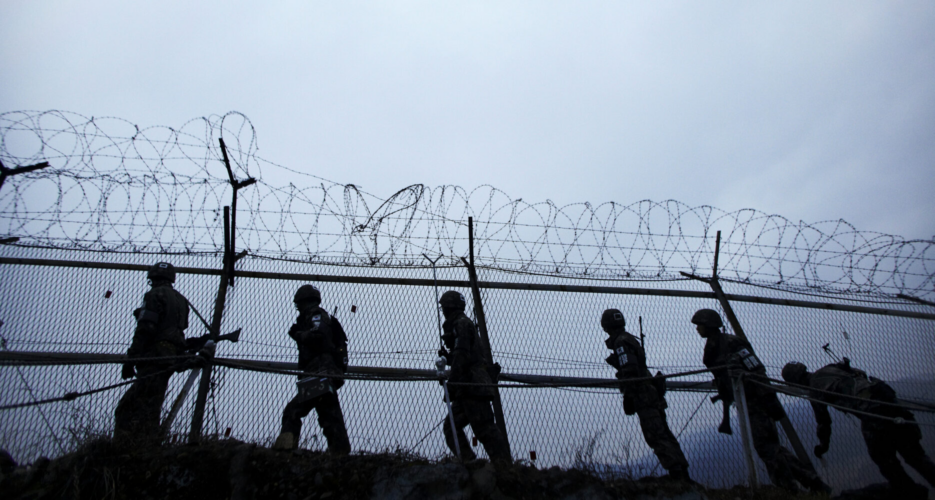
In this episode, Agence France-Presse (AFP) global news editor Roland de Courson joins the podcast to discuss his photo-and-essay project — K-Scar — documenting life, memory and tourism along the inter-Korean border.
De Courson explains why he describes the border as a “scar” and reflects on how indifference, curiosity and commercialized “dark tourism” shape the way people experience the DMZ and nearby frontline sites. The conversation moves from observatories and curated attractions to quieter human stories, such as aging refugees and communities living inside civilian control zones. He also discusses how art, everyday life and even a Starbucks overlooking North Korea reveal the normalization and contradictions of the border.
Roland de Courson is a French journalist born in Madrid. He started his career in Canada and joined AFP in 1994. He is currently a global news editor in Seoul. For over two years, Roland traveled along the inter-Korean border to document his K-Scar project, which can be found online here.
About the podcast: The North Korea News Podcast is a weekly podcast hosted by Jacco Zwetsloot exclusively for NK News, covering all things DPRK — from news to extended interviews with leading experts and analysts in the field, along with insights from our very own journalists.
Podcast: Play in new window | Download (Duration: 46:41 — 43.0MB) | Embed
In this episode, Agence France-Presse (AFP) global news editor Roland de Courson joins the podcast to discuss his photo-and-essay project — K-Scar — documenting life, memory and tourism along the inter-Korean border.
De Courson explains why he describes the border as a “scar” and reflects on how indifference, curiosity and commercialized “dark tourism” shape the way people experience the DMZ and nearby frontline sites. The conversation moves from observatories and curated attractions to quieter human stories, such as aging refugees and communities living inside civilian control zones. He also discusses how art, everyday life and even a Starbucks overlooking North Korea reveal the normalization and contradictions of the border.