

To print this article, all you need is to be registered or login on Mondaq.com.
Article Insights
Scott Foster’s articles from Lewis Silkin are most popular:
- within Intellectual Property topic(s)
- in United Kingdom
- with readers working within the Telecomms industries
Lewis Silkin are most popular:
- within Cannabis & Hemp, Law Practice Management and Transport topic(s)
Patents Court overview: what are the numbers?
52 actions were filed in the Patents Court in 2025; a material
increase over the historic median of 38 proceedings per year (see
Figure 1). That spike may, however, be attributable to a cluster of
14 actions by AstraZeneca in April–May 2025, all presumably
relating to the dapagliflozin litigation. Stripping out those
closely related actions, the volume of new proceedings would be in
line with earlier years.
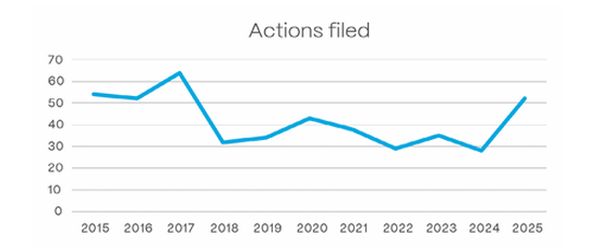
Figure 1: Number of Patents Court proceedings commenced per
year
The Patents Court released 41 judgments in 2025, which is higher
than the historic median of 34 judgments a year (see Figure 2).
Many of these judgments addressed interim relief in SEP and F/RAND
cases.
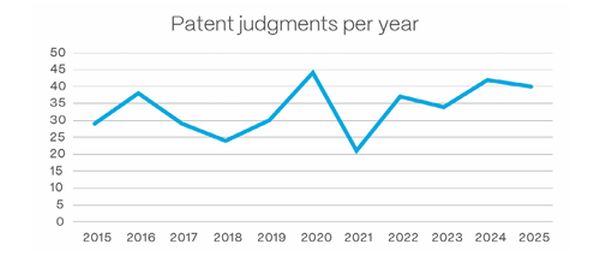
Figure 2: Patents Court judgments per year
The 41 judgments related to five different hearing categories
shown in Figure 3.
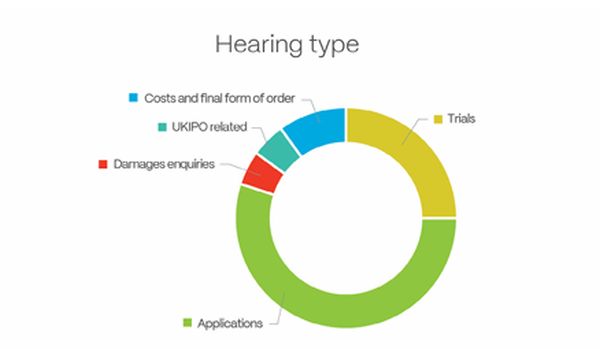
Figure 3: Hearing categories by number of hearings in 2025
We address trials in the section below. The damages enquiries
were part of the Lufthansa v Astronics dispute where the
Court assessed profits and entitlement to interest. Of the 2 UK IPO
related decisions, one was an unsuccessful appeal of the (non)
patentability of an application for a means for propelling a
spacecraft (Nicholas Klemz v Comptroller-General) and in
the other the Court struck claims of malice and corruption against
the Comptroller-General of Patents (Othman Bin Ahmad v
Comptroller-General).
Three decisions awarded costs following trial; with the amounts
being sought by the parties ranging from £1.2 million to
£6.3 million depending on the case and party (see, for
example, Generics (UK) v Astrazeneca and Pfizer Limited v
Glaxosmithkline). In all judgments, the successful party’s
recoverable costs were reduced proportionately to reflect issues at
trial upon which they lost, and the successful party was awarded a
60-65% interim payment of costs.
In total, the hearing of applications occupied 31 days of court
time, while the hearing of trials took up 62 days.
Patent trials: who heard them, what were they about, and how
long did they take?
Probably the most salient metric for litigants is trial success
rate. In 2025, the Patents Court released ten patent trial
judgments. 7 addressed patent validity and infringement in the
usual way. The remaining three addressed an SPC manufacturing
waiver (Regeneron Pharmaceuticals v Alvotech), ownership/
entitlement to inventions (Vanessa Hill v Touchlight Genetics), and
an application for a FRAND interim licence that was determined to
be a trial for final relief (Acer v Nokia).
Figure 4 shows the trial decision makers.
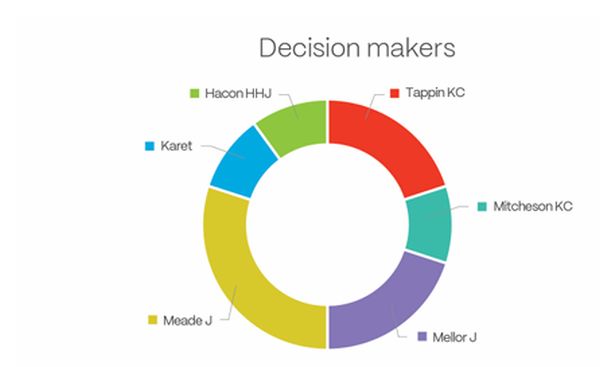
Figure 4: Judges hearing Patents Court trials
Not surprisingly, Meade J and Mellor J, as judges of the Patents
Court, heard 50% of the patent trials. The remaining 50% were heard
by Deputy High Court Judges appointed under the Senior Courts Act
1981. It is common for Deputy High Court Judges to take on some
case load of the Patents Courts judges.
Figure 5 shows the patent subject matter of each of the
trials.
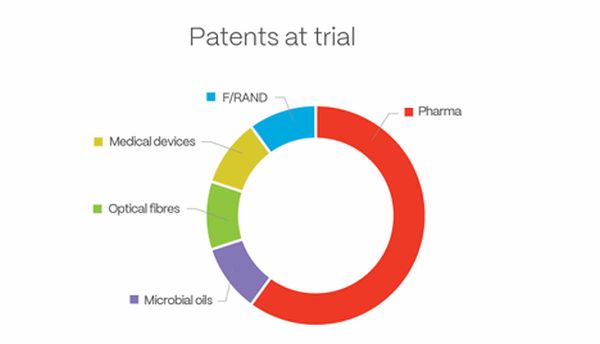
Figure 5: Subject matter of substantive patent trials
Pharma dominated the 2025 trial list. The subject matter
included omalizumab (Celltrion v Genentech), dapagliflozin
(Generics (UK) v AstraZeneca), eculizumab (Samsung
Bioepis v Alexion), and aflibercept (Formycon v
Regeneron).
Across the ten trials, hearings stretched as long as 11 days
(Formycon v Regeneron), but the typical trial lasted 6 days.
Judgments often followed swiftly: the quickest was handed down 28
days after the trial hearing (Generics (UK) v
AstraZeneca), with a median turnaround of 55 days. These
timelines reflect a prodigious work effort by the Court. Later in
this report we address the substantive results at trial.
Patent applications: what was the duration and timing and what
did they address?
In 2025, 23 application judgments were released. Hearings were
focused: the median lasted one day, and the longest ran four days.
Decisions often followed quickly, with a median turnaround of seven
days from hearing to decision, though the outer limit stretched to
75 days. Judgment was delivered from the bench in four
applications.
Figure 6 illustrates that F/RAND cases accounted for more than
half of the applications, with pharma following second.
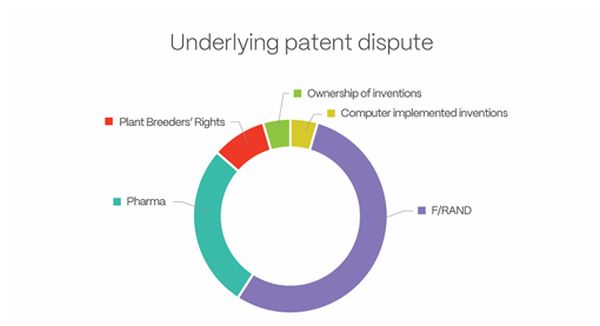
Figure 6: Applications in 2025 split by underlying patent
dispute
It is not unexpected to see the schedule being dominated by
complex F/RAND proceedings because of the extensive body of case
law that developed since Unwired Planet (2017-2020), the
Courts’ willingness to declare global F/RAND licence terms, and
the Courts’ rate-setting decisions in Interdigital v
Lenovo and Optis v Apple. Judgments on Plant
Breeders’ Rights are not, however, common: the two Nador
Cott v Asda Stores judgments in 2025 were the only judgments
in the previous 25 years.
Figure 7 sets out the substantive nature of the applications;
which covered a broad range in 2025. The largest category, not
surprisingly, addressed case management matters such as pleading
amendments and striking, evidence at trial, security for costs,
document disclosure, breaches of orders, stays, and so on.
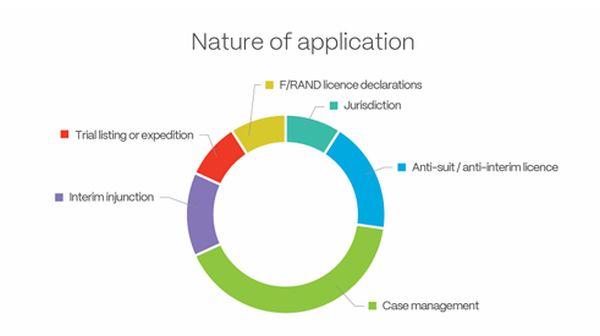
Figure 7: Subject matter of applications in 2025
The interim injunction judgments related to empagliflozin
(Boehringer Ingelheim v Dr. Reddy’s) or dapagliflozin
(Astrazeneca v Glenmark). Regarding the applications to
expedite trials, both were granted, one in a pharma case
(Regeneron v Alvotech) and one in a F/RAND case
(Samsung v ZTE). All three jurisdiction challenges were
within F/RAND disputes: MediaTek v Huawei, Acer v Nokia, and
Amazon v Interdigital.
Patent trials: what happened on infringement and validity?
This section of the report focuses on trial decisions addressing
validity and infringement issues and therefore excludes the SPC
waiver, ownership/ entitlement, and F/RAND interim licence trials
referred to above.
Figure 8 sets out the results of the key validity attacks in
2025 (novelty, obviousness, insufficiency/plausibility, and added
matter) and highlights the low success rate for invalidity
challenges in 2025.
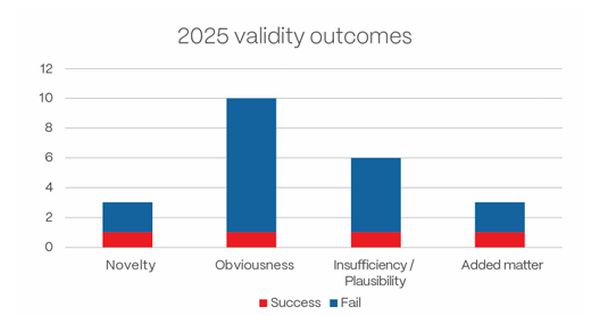
Figure 8: Success rates of patent validity challenges in
2025
Contrasting 2025 with historic data (see Figures 9-12), 2025
appears to have been a disappointing year for defendants and a
successful year for patentees. However, the data set for 2025 is
small so it may be unreasonable to draw meaningful conclusions for
the future.
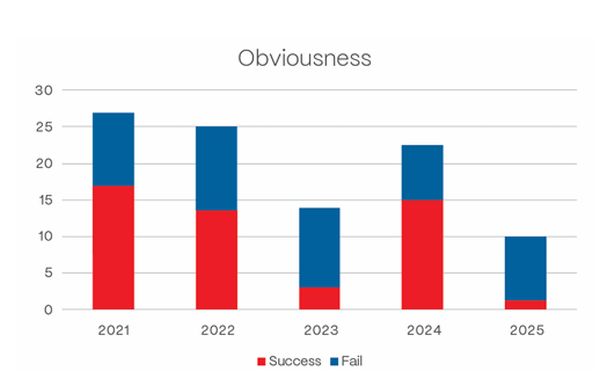
Figure 9: Success rates of obviousness challenges from
2021-2025
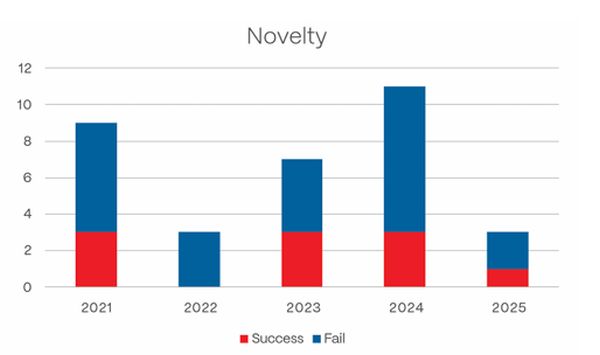
Figure 10: Success rates of novelty challenges from
2021-2025
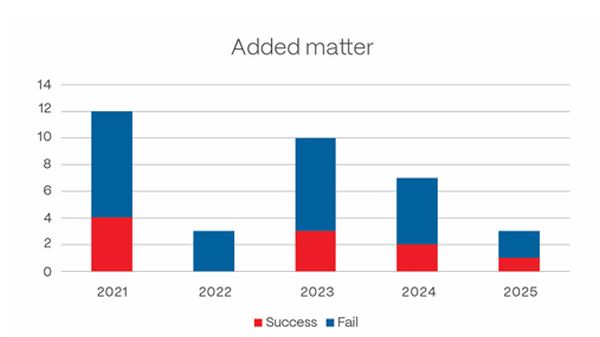
Figure 11: Success rates of added matter challenges from
2021-2025
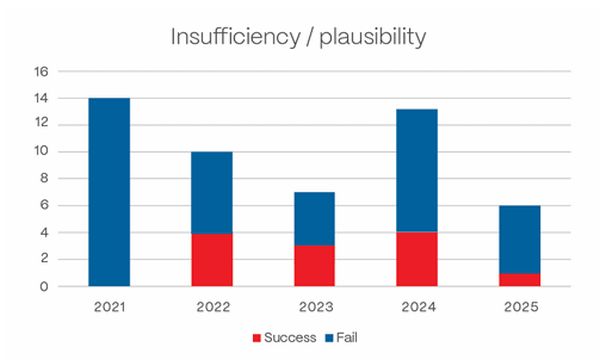
Figure 12: Success rates of insufficiency / plausibility
challenges from 2021-2025
More often than not the validity challenge failed. In five
trials at least one patent was found valid and infringed:
Celltrion v Genentech, Salts Healthcare v Pelican Healthcare,
DSM v Algal Omega 3, Samsung Bioepis v Alexion, and Fujikura v
Sterlite. The only notable success for defendants came in
Formycon v Regeneron where a valid patent was held not to be
infringed (and another patent was invalidated and also not
infringed). The defendants in DSM v Algal Omega 3 did
invalidate 2 of the 3 patents at issue, but overall were found to
infringe a valid patent.
It is also interesting to look at the success rate of
infringement claims in 2025, which showed an even split (see Figure
13). Combining this with the lower success of invalidity
counterclaims, re-affirms that 2025 was a strong year for
patentees.
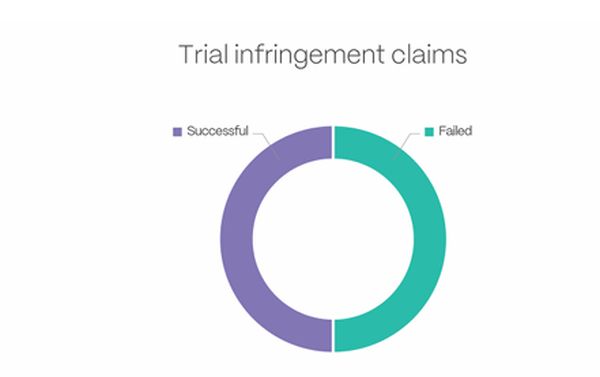
Figure 13: Success rate of infringement claims in 2025
The Court found infringement in the following cases:
Celltrion v Genentech, Salts Healthcare v Pelican Healthcare,
DSM v Algal Omega 3, Samsung Bioepis v Alexion, and
Fujikura v Sterlite.
Court of Appeal: how busy was it and what were the
outcomes?
The Court of Appeal released 15 judgments in 2025, which is
higher than the historic median of nine and the highest number in
ten years. Arnold LJ heard 13 of the hearings and Sir Colin Birss
C. heard five. Therefore, at least one patent specialist judge sat
on every patent appeal in 2025. The historical trend of patent
appeal judgments is set out in Figure 14.
To view the full article,
please click here.
The content of this article is intended to provide a general
guide to the subject matter. Specialist advice should be sought
about your specific circumstances.