
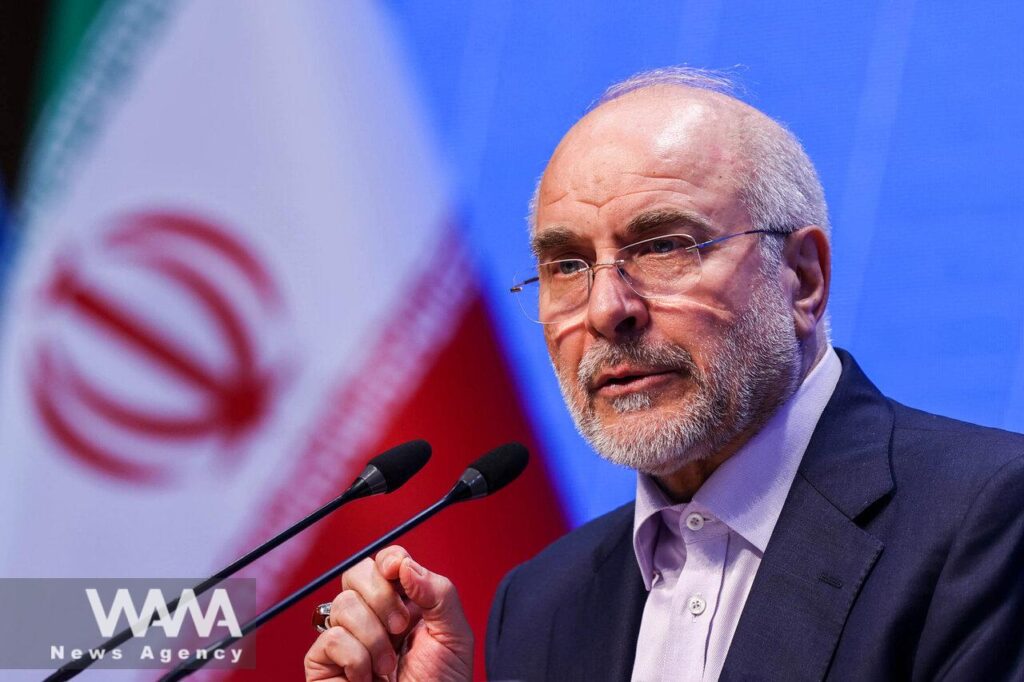
WANA (Jan 29) – Mohammad Bagher Ghalibaf, Speaker of Iran’s Parliament, has rejected the prospect of negotiations with the United States under conditions of military threat or coercion, warning that diplomacy conducted “in the shadow of war” only fuels instability and tension.
In an interview, Ghalibaf said Iran does not oppose dialogue in principle, but stressed that any talks must be genuine, balanced, and conducted within internationally recognized frameworks. “If dialogue is real and based on accepted international norms, regulations, and mutual respect, then yes,” he said. “But dictation, pressure, and submission are not negotiation.”
Referring to past experiences with Washington, Ghalibaf expressed deep scepticism toward U.S. intentions, particularly under President Donald Trump.
He noted that during Trump’s first term, the Joint Comprehensive Plan of Action (JCPOA), which had been approved by the UN Security Council, was unilaterally abandoned by the United States. “If such agreements can simply be torn up, what value do negotiations have, and what credibility do they hold in the eyes of global public opinion?” he asked.
Ghalibaf also recalled that during Trump’s second term, Iran entered renewed talks, but shortly before the sixth round of negotiations, the “negotiating table was bombed,” referring to a military attack that took place two days before the talks were scheduled to begin. “If this is the meaning of negotiations, then it is neither dialogue nor diplomacy,” he said.
The Iranian parliament speaker emphasised that diplomacy without guarantees is meaningless. “No diplomacy can succeed without trust and assurances,” he stated, adding that negotiations under military threats do not resolve disputes but instead deepen insecurity. He argued that as long as Iran’s national dignity is not respected and the economic benefits for the Iranian people are not guaranteed, negotiations will not take place.
Addressing Trump directly, Ghalibaf said that if the U.S. president truly seeks peace—or even aspires to receive the Nobel Peace Prize—he must distance himself from “warmongers and advocates of submission” within his circle. “Only then can the Iranian people and the world believe his words,” he said.
In another part of the interview, Ghalibaf accused foreign actors of orchestrating recent deadly unrest in Iran, describing it as a plot “entirely designed outside the country.”
He said Iran would pursue justice for the victims through international courts, emphasizing that Iranians themselves have long been victims of terrorism. He cited the early years after the 1979 revolution, during which senior officials, members of parliament, and more than 17,000 civilians were killed by militant groups now allegedly sheltered in Western countries.
Ghalibaf said more than 2,500 people were killed in the recent incident, describing it as a painful national tragedy. He vowed that Iran would relentlessly pursue accountability, both domestically and internationally, and would not hesitate “even for a moment” in seeking justice for those killed.
The interview took place amid an increased U.S. military presence in the Middle East and renewed threats by Trump of possible military action against Iran.
Ghalibaf warned Washington that any attack on Iran would be met with retaliation, putting thousands of U.S. troops in the region at risk. “Mr. Trump may be able to start a war,” he said, “but he will have no control over how it ends.”
While acknowledging internal economic challenges in Iran, Ghalibaf attributed much of the country’s economic pressure to what he described as unjust U.S. sanctions.
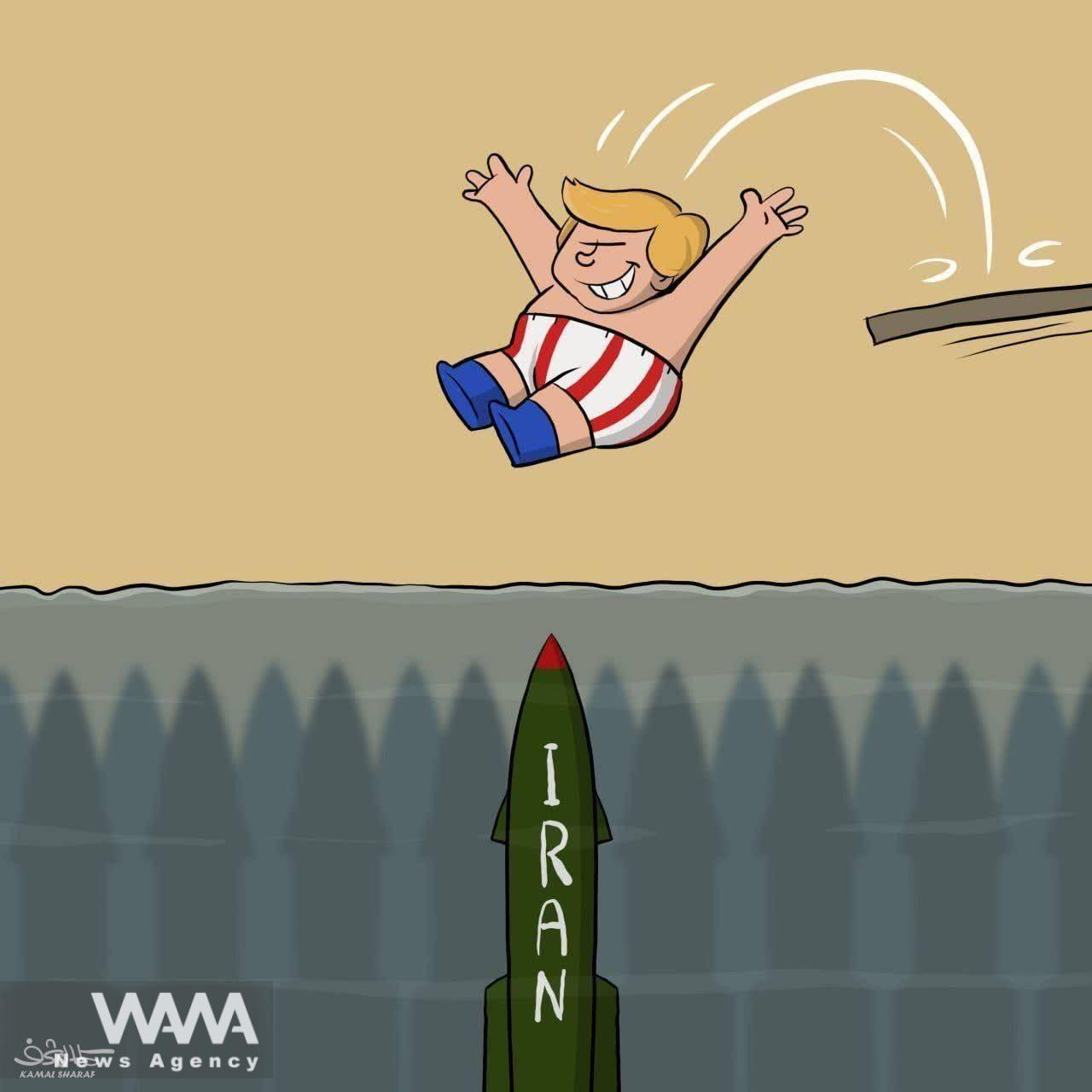
New Art by Kamal Sharaf about Trump. Social media/ WANA News Agency