
Island life has its challenges
For families living on Croatia’s remote islands, winter brings more than colder weather. It brings uncertainty, disrupted routines and growing concerns about whether island life remains sustainable for children and young families.
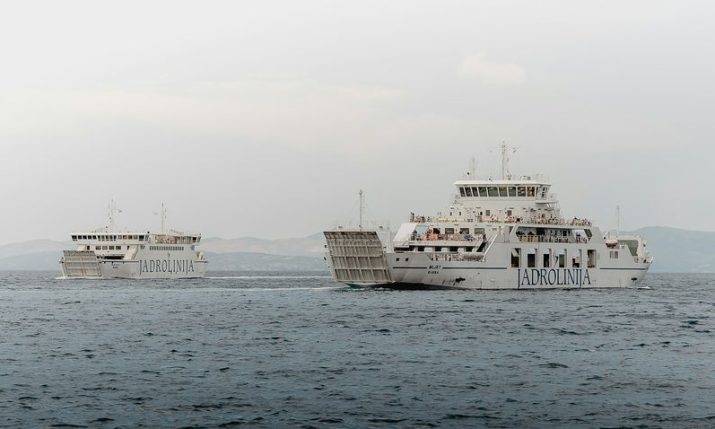
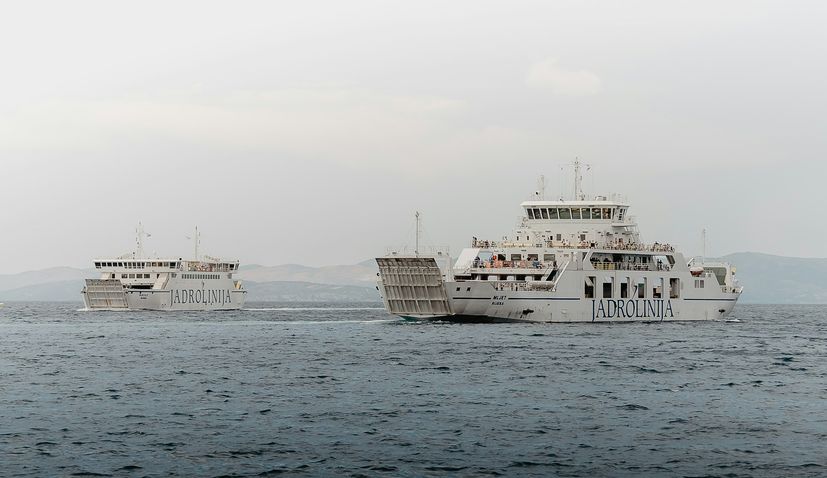
Residents of islands such as Kaprije and Žirje near Šibenik rely heavily on maritime connections, particularly outside the summer tourist season.
During winter, ferry services are frequently affected by strong winds such as the bura and jugo, leaving islanders dependent on fast boats.
However, outside the peak season, these services operate far less frequently, forcing residents to plan their lives around limited sailing schedules. For children, this reality can shape their entire upbringing, as HRT reports.
Val Mudronja is the only primary school pupil living in the Šibenik archipelago. On the island, his football pitch is the whole island and the sea marks the boundary of his everyday world. While many children can walk to after-school activities, for Val and his family, attending football training in Šibenik becomes a logistical challenge.
“Training sessions are in the evening, and we simply cannot return to the island the same day,” his mother, Livia Mudronja from Kaprije, told HRT. “That means the whole family has to go to Šibenik, stay overnight, and then return the next day with the teacher. It is a huge complication.”
Teachers working on the islands face similar challenges. School schedules and lesson preparation are dictated by ferry timetables rather than educational needs.
“I have to prepare much earlier for classes because on Tuesdays and Thursdays I spend almost the entire day either teaching or travelling,” says Nina Vukorepa, a teacher at Fausta Vrančić Primary School in Šibenik.
On those two weekdays, the ferry is the only option that allows travel to and from Kaprije within a single day. Meanwhile, the fast boat operates just once on those days during the off-season, a situation that lasts for eight months of the year.
Island residents stress that reliable, year-round connections with the mainland are not a luxury but a basic necessity.
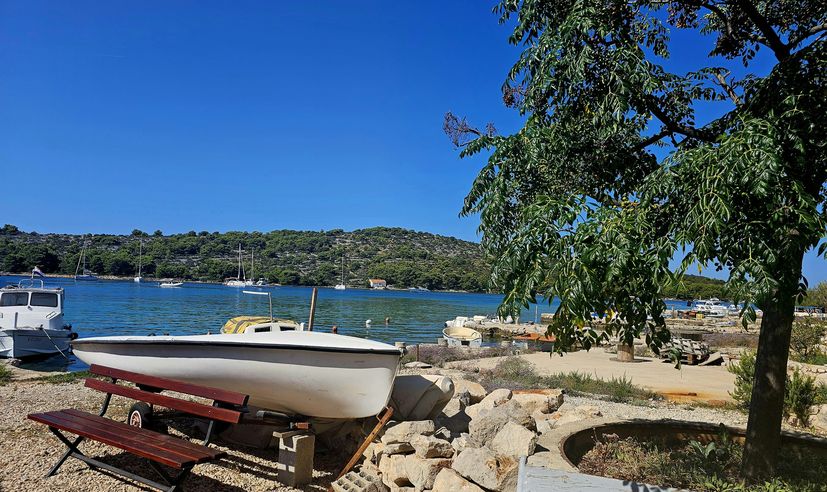
“More frequent lines between Šibenik, Kaprije and Žirje are essential,” says Barbara Klisović, president of the Periska Association on Kaprije. “Without regular maritime connections, there is simply no life on the island.”
Kaprije
On Žirje, the situation is no different. Islanders must travel to the mainland for almost every essential service.
“We have no cinema, no theatre, no banks, no lawyers, nothing,” says Siniša Bilan, president of the Žirje Local Committee. “For basic things, even buying meat, people must go to the city.”
The number of sailings on state ferry lines was set by a government decision more than ten years ago.
According to the Agency for Coastal Line Maritime Transport, local or regional authorities can request additional services on unprofitable state routes, but only if they secure funds in their own budgets to cover the additional costs.
The agency confirmed it received a request from the City of Šibenik to introduce an additional off-season service, but the necessary funds were never allocated. City officials say the lengthy administrative procedure for granting such support proved an obstacle. In addition, a new government decision on state ferry lines is expected to enter the approval process soon.
“For this reason, we decided to ask that the additional service be included in the regular line,” said Joško Jurić, Head of the City of Šibenik’s Department for Communal Activities. “If that does not happen, we will do everything necessary in the meantime to formally secure the support and meet the needs of our island residents.”
Current and future pupils growing up on Croatia’s islands are counting on that promise.
“Many families see the island as a place to live,” says Livia Mudronja. “But with irregular ferry services and the current sailing schedule, life becomes impossible.”
For now, island families continue to balance on the edge of what is feasible. Yet despite the challenges, parents insist that childhood on an island, surrounded by nature and community, remains worth every nautical mile.