
Picture yourself at eighty-five. You live alone in a fourth-floor apartment in a busy city. You loved the theater in your youth, savoring the thrill as the lights dimmed and the crowd fell to a hush. Now, money is tight, sitting for hours is hard on your body, and perhaps most heartbreaking of all, you have no one to go with.
For millions of older adults around the world, this scenario is more than hypothetical; it’s everyday life. Loneliness has become an increasingly widespread issue, affecting physical health as much as smoking or obesity. But in Hamburg, Germany, a remarkable social initiative is offering a different kind of remedy for loneliness among the elderly.
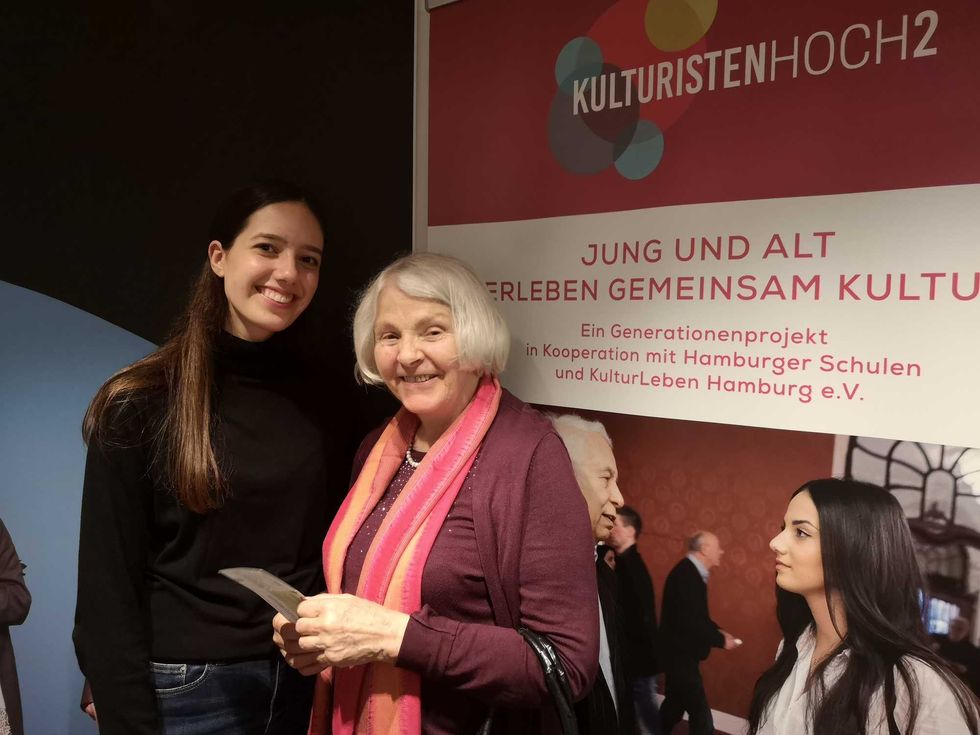 A high school volunteer with her senior “tandem.” Photo credit: Kulturisten Hoch Zwei
This approach, often referred to as “social medicine,” drives KULTURISTENHOCH2 (Culture to the Power of Two), a non-profit redefining aging, youth, and the transformative power of human connection.
Unpacking KULTURISTENHOCH2
At its heart, KULTURISTENHOCH2 (also known as KH2) is a “culture buddies” program with a simple, beautiful mission. The project pairs high school students with older neighbors living on low incomes to forge meaningful intergenerational connections.
The project was founded in 2016 by Christine Worth, a former marketing executive inspired by her family history. She remembers watching her father’s world grow smaller due to dementia, aging, and isolation, and realized that getting older is an unaddressed social problem. Worth found that for many seniors, not having someone to share the day with was the biggest barrier to leaving the house.
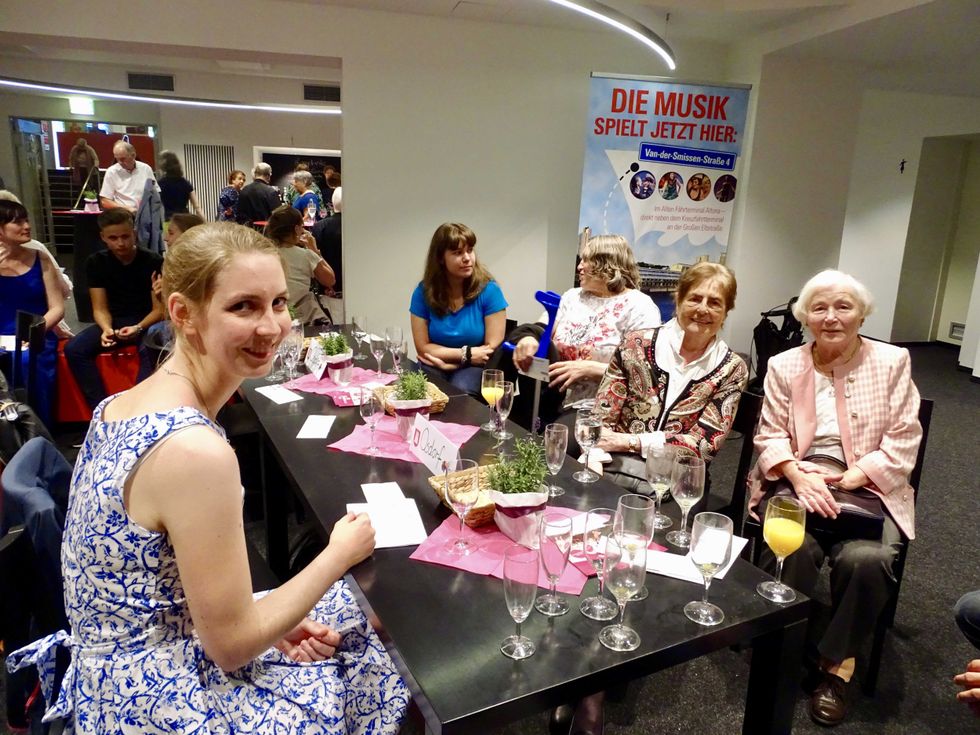 KH2 makes leaving the house more accessible to senior citizens. Photo credit: Kulturisten Hoch Zwei
Through KH2, seniors are given a “VIP pass” to an unbelievable, culturally rich city. Paired with a local teenager, these elders enjoy free tickets to concerts, plays, and art exhibits, proving that a shared cultural experience can bridge even the largest age gaps.
How the program works
KH2 is designed to remove every barrier that might keep an older person at home, creating a safe, comfortable, and dignified experience from start to finish.
The pairing process
The initiative starts in local schools, where students sixteen and older volunteer to join KH2. These “young buddies” are paired with seniors ages 63 and older—many of whom are living on low incomes or with physical disabilities—within their district, allowing them to attend a wide range of cultural events free of charge.
Seniors are identified and registered as participants if they meet age and income requirements and express an interest in cultural participation.
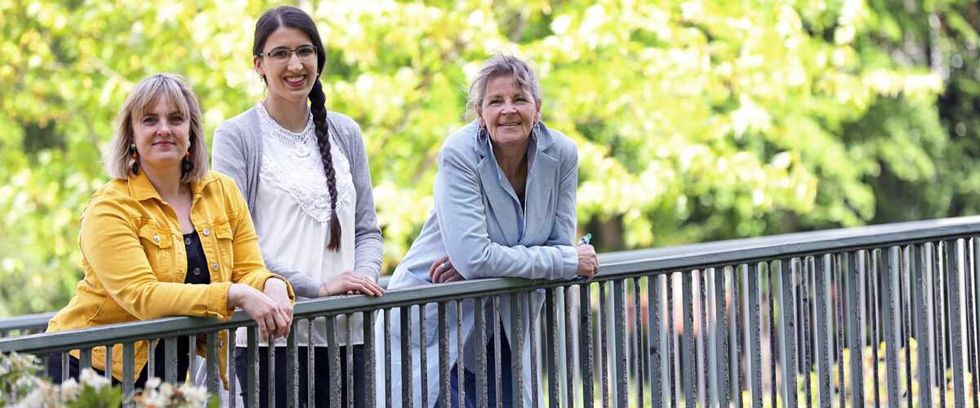 Many “culture buddies” stay in contact after the program ends. Photo credit: Kulturisten Hoch Zwei
After matching, the student will contact the senior, coordinate logistics, and accompany them to selected events. Over time, many connections evolve into lasting relationships, with approximately 20% of “generational tandems” reportedly maintaining regular contact beyond the official program.
Door-to-door companionship
Tickets are provided free of charge by KultureLebe Hamburg e.V., a partner program that champions the belief that “culture is not a luxury, culture is food” and arranges free cultural experiences for people on low incomes.
The student arranges a meeting time and place, often picking the senior up from their home and, if requested, accompanying them door-to-door. Travel typically takes place via public transportation, with the student offering practical assistance along the way, such as navigating stairs, reading signage, and more.
Students commit to at least three cultural outings per school year, though many choose to volunteer more often.
Walking in their shoes
One of the most impactful aspects of KH2 is how it prepares the students. Before meeting their senior partners, teens receive specialized training designed to ensure the needs of older adults are met.
Beyond discussing aging and how to navigate communication with seniors, students wear a 77-pound “aging simulation suit,” which restricts movement and vision. They are given “ear defenders” to simulate hearing loss and practice using wheelchairs and walkers to experience the physical challenges of older age and its practical challenges.
Cultural experiences for all
Events include a broad range of programs, including the theater, opera, orchestral events, cinema, gallery openings, and festivals. Here, culture serves as a natural “conversation starter” between generations, as shared performances and exhibitions open the door to exchanging perspectives and life stories.
While student participants receive certificates for their volunteer work, the real reward lies in personal growth. Through engaging with seniors from a different generation, they gain a deeper understanding of history, empathy, and human connection.
Sustaining and expanding KH2
The program started with three pilot schools and 37 seniors, and expanded quickly. By the end of 2019, around 165 students and 175 seniors were active in KH2, with more than 850 pairings activated across Hamburg.
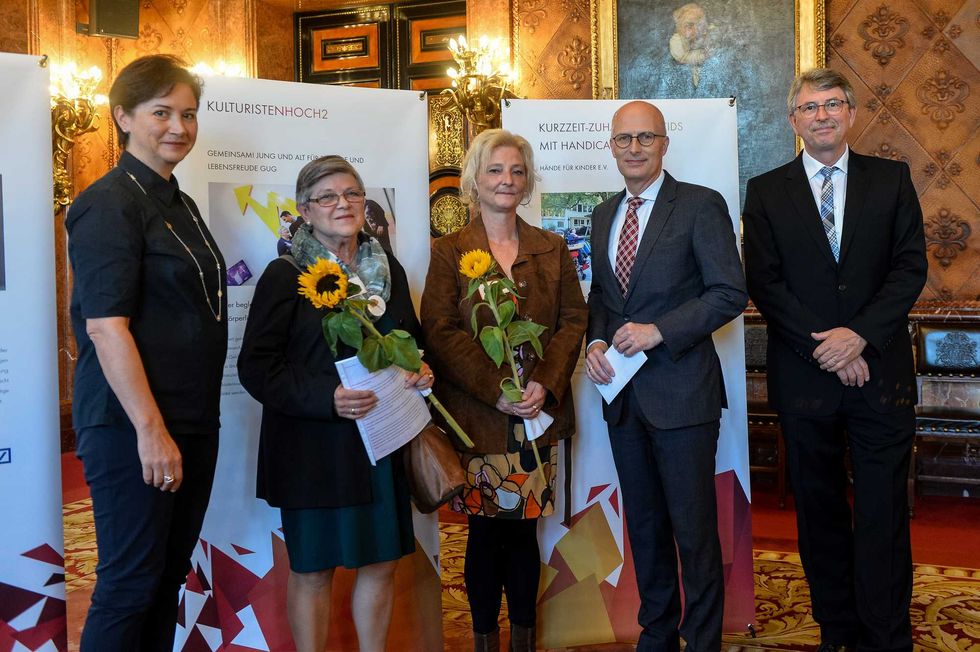 KH2 provides students with excellent life skills and lasting connections. Photo credit: Kulturisten Hoch Zwei
Keeping KH2 running requires significant support. Around 25% of its funding comes from government agencies, with the remainder provided by private foundations, corporate sponsors, and grassroots fundraising efforts.
The science behind the magic of connection
Public health experts are increasingly recognizing that health extends beyond diet and exercise. A groundbreaking 2023 report from the World Health Organization (WHO) linked participation in arts and culture to tangible health benefits, including reduced depression, improved cognitive function, and even increased life expectancy.
“For too long we have seen Science and the Arts as separate endeavors,” said Sir Jeremy Farrar, chief scientist at the WHO. “But these silos were not always so. Through much of human history, the creative interface of different disciplines has been a catalyst for both innovation and healing.”
In this sense, KH2 functions as more than a community program; it serves as a preventative health strategy.
Creating lasting partnerships
In a society increasingly shadowed by loneliness and isolation, KH2 is grounded in the belief that real change happens through encounter and exchange. Through its life-changing cultural tandems, older adults regain mobility, confidence, and a renewed sense of belonging as active members of society.
By connecting two groups who might otherwise never meet—teenagers just beginning their lives and seniors reflecting on theirs—KH2 creates moments in which age quietly falls away, leaving two souls moved by art.