
From reproductive rights to climate change to Big Tech, The Independent is on the ground when the story is developing. Whether it’s investigating the financials of Elon Musk’s pro-Trump PAC or producing our latest documentary, ‘The A Word’, which shines a light on the American women fighting for reproductive rights, we know how important it is to parse out the facts from the messaging.
At such a critical moment in US history, we need reporters on the ground. Your donation allows us to keep sending journalists to speak to both sides of the story.
The Independent is trusted by Americans across the entire political spectrum. And unlike many other quality news outlets, we choose not to lock Americans out of our reporting and analysis with paywalls. We believe quality journalism should be available to everyone, paid for by those who can afford it.
Your support makes all the difference.
Read more
The Israeli military has for the first time accepted figures released by Gaza’s health ministry showing that more than 70,000 Palestinians were killed during its war in the enclave, according to a report.
The Gaza health ministry says 71,667 people have been killed since Israel’s military operations began on 7 October 2023, including 492 who have been killed since a ceasefire agreement was finalised in October.
But IDF sources told Haaretz that the death toll has now been accepted by military officials. The figures are regarded as reliable by humanitarian organisations, including the United Nations.
The tally includes those killed directly by Israeli fire, not those who died of other causes including starvation. Several studies suggest the death toll could be far higher.
The health ministry also reports that 171,343 people have been wounded by Israeli fire, representing around 8.1 per cent of the population.
open image in gallery
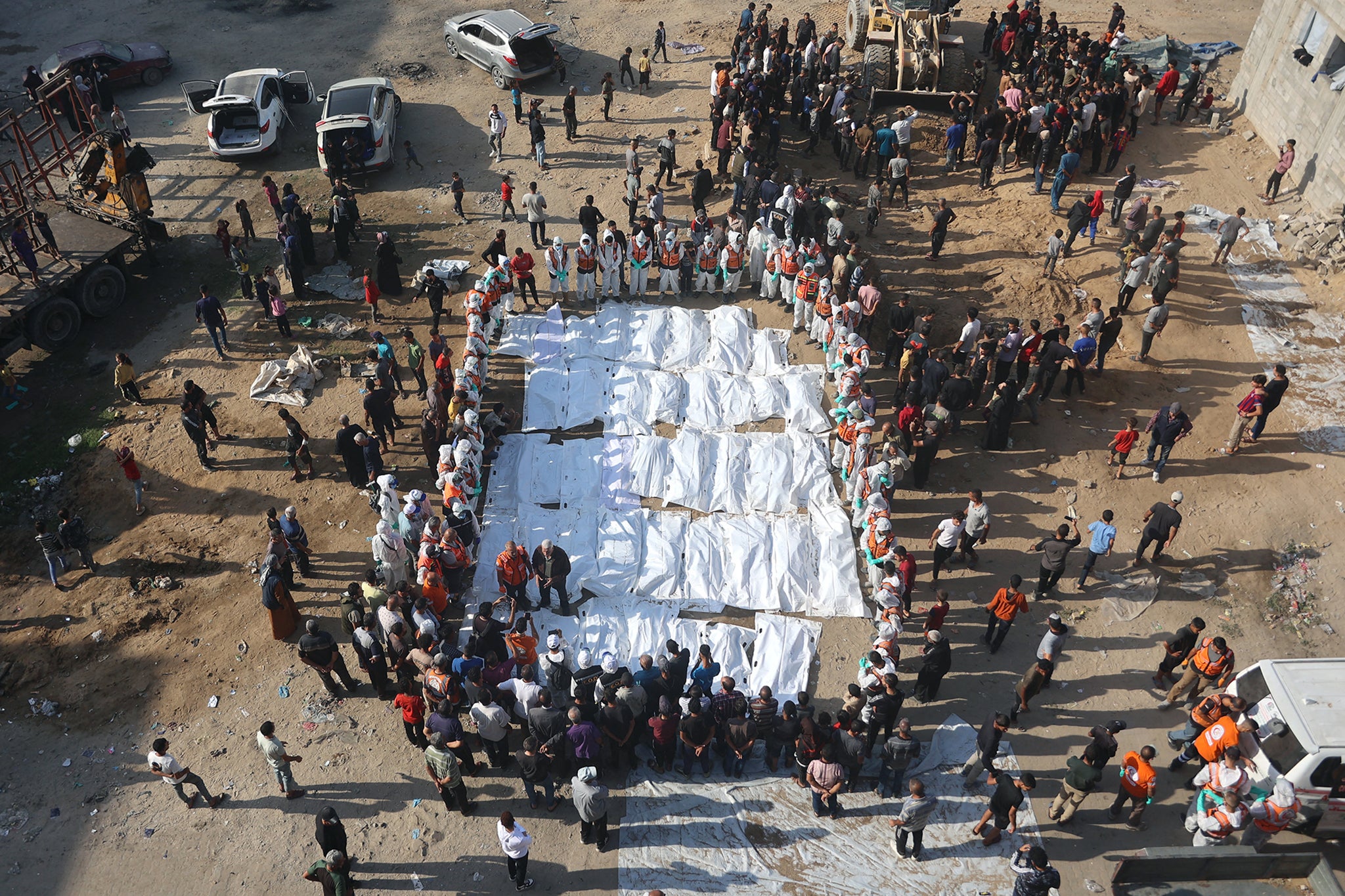
Civil Defense members, in cooperation with the Palestinian Shahebar family, lay out body bags containing the remains of members of the Shahebar family (AFP/Getty)
The Israeli military did not comment when approached by The Independent.
Gaza health ministry records identify nearly all of the casualties using their names and identification numbers, but they do not distinguish between militants and civilians. According to Israeli outlet Haaretz, Israel’s military is currently analysing data on the deaths to calculate how many people killed it believes are combatants and how many were civilians.
A study carried out by Professor Michael Spagat of the University of London suggested that more than 75,000 people had died during the war as of January 2025. At that time, Gaza’s health ministry placed the number at just over 45,600, suggesting it undercounted the true total by 40 per cent.
Other research, published in medical journal The Lancet in January 2025, also suggested the death toll was around 40 per cent higher than the recorded numbers.
Violence has continued in Gaza even after a fragile ceasefire came into effect in October last year. Two more Palestinians were killed in eastern Khan Younis on Thursday, medics said, in an area adjacent to where the army operates.

open image in gallery
People search for survivors and the bodies of victims through the rubble of buildings destroyed during Israeli bombardment, in Khan Yunis in the southern Gaza last year (AFP via Getty Images)
It comes as Israel and Hamas prepare to move into the second phase of the ceasefire, following the discovery of the body of the final Israeli hostage remaining in Gaza on Monday, police officer Ran Gvili.
Israel said it had agreed to reopen the Rafah crossing linking the Gaza strip to Egypt, the main point of entry and exit for Palestinians which has been mostly closed since May 2024 when Israeli forces seized control of the Palestinian side.
The Rafah crossing was meant to open during the first stage of the ceasefire, but the Israeli government instead made it conditional on Hamas making every effort to return the body of the Gvili.
Reuters news agency reported, citing three sources, that the Israeli military intends to restrict the number of Palestinians allowed into Gaza to ensure that more leave than enter.