
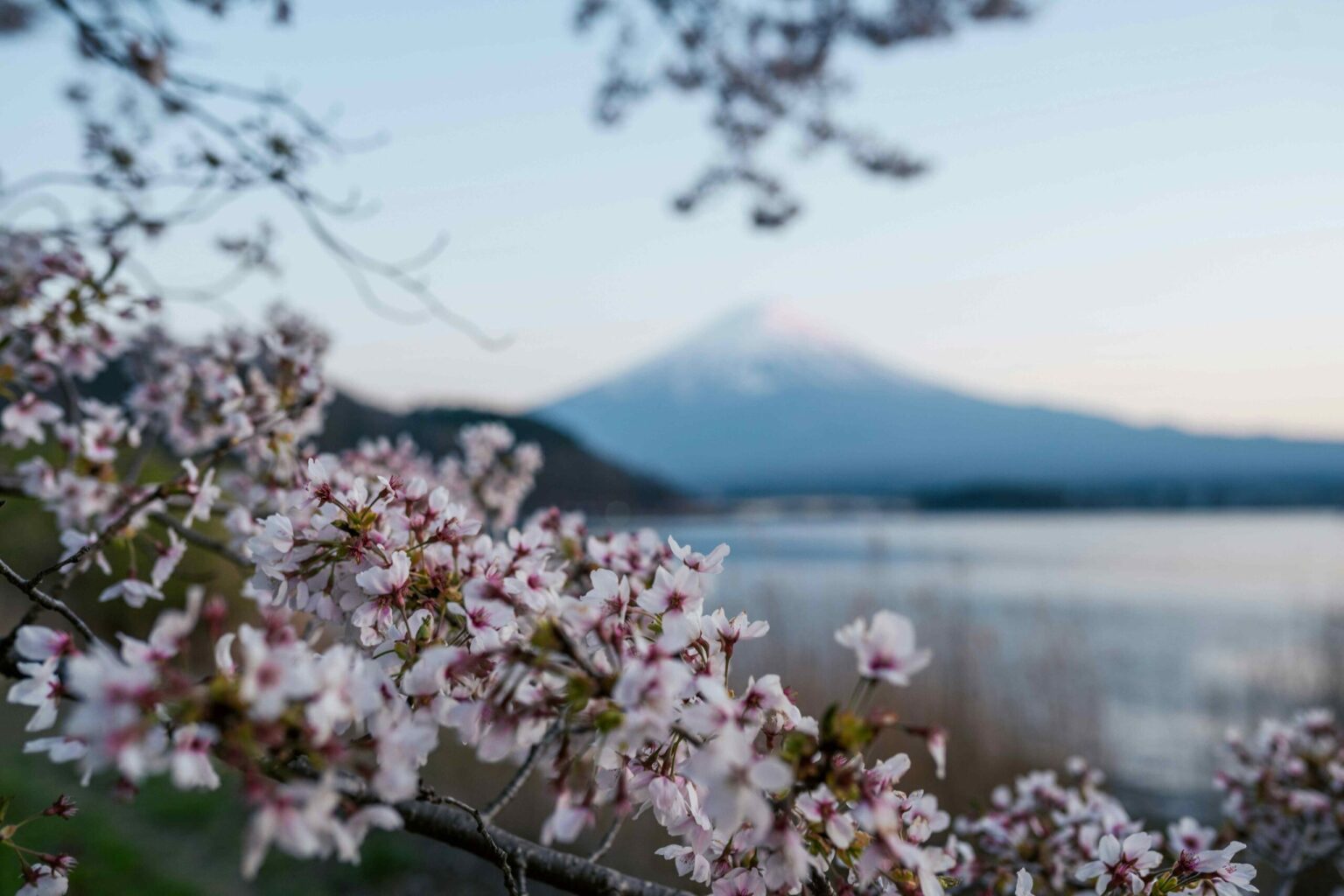
Japan’s cherry blossom season typically draws large crowds and higher prices, particularly in Tokyo, Kyoto and Osaka. In 2026, however, travellers planning to visit during the sakura period may find lower costs than in recent years, with prices for flights, accommodation and tour packages falling across much of the country.
Travel industry figures indicate that prices are between 10 and 20 per cent lower than last year, with the steepest declines reported in Kyoto and Osaka. “We expect the lower prices to continue into March and April, which aligns with the peak cherry blossom season”, says Ben Julius, founder of travel company Tourist Japan.
One of the main drivers behind the shift is a sharp decline in visitors from mainland China, Japan’s main source of tourists. The decrease follows comments made in November 2025 by Japanese Prime Minister Sanae Takaichi, who said Japan could deploy its military if China attempted to invade Taiwan.
In response, Beijing imposed limits on outbound travel to Japan. Chinese airlines were instructed to scale back flight schedules until March. Air China, for example, cancelled 23 flights between Shanghai and Osaka and 14 flights between Chongqing and Tokyo in December 2025. As a result, arrivals from China fell by 45 per cent compared with the same period a year earlier.
The slowdown follows an exceptionally strong year for Japanese tourism. In 2025, the country welcomed a record 42.7 million international visitors, with cherry blossom season drawing heavy crowds to major cities. While China remained an important source market, strong growth from South Korea, Taiwan, the United States, Vietnam and India also helped push arrivals to record levels.
2024 had already shown an upward trend in spring tourism. During March of that year, more than 3.1 million foreign visitors arrived for the cherry blossom season, around 70 per cent higher than the previous year and above pre-pandemic levels, according to the Japan National Tourism Organization (JNTO). The increase reflected pent-up post-pandemic demand, a weak yen and the timing of the blooms around the Easter holidays.
Although the Japanese yen remains historically weak in 2026, its effect on travel prices has shifted. With fewer visitors from China and reduced air capacity, the currency is now delivering better value rather than fuelling price increases. Unlike previous years, when a weak yen boosted demand and pushed up costs, lower tourist numbers in 2026 mean travellers are paying less for the same services. A hotel room priced at ¥13,400, for example, now costs about €100, compared with roughly €120 two years ago. As of mid-January, €1 was worth around ¥183.
The currency effect is particularly beneficial for travellers from the UK and Europe. “We’ve seen a 23 per cent increase in bookings from UK and European customers over the past year,” says Kenny Onishi, general manager for Japan at Intrepid Travel.
Price declines are especially evident in the tour market. A 16-day cherry blossom itinerary offered by Tourist Japan costs around €4,058 per person during the 2025 season. In 2026, the same programme, including identical hotels, transfers and excursions, is priced at €3,165, a reduction of about 22 per cent.
Availability has also improved. “By this stage in previous years, many popular hotels would already have been fully booked for cherry blossom season,” Julius says. “In 2026, travellers are still finding availability across a much wider range of accommodation categories, even during peak bloom periods.”
The Japan Meteorological Corporation released its cherry blossom forecast earlier this month, predicting milder temperatures and earlier flowering in many regions. Tokyo’s blossoms are expected around 22 March 2026, with Osaka following on 25 March. Okinawa’s season typically runs from January to February, while Hokkaido usually reaches peak bloom between April and May.
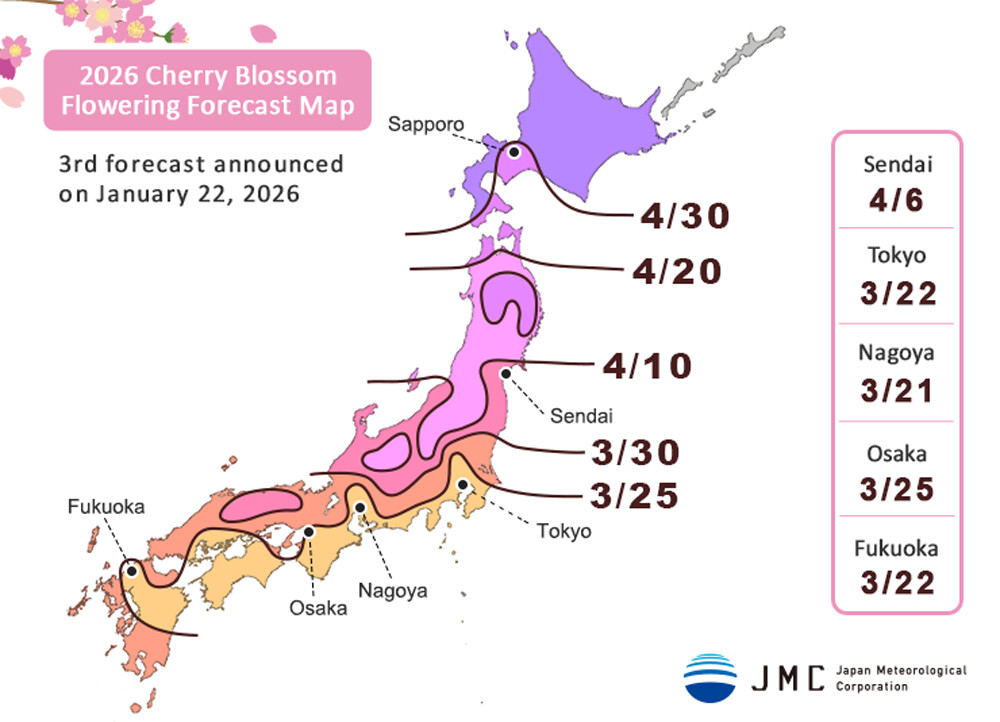 © Japan Meteorological Corporation
Some travellers are increasingly choosing alternative destinations to avoid crowds. Rakuten Travel reports a 500 per cent increase in demand for Okinawa in 2026 compared with the previous year, while bookings for Hokkaido have risen by 200 per cent. From May to June, destinations such as Yamanashi, Fukuoka and Kumamoto are also attracting higher interest as visitors seek less congested areas.
Despite falling prices, travellers will still need to factor in new and higher fees in 2026. Japan is reviewing long-standing visa charges, with proposals to raise single-entry fees from ¥3,000 (€16) to ¥15,000 (€82) and multiple-entry visas from ¥6,000 (€33) to ¥30,000 (€164), potentially from April. Kyoto is also introducing higher accommodation taxes from March, with luxury hotel stays subject to charges of ¥10,000 (€55) per night or more. In addition, Japan’s international departure tax is set to triple to ¥3,000 (€16) from July 2026.