

Listen to this article
Estimated 4 minutes
The audio version of this article is generated by AI-based technology. Mispronunciations can occur. We are working with our partners to continually review and improve the results.
Both companies competing to build Canada’s new fleet of submarines are engaged in a battle of deal-signing this week, looking to convince the federal government and the public they’re serious about creating jobs in this country.
Germany’s ThyssenKrupp Marine Systems (TKMS) has signed an agreement with Vancouver’s Seaspan Shipyard to establish a maintenance facility for the new submarines should the federal government select its Type-212CD as the replacement for the navy’s aging Victoria-class boats.
The company, in a statement on Wednesday, said the facility is a critical part of Canada’s strategy to have as much work on the program, estimated to be between $20 billion to $24 billion, done by Canadian companies.
TKMS has — both publicly and privately — floated the idea of building some of the 12 boats in Canada, in addition to operating two maintenance facilities, one on each coast. But Canadian officials have poured cold water on the notion of building submarines here, as Canada doesn’t yet have, and would need time to create, the industrial capacity.
Earlier this week, South Korea’s submarine manufacturer, Hanwha Ocean, announced it had signed several partnership agreements with Canadian companies including Algoma Steel, the Sault Ste. Marie, Ont., firm that has been hit hard by U.S. tariffs.
The memorandum of understanding includes a pledge that Hanwha would invest $275 million to stand up a new structural steel beam mill, something that would be needed to produce the kind of high-strength alloy steel needed to build submarines.
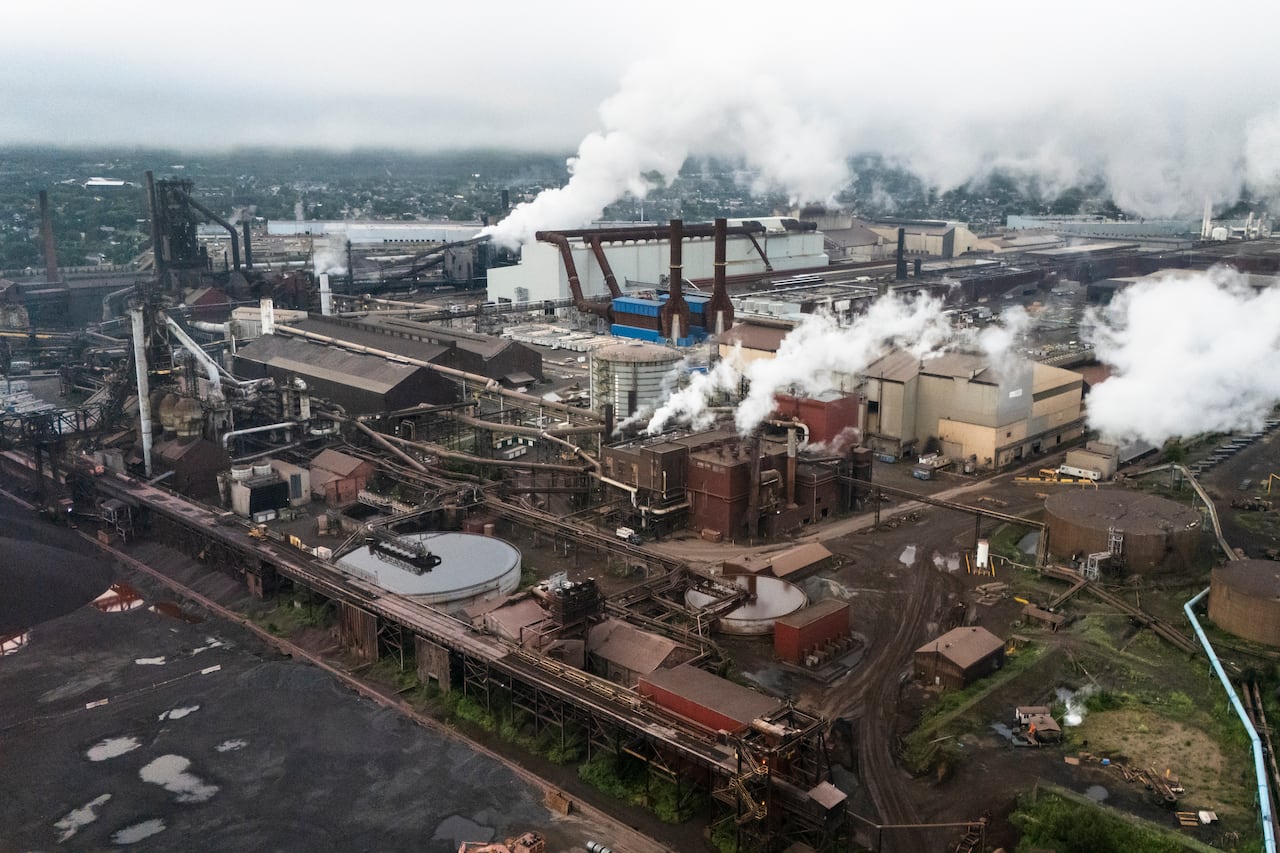
South Korea’s Hanwha Ocean has agreed to invest millions in Algoma Steel, in Sault Ste. Marie, Ont., seen here in July 2025, if it wins the contract to build Canada’s new submarine fleet. (Nick Iwanyshyn/The Canadian Press)
The intention would be to use Algoma steel in both the Hanwha’s vessels and in the construction of the maintenance facilities, should it land the submarine deal.
The federal government has told both TKMS and Hanwha Ocean that it wants to see full proposals from them by March. It’s thought a decision on which bid to go with could come sometime this year.
The commander of the Royal Canadian Navy, Vice-Admiral Angus Topshee, in a year-end interview with CBC News in December, said he’s hoping the government will come to a decision this year.
“We’re down to a single operational submarine,” Topshee said, referring to HMCS Corner Brook, which just returned to service. The other three subs — HMCS Victoria, HMCS Windsor and HMCS Chicoutimi — are either in maintenance or not operational.
“Clearly we need to get that capability locked in for the future and at the numbers that Canada really needs to meet the current [international] environment.”
Last fall, the minister in charge of defence acquisition, Stephen Fuhr, told Radio-Canada and CBC News that Ottawa will favour the pitch that creates the most Canadian jobs.
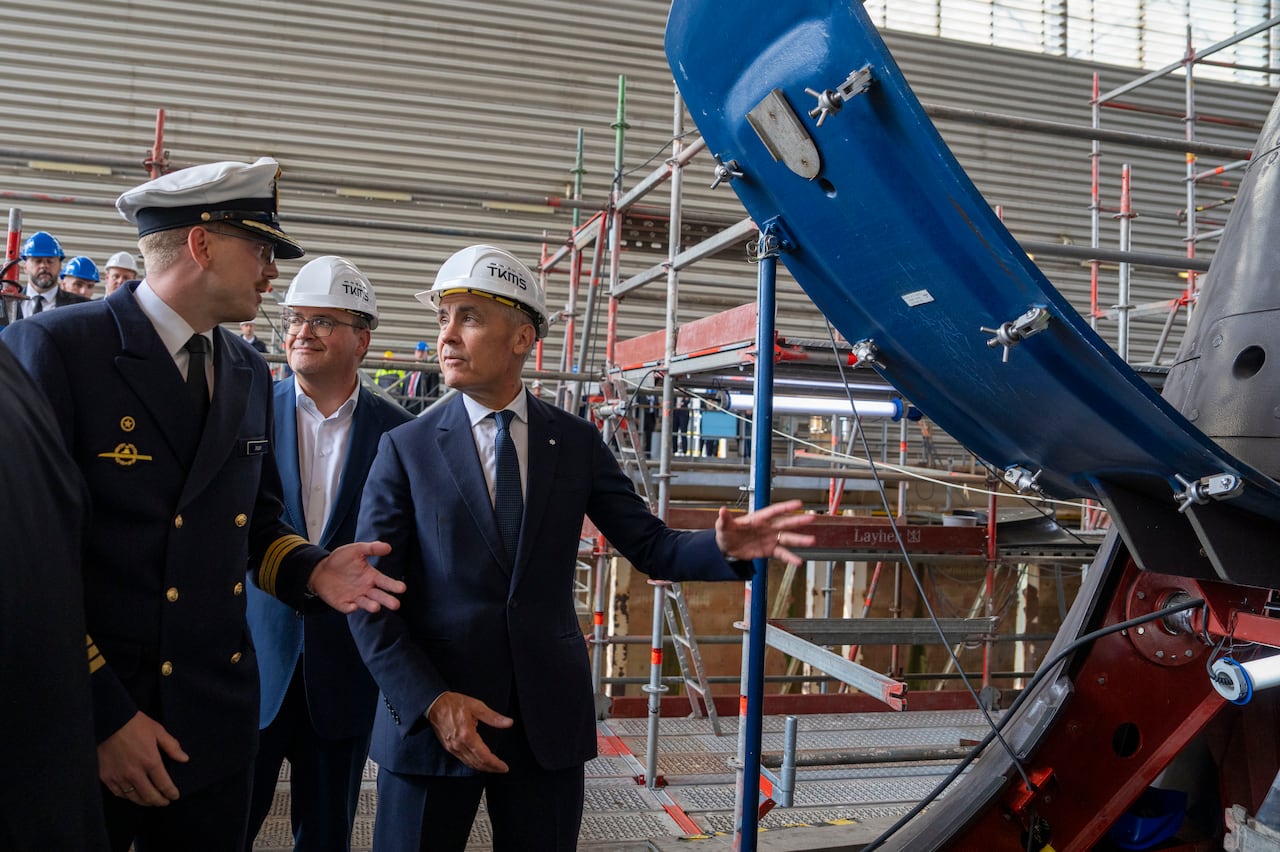
Prime Minister Mark Carney, right, tours a ThyssenKrupp Marine Systems submarine-building facility in Kiel, Germany, on Aug. 26, 2025. (Christinne Muschi/The Canadian Press)
Also this week, a high-level South Korean government delegation signed a number of memorandums on industrial collaboration that don’t involve the submarine manufacturer, but which could have a bearing on Ottawa’s decision.
The collaboration agreement is intended to strengthen the automotive supply chain and enhance co-operation on critical mineral supply chains, clean energy transition and energy security.
The deal is potentially significant because, sources say, Ottawa has told both South Korea and Germany that the proposed economic benefits of their submarine pitches should include aspects to bolster Canada’s automotive sector, which has also been pounded by the Trump administration.
For its part, TKMS acknowledged last week that it is in talks with Norwegian and German companies to offer a multi-billion-dollar investment package to Canada.
Oliver Burkhard, the CEO of the German shipbuilding company, said the talks go beyond the submarine parts supply chain and cover possible investment commitments in rare earths, mining, artificial intelligence and battery production for the automotive sector.
The Hanwha Group — the consortium that owns the submarine shipyard — said in a statement two weeks ago that it aims to create at least 200,000 jobs in Canada by 2040 through co-operation across various sectors including shipbuilding.
Most defence analysts agree that whether any of the deals turn into actual jobs is highly speculative at this point.
In December 2024, the country’s auditor general found that Innovation, Science and Economic Development Canada could not demonstrate that the Industrial and Technological Benefits Policy effectively turned over $36 billion in defence contracts — from 2014 to 2023 — into the promised economic benefits.
The audit highlighted poor tracking, lack of clear rules and unverified, delayed or missed obligations.