
Kaleigh Harrison
As electricity demand surges—driven by electrification, climate pressures, and AI-fueled data centers—the need for resilient, around-the-clock clean energy is intensifying. While solar and wind have become cheaper and more widespread, their variable output limits reliability. Most battery systems, optimized for just a few hours of discharge, aren’t built to bridge multi-day generation gaps.
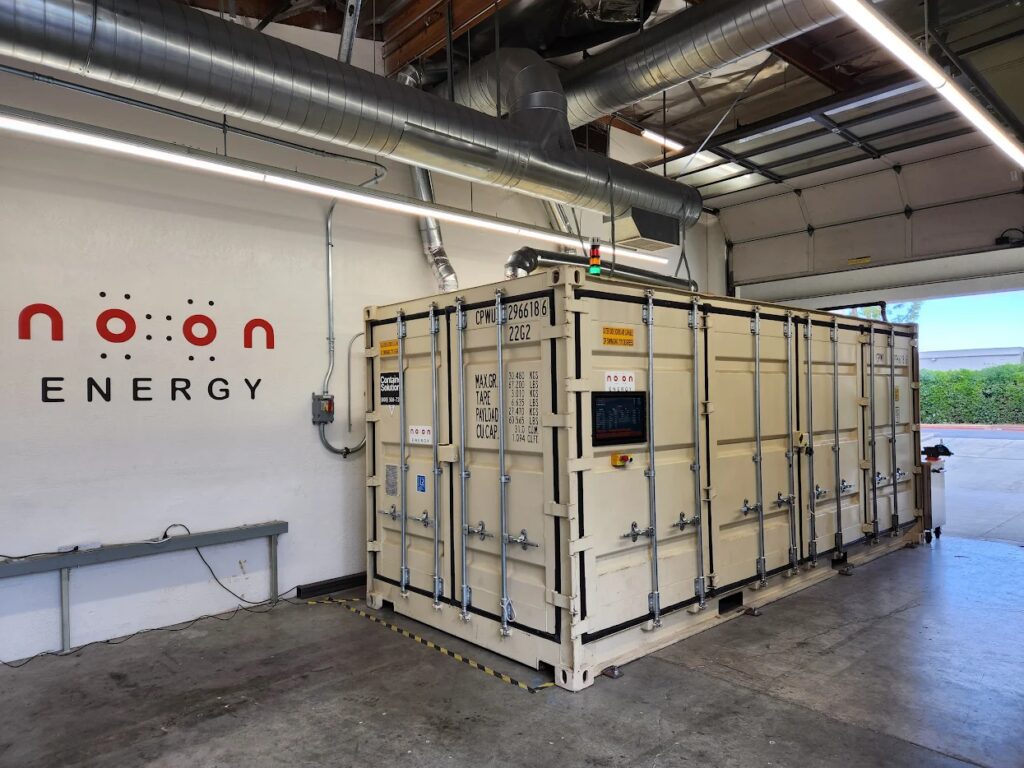
Noon Energy, a California-based startup, has demonstrated a battery that could shift that dynamic. In a recent system trial, its reversible solid oxide fuel cell ran continuously for thousands of hours, storing and discharging power for more than 200 hours in a modular configuration. The demonstration moves ultra-long-duration energy storage (ULDES) from the lab toward real-world application—especially for industrial customers where downtime isn’t an option.
The company’s battery is engineered to work alongside intermittent renewables, capturing excess generation during high-output periods and releasing it steadily over several days. Lithium-ion still plays a role in grid stability, managing minute-by-minute variability. But for multi-day reliability, ULDES is emerging as a complementary technology—particularly in markets where data center operators are exploring self-generation to secure uptime.
Lower Costs, Smaller Footprint, Fewer Critical Materials
Unlike traditional battery technologies, Noon Energy’s approach separates power from energy capacity. This allows storage duration to increase without driving up system costs, making deployments of 100 hours or more both feasible and economically competitive. That design flexibility could shift how companies think about long-duration backup power.
Size also sets the system apart. The containerized format offers a smaller footprint than lithium-ion at comparable energy capacities, and is significantly more space-efficient than options like flow batteries or pumped hydro. That density makes it a strong candidate for energy-constrained sites, including industrial campuses and urban data centers.
Importantly, the battery avoids reliance on scarce raw materials. By using widely available elements—carbon and oxygen among them—Noon Energy’s system steers clear of the supply chain and geopolitical volatility that often shadow lithium-ion and cobalt-based systems. The company estimates it uses only a fraction—around 1%—of the critical elements needed in traditional batteries, a selling point for buyers focused on sustainability and sourcing risk.