
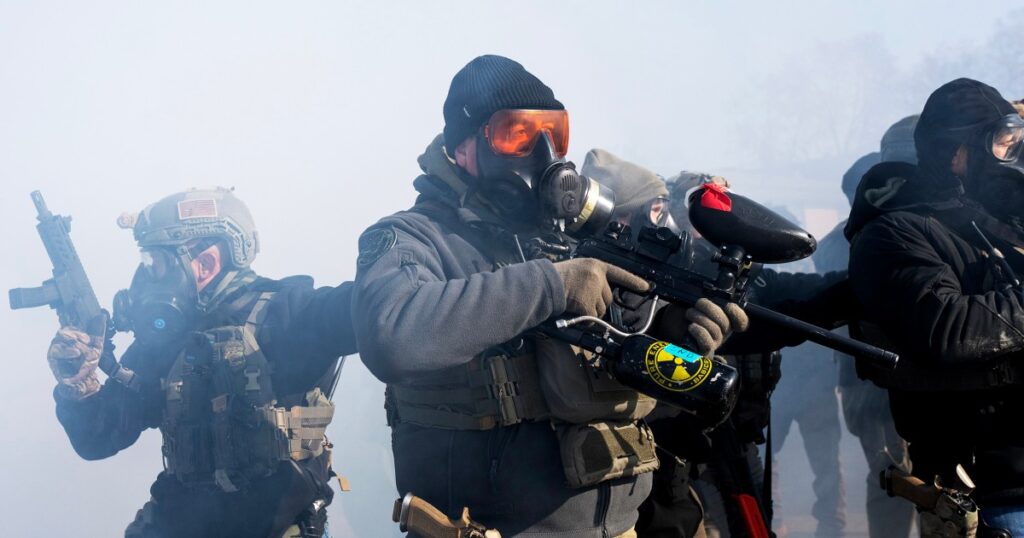
MINNEAPOLIS — A federal judge on Saturday declined to immediately halt Operation Metro Surge, allowing the sweeping federal immigration enforcement action in Minnesota to continue while a broader legal challenge plays out.
U.S. District Judge Katherine Menendez denied a request from Minnesota officials for a temporary restraining order, despite acknowledging what she described as “profound and even heart breaking” consequences for communities in the state.
She said “those are not the only harms to be considered,” however.
“The Eighth Circuit has recently reiterated that entry or injunction barring the federal government from enforcing federal law imposes significant harm on the government,” the judge wrote.
Minnesota officials argued that the operation violates the Constitution’s 10th Amendment by unlawfully pressing the state to change or abandon so-called sanctuary policies and cooperate more fully with federal immigration authorities. Menendez said those arguments, at least at this stage, were not strong enough to justify blocking the operation.
“The inferences to be drawn regarding the allegedly coercive purpose of Operation Metro Surge are not as one-sided as Plaintiffs suggest,” she wrote, rejecting the state’s claim that the operation was being carried out “in brazenly lawless ways” to force changes in state and local law.
Minnesota Attorney General Keith Ellison said in a statement that his office was “disappointed” by today’s ruling, but is “fighting on.”
“History is on our side and Minnesotans are meeting its call,” he said. “I will keep matching your bravery.”
Political tit-for-tat
Starting in December, the Trump administration sent 3,000 federal immigration agents to the Twin Cities and arrested more than 3,000 undocumented immigrants, according to the Department of Homeland Security.
U.S. citizens Renee Good, 37, and Alex Pretti, 37, were both shot and killed by federal immigration authorities in separate confrontations this month. The killings have sparked daily anti-ICE protests in the Twin Cities and national condemnation.
Hannah Lindenberg, a protestor outside of the Bishop Henry Whipple Federal Building, which houses an ICE detention center, said that even if Menendez ruled in favor shutting down the operations, the decision still wouldn’t go far enough.
“As long as ICE, as a concept, exists, it will be a problem,” she said. “Period.”
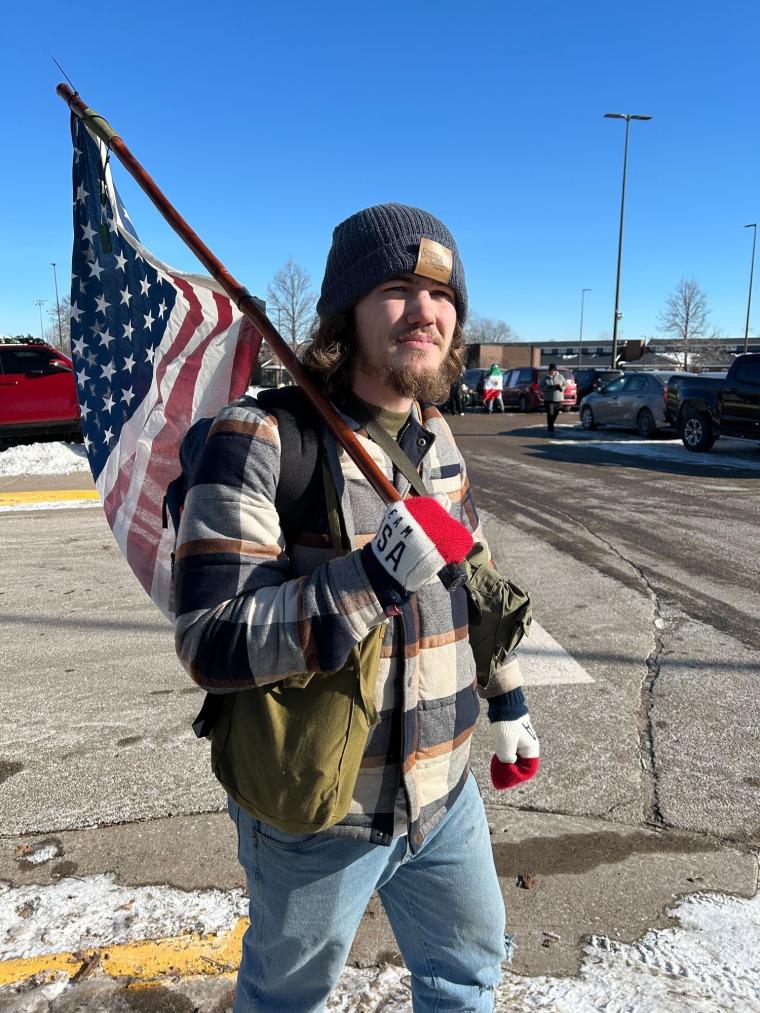 Niklas Lindstrom, 20, from Wis., protests outside Bishop Henry Whipple Federal Building in Fort Snelling, Minn., on Saturday.Alicia Lozano / NBC News
The Trump administration has sent mixed signals after initially vowing to double down on the operation in the wake of Pretti’s death last week, calling the 37-year-old ICU nurse a “domestic terrorist,” before officials launched an investigation into the incident.
Then on Thursday, Trump border czar Tom Homan said the administration would “draw down” the operation in the state. President Donald Trump also spoke with the Minnesota Gov. Tim Walz over the phone this week.
But on Friday, federal authorities arrested former CNN anchor Don Lemon in connection with a protest he covered at a St. Paul church earlier this month. Lemon vowed to fight the charges against him.
On Truth Social on Saturday, Trump called Walz “corrupt” and Rep. Ilhan Omar, D-Minn., who was attacked at a town hall this week, a “scammer.”
It is also unclear if tensions have eased on the ground, where daily life has transformed for some Twin Cities residents since the operation began.
In her ruling on Saturday, Menendez acknowledged the toll the operation was taking on Minnesotans. She wrote that there is evidence federal immigration agents have engaged in racial profiling, excessive use of force and other harmful actions — claims the government did not rebut in its filings.
“Defendants do nothing to refute the negative impacts described by Plaintiffs in almost every arena of daily life,” Menendez wrote, citing increased police overtime costs, declining school attendance, delayed emergency responses and severe hardship for small businesses.
“It would be difficult to overstate the effect this operation is having on the citizens of Minnesota,” she added.
Gary Grumbach reported from Washington, D.C.; Matt Lavietes reported from New York City; and Alicia Lozano reported from Minneapolis.