

February 1, 2026 — 7:15pm
AAA
In the late ’90s, there was no cooler aesthetic for personal technology than transparent plastic. Plenty of gadgets and gear had been transparent before – mainframes and cassette tapes – but generally for utilitarian purposes. At the turn of the millennium, tech companies were making see-through fashionable. A quarter of a century later, the style has made a resurgence.
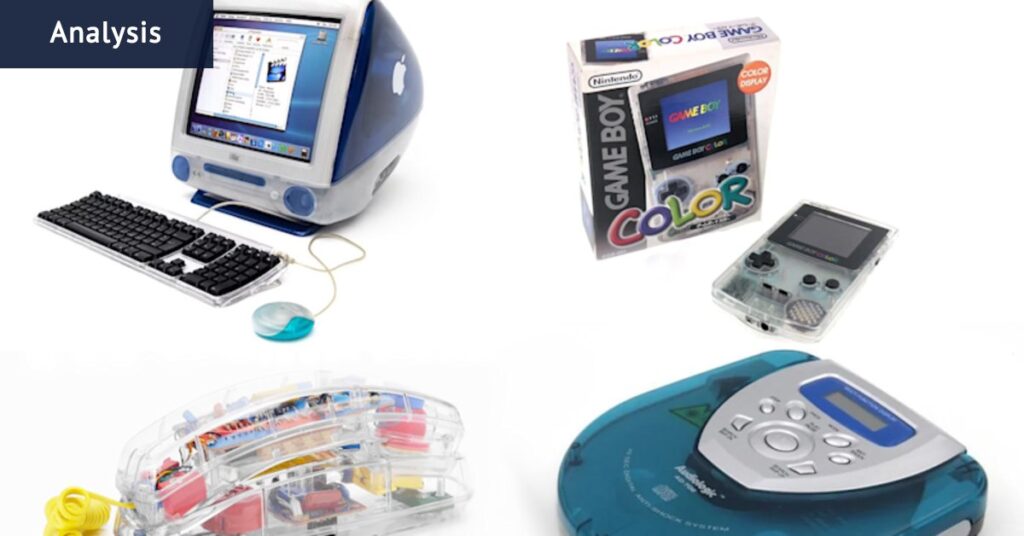
Apple’s 1998 iMac G3, with a transparent shell exposing the neck of the cathode ray tube and some of the internal parts, is an iconic example of the style. Nintendo’s Game Boy Color, released the same year, is another. But there were also home phones, TVs, headphones, CD players, game consoles, desktop PCs, toys, radios and more that proudly showed off their insides around the same time.
See-through tech is thought of as a 90s fad, though it really started earlier and carried on through the 2000s.
After years of big, dirty, beige, incomprehensible technology, these devices redefined gadgets based on the clean, honest components viewable within — buttons and switches and physical mechanisms, tangible media you could watch being spun or accessed, visible ribbon cables and solder — symbolising that they had nothing to hide. And it’s clear that a desire to recapture that feeling is powering the transparent gadget’s return.
We’re in an era where whole systems of that tactile technology have been replaced by chips so small as to be functionally invisible, while massive machines tucked away in data centres do most of our processing and send the results to us through the air. We barely use physical media now, and even our digital media is beginning to be affected by indecipherable AI systems.
Taking a look back at the past year of gadgets, you can see how many firms are dredging the ’90s for a double dose of nostalgia and reassurance, attempting to ground our nebulous technology in what physical features remain.
A see-through smartphone isn’t really possible or practical, since you’d only really see battery. But British tech firm Nothing takes an allegorical approach with transparent panels showing screws, circuit traces, ribbons and objects that are really just there for aesthetics. Its earbuds share the same aesthetic, but its Headphone (1) may be the ultimate expression of this, evoking a ’90s rave DJ idea of what the future should have been.
Audio is ground zero for the newly revived trend, with Beats and Sony also creating see-through buds in the past year, which makes sense given transparency also means clarity. Audio Technica even made a see-through turntable, which is perfect for all those extremely expensive transparent vinyl re-releases.
Drone-maker DJI last year released its first robot vacuum cleaner and, you guessed it, the unit and its dock are see-through, which is a big vote of confidence in the cleanliness of something designed to hold dirt.
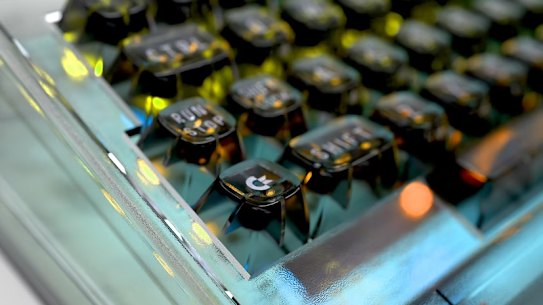
PC accessory maker Razer released new versions of five of its popular gadgets with new transparent casing, which gives them an entirely different vibe since they also have bright colourful lighting inside that you usually only see through small cracks and windows. Now the bare LEDs themselves are on display.
Charlie Bolton, Razer’s global head of design, said refitting existing devices to be see-through was a deceptively complicated process, and the company went through many iterations and materials.
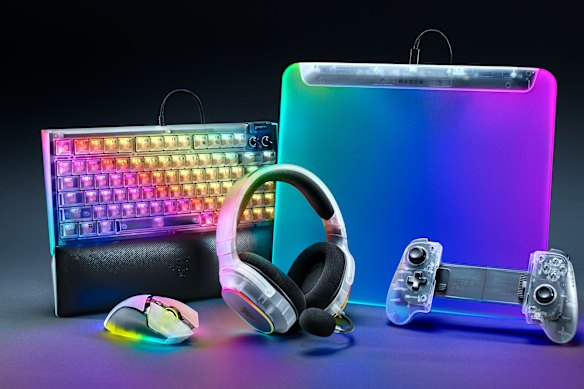
Razer’s Phantom White collection pairs transparency with coloured lighting.
“If you do it badly, it can look very cheap. You almost go into a whole different, plastic packaging feel. So we had to find the balance of transparencies, and against black parts and certain elements,” he said.
“We know people like it, but to do it well, you have to be quite competent and have quite a good engineering base.”
The Basilisk V3 Pro mouse has clear transparent panels, but also dark smokey panels and frosty rubberised grip parts. If it was all completely transparent, it might just look like a grey wedge. The BlackWidow V4 75% keyboard has black elements, including the palm rest, which Bolton said was intended to be transparent but the materials didn’t work out right. There’s also a headset and a mouse mat, and all have bright colourful lights that seem to fill the whole device. Or you can turn them off and have a view of the keycaps and wires.
“It was a lot of honesty when it came to seeing the internal components. And we had nothing to hide on that front,” Bolton said, noting the empty space, messy wiring and added weights that would be exposed if some other brands went transparent.
“We didn’t rework anything to make it better for the internal parts – it’s more the exterior structure elements, making sure the transparency and the frosting was good. It does bring up challenges about the readability of the fonts and choosing the right colours.
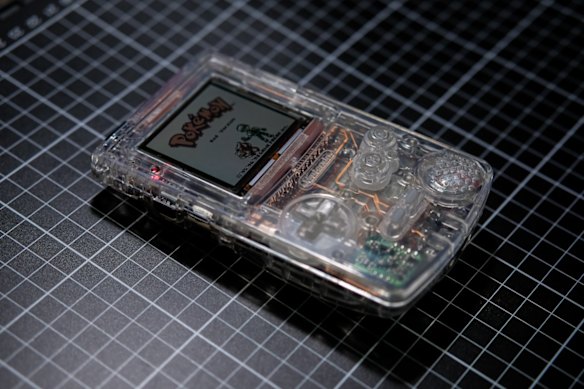
Modders and makers of retro game tech push transparency past the limits of what was possible in the ’90s.X / natalie_thenerd
The transparency boom is hitting especially strongly in video games, where products hoping to evoke a boutique or retro feel can use the style to distance themselves from today’s digital, ephemeral and perpetually online experiences.
Editor’s pick
Modern recreations of old systems such as the PlayStation and Nintendo 64 are available in finishes that evoke the see-through special editions of the ’90s and early 2000s, and enthusiasts building custom Game Boys invariably return to the transparent look. Australian modder Natalie the Nerd even took it one step further last year and invented a transparent circuit board to make her machine more see-through than most.
The trend even affects projects involving tech that’s far older than the ’90s. The new Commodore 64 Ultimate, a recreation of the classic computer produced by a global team that’s partly based in South Australia, is staunchly dedicated to returning to a simpler and more hands-on era. It comes with a huge spiral-bound manual that teaches you how to code, it has original-style ports for connecting old gear, and it even has a speaker inside that simulates the whirs, screeches and ker-thunks of old data drives and disks. But in addition to a classic beige model, it also comes in a fully transparent option full of LEDs.
It may be anachronistic, but the reasoning is clear. Transparency is trust, and people want machines they can see into.
Get news and reviews on technology, gadgets and gaming in our Technology newsletter every Friday. Sign up here.

From our partners