
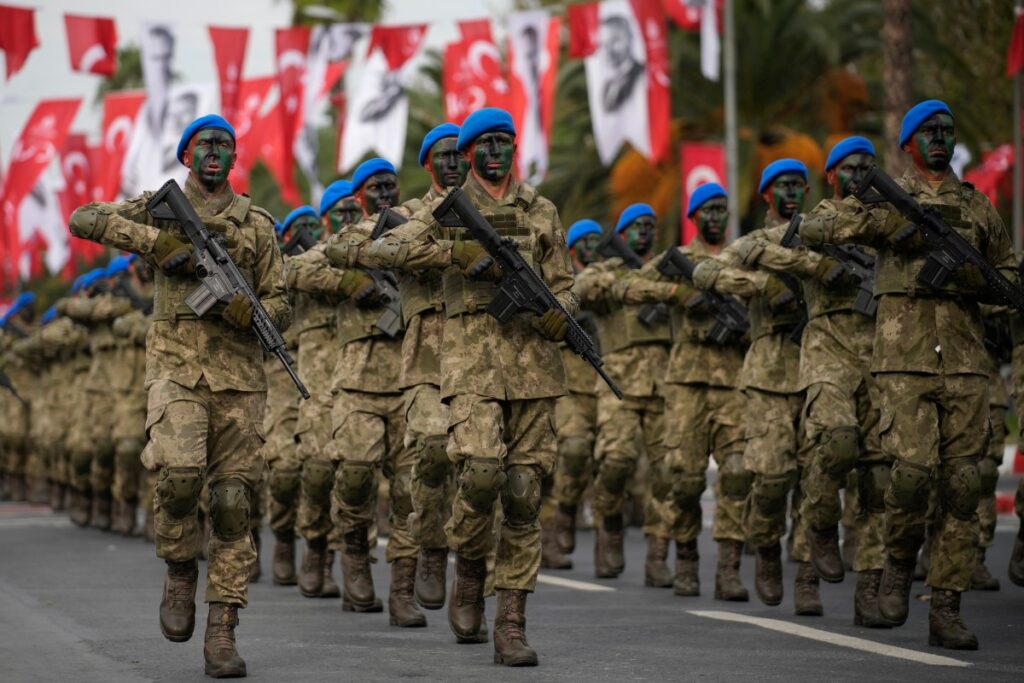
Births in Türkiye fell again in 2025, continuing a decline that has put NATO’s youngest population on a course President Recep Tayyip Erdoğan has called a “demographic disaster.”
For decades, the country of 85 million and rising military power had the bloc’s highest total fertility rate (TFR). In 2016, it stood at 2.1 births per woman, the level needed to sustain a population naturally. By the end of last year, the Turkish Statistical Institute reported it had fallen to 1.48, driven by prolonged economic downturn, rising cost of living and changing social norms among young people.
It’s a familiar pattern for most upper- and middle-income countries, where roughly two-thirds of the population lives, with TFRs below the replacement rate, according to the International Monetary Fund. Many NATO member states are in an even more advanced stage of demographic transition, which will have wide-ranging effects on society in the coming decades—driving up pensions, health care and other public expenditures while squeezing defense budgets.
Newsweek reached out to NATO by email with a request for comment.
Difficult Balance
Ageing societies compound the challenge, with people aged 65 and over comprising 21.6 percent of the European Union’s population in 2024, according to Eurostat. Labor-saving technologies such as artificial intelligence, robotics and automation are expected to pick up some of the slack as populations age and military forces shrink.
Yet there is a cap on the ability of democratic governments to invest in these technologies.
“Russia and China can afford disproportionate spending on defense because they short-change their social welfare and pensions,” Christian Leuprecht, a professor at the Royal Military College of Canada and Queen’s University, told Newsweek. “A major boost in defense spending in aging societies would require politicians in democracies to make tradeoffs that are too politically painful.”
The demographic challenge comes as European governments face pressures not seen since the end of the Cold War to build up defense capabilities, after Russia’s war against Ukraine—the first state-on-state conflict in Europe since World War II—exposed vulnerabilities. Renewed tensions in the Middle East and elsewhere have added further urgency.
After sustained pressure from U.S. President Donald Trump, the 32 NATO members agreed last year to commit 5 percent of their GDP to defense spending by 2035.
The demographic changes are also expected to shape how innovation proceeds. As governments divert more public resources to pensions and health care, defense industries will be outcompeted for top-tier talent and will increasingly need to outsource tech innovation to the private sector, Leuprecht said.
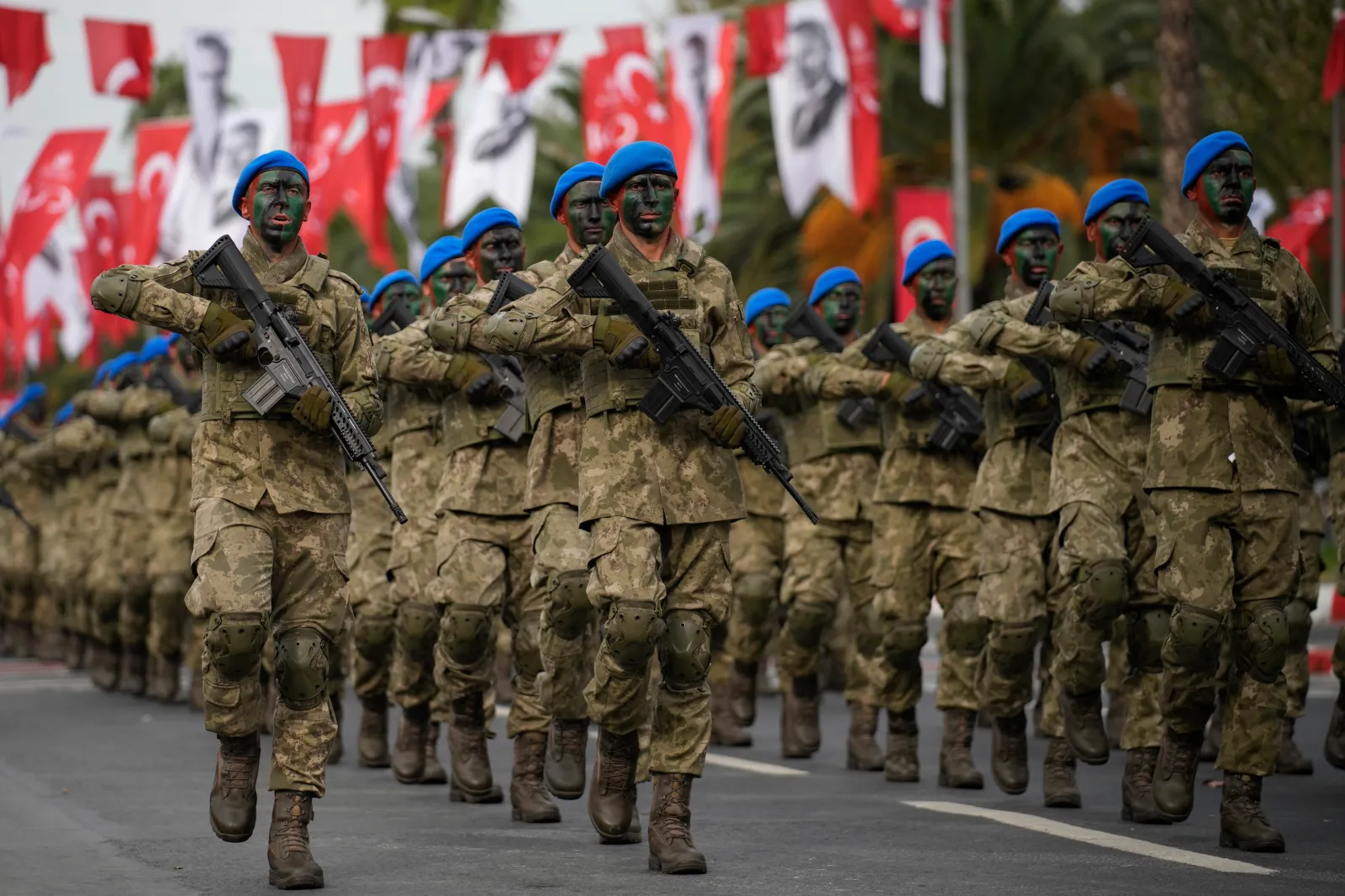
Mass vs. Class
“But demography is never destiny,” Leuprecht added. It is just one determinant among many, including productivity, innovation, energy prices, and economic growth.
The ability to scale up production is another key factor.
“That’s also the U.S. advantage: scale in defense economics and defense production. As a result, U.S. kit tends to be less expensive and more cutting edge than that of allies,” he said.
A balance of “mass and class”—manpower and quality of technology and recruits—is key, Leuprect said.
“Ukraine is among the demographically oldest societies in Europe, yet it is at the cutting edge of the military innovation cycle,” he said.
A combination of policy responses may be key to keeping member states’ militaries at full operational readiness—investments in AI and other advanced technologies paired with upskilling programs to extend the careers of older service members, the Center for Strategic and International Studies, a Washington think tank, wrote in a 2024 report.
Over time, preventive health care policies can extend people’s active years and cut spending on treatment of chronic illnesses, maximizing economic productivity as populations age.
“This isn’t a false binary: Defense and welfare are both essential,” policy analyst Jack Eddy wrote for the International Longevity Centre UK. “But it does demand honesty. If we want to prepare for tomorrow’s wars, we must also prepare for tomorrow’s [aging] society.”
In a polarized era, the center is dismissed as bland. At Newsweek, ours is different: The Courageous Center—it’s not “both sides,” it’s sharp, challenging and alive with ideas. We follow facts, not factions. If that sounds like the kind of journalism you want to see thrive, we need you.
When you become a Newsweek Member, you support a mission to keep the center strong and vibrant. Members enjoy: Ad-free browsing, exclusive content and editor conversations. Help keep the center courageous. Join today.

