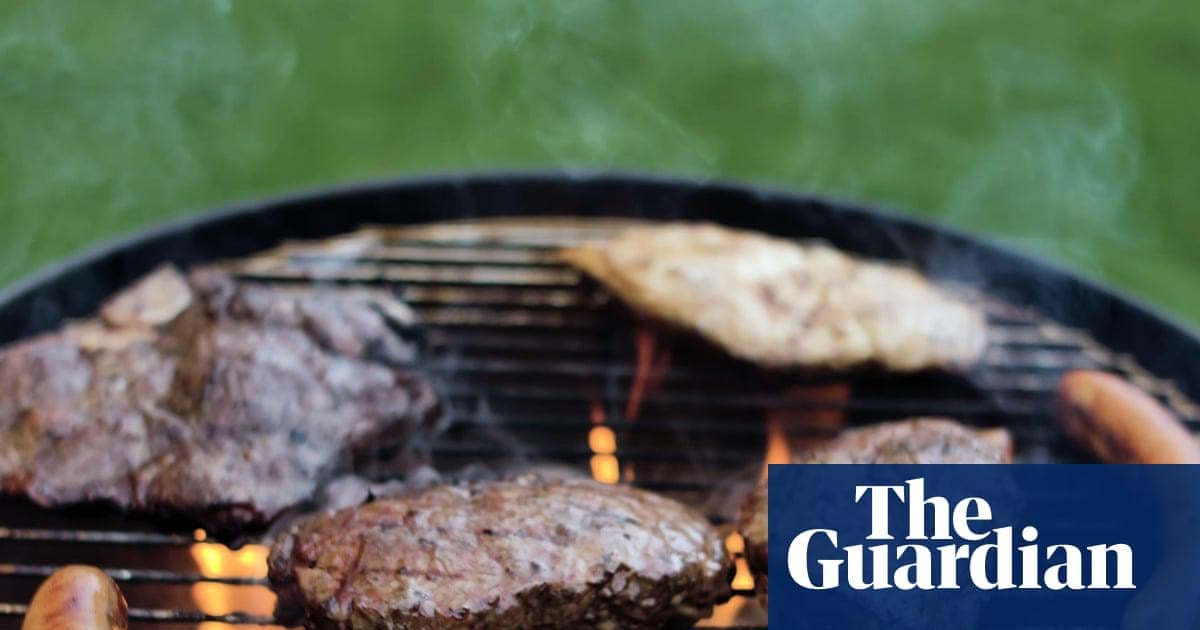
‘Humanity’s Favourite Food’: How to End The Livestock Industry but Keep Eating Meat
https://www.theguardian.com/environment/2026/jan/31/humanitys-favourite-food-how-to-end-the-livestock-industry-but-keep-eating-meat

‘Humanity’s Favourite Food’: How to End The Livestock Industry but Keep Eating Meat
https://www.theguardian.com/environment/2026/jan/31/humanitys-favourite-food-how-to-end-the-livestock-industry-but-keep-eating-meat
11 Comments
The *Guardian* argues that humanity won’t give up meat voluntarily, consumption has risen for decades despite ethical and environmental concerns. The only realistic way to end the livestock industry is not persuasion, but replacement: making real meat that is indistinguishable in taste and experience, while being cheaper, cleaner, and more scalable. This mirrors past transitions where technology, not restraint, solved the problem, whales weren’t saved by asking people to stop using oil, but by technology making whale oil, and later other products, obsolete.
That shift is now starting in food. Cultivated meat and seafood, grown from cells rather than animals, are moving from research labs into factories and restaurants. Companies funded by Agronomics like Meatly (cultivated meat,) BlueNalu (cultivated seafood), and Clean Food Group (precision-fermented fats and ingredients) funded by Agronomics are tackling different parts of the same problem: decoupling meat and dairy from farming and fishing. The strategy is pragmatic, start with premium products where early costs make sense, prove safety and quality, then scale as production costs fall.
If this works, meat becomes an industrial product rather than an extractive one. Livestock farming and overfishing don’t disappear overnight, but gradually lose relevance as better substitutes take market share. Just as energy was decoupled from whales and transport from horses, food may be decoupled from animals altogether. The future of meat isn’t “less meat,” it’s the same meat, made in a fundamentally different way.
No worries, there is always the [HDP](https://static0.polygonimages.com/wordpress/wp-content/uploads/2025/12/john-cena.jpg) option.
If only their wasn’t a answer.
Lab grown meat.
But that’s woke by murkan politicians and being outlawed.
Internalize the costs of meat production so that consumers are paying for the actual costs (carbon emissions, land degradation, water pollution, etc., not even getting into health concerns from excessive red and processed meat consumption), rather than offloading them to taxpayers.
So many of the problems we face can be alleviated if the businesses causing harm have to cover the costs of that harm they are causing.
I’m pretty sure cooked meat is the reason we are the apex species on this planet. So yea, let’s just stop doing that…. Some real 21st century insight there
It would be great if there were an official government push for this. Most people don’t see the problem they just buy their meat from the supermarket and move on. Realistically public habits won’t change unless shifts are gradually introduced or mandated
I am all for this. I would be ready to buy more expensive but ethically sourced meat.
Honestly where I live
during the winter I cannot even get any decent fresh veggies that aint rotting after two days and have at least a bit of taste.
The answer is simple: Know your farmer, and know your rancher.
Grasslands are typically lands which are not suitable for crops. So if we remove cows some other, wild ruminants will get there to graze and burp the same amount of methane. If we kill them off, decomposing plant matter will release methane anyway. So it’s kinda bullshit. The problem is growth. Without growth we wouldn’t have to cut forests for pastures.
The thesis is correct but ignores reality of where that industry is (or will be any time soon).