
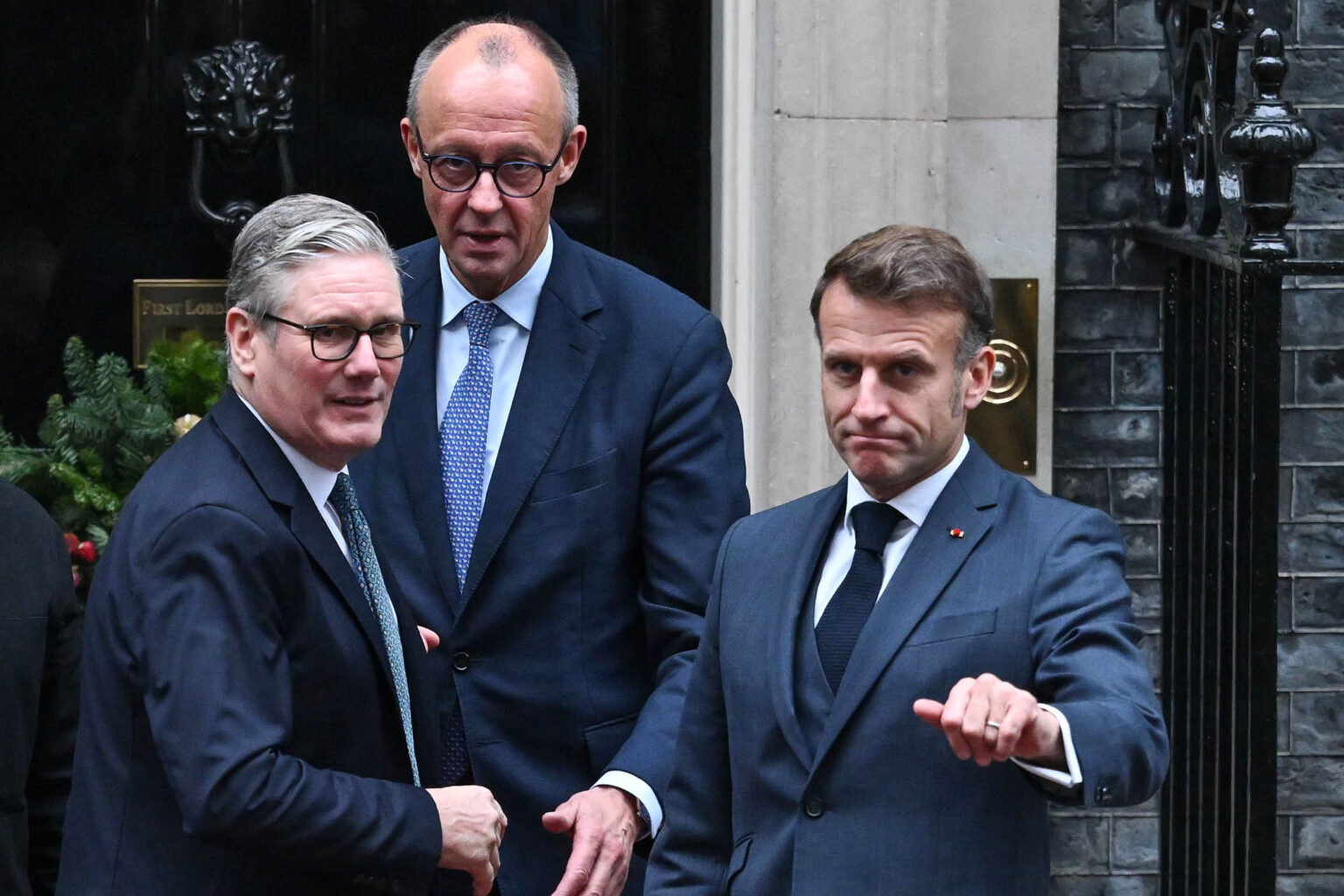
Keir Starmer is urging the European Union to allow Britain to join a multibillion-euro defence fund as part of efforts to deepen military and economic cooperation after a series of erratic moves by Donald Trump.
The prime minister said Europe, including the UK, needed to work more closely together on “spend, capability and cooperation” to bolster European security and defence in an increasingly uncertain world.
Speaking ahead of talks between the EU and the UK in London this week, Starmer said he was pressing for Britain to be able to sign up to the second round of the €150bn (£130bn) Security Action for Europe (Safe) fund.
“Europe, including the UK, needs to do more on security and defence,” he told journalists on the plane during his trip to China. “That should require us to look at schemes like Safe and others to see whether there is a way in which we can work more closely together.”
He added: “Whether it’s Safe or other initiatives, it makes good sense for Europe in the widest sense of the word – which is the EU plus other European countries – to work more closely together. That’s what I’ve been advocating and I hope to make some progress on that.”
Maroš Šefčovič, the EU’s trade commissioner, is due in London for talks on Monday, with trade, energy and fisheries on the agenda. But the UK is also hoping to secure a deal on defence ahead of a summit, provisionally planned for May.
Negotiations for the UK to join the Safe fund collapsed in November last year amid claims that the EU was demanding £2bn as an entry fee for the scheme.
However, the mood has shifted since Donald Trump’s threats to take over Greenland and criticism of Nato. There is now a growing desire in other European countries for Britain – a big hitter in European defence – to be involved.
France was blamed by some for the breakdown of the talks but other member states, including Germany are said to want the UK to be involved in the scheme.
Starmer told The Observer that he now has a Whatsapp group with the French president Emmanuel Macron and the German Chancellor Friedrich Merz to discuss strategy on security and defence. “We’re constantly touching base with each other about the approach we’re taking,” he said. “Having a strong nucleus at the heart of Europe is part of the thinking about how we strengthen our transatlantic bond in the sense of Europe doing more.”
NewslettersChoose the newsletters you want to receive
Clear, calm analysis on the stories driving the day’s news.
The very best of our journalism, reviews and ideas – curated each day.
A dispatch from The Observer’s kitchen table – from Nigel Slater’s recipes to interviews, features and hot tips.
For information about how The Observer protects your data, read our Privacy Policy
The prime minister said the war in Ukraine had exposed the fact that Europe was “not strong enough” in its own defence and security. “Europe needs to step up more,” he said. “That is not to pull away from the US-Europe transatlantic relationship but it is to rebalance it, to make sure that within Nato, Europe is doing more in order to strengthen Nato not to pull Nato away from the US but actually to make Nato fit for the future.”
He insisted it was not enough just to boost defence budgets. “It’s more than just spending more, we need to coordinate and collaborate more closely,” he said. “This is the argument I’m making to the Europeans. What are you spending your money on? Is it interoperable?”
Starmer is facing pressure from within the Labour party to forge closer ties with the EU as the US becomes an increasingly unreliable partnerStarmer is facing pressure from within the Labour party to forge closer ties with the EU as the US becomes an increasingly unreliable partner
The Safe fund is designed to boost European defence spending and allow countries to jointly procure new weapons by borrowing money guaranteed by the EU budget. EU countries can spend up to 35% of the rearmament fund with UK defence companies thanks to a bilateral security partnership signed last May. That could rise to 50% if Britain joined Safe and British businesses could take the lead on contracts.
Starmer is facing pressure from within the Labour party to forge closer ties with the EU as the US becomes an increasingly unreliable partner. Some cabinet ministers including Wes Streeting, the health secretary, and David Lammy, the deputy prime minister, have suggested the government should join a customs union.
Speaking in China last week, the prime minister insisted the relationship with the EU should be “iterative” following the initial agreement last year. “We should be seeking to go further. And I think there are other areas in the single market where we should look to see whether we can’t make progress. That will depend on our discussions and what we think is in our national interest.”
He added: “I do think we can go further. And the place to look is the single market, rather than the customs union, which doesn’t now serve our purpose very well.”
Photograph by Rasid Necati Aslim/Anadolu via Getty