
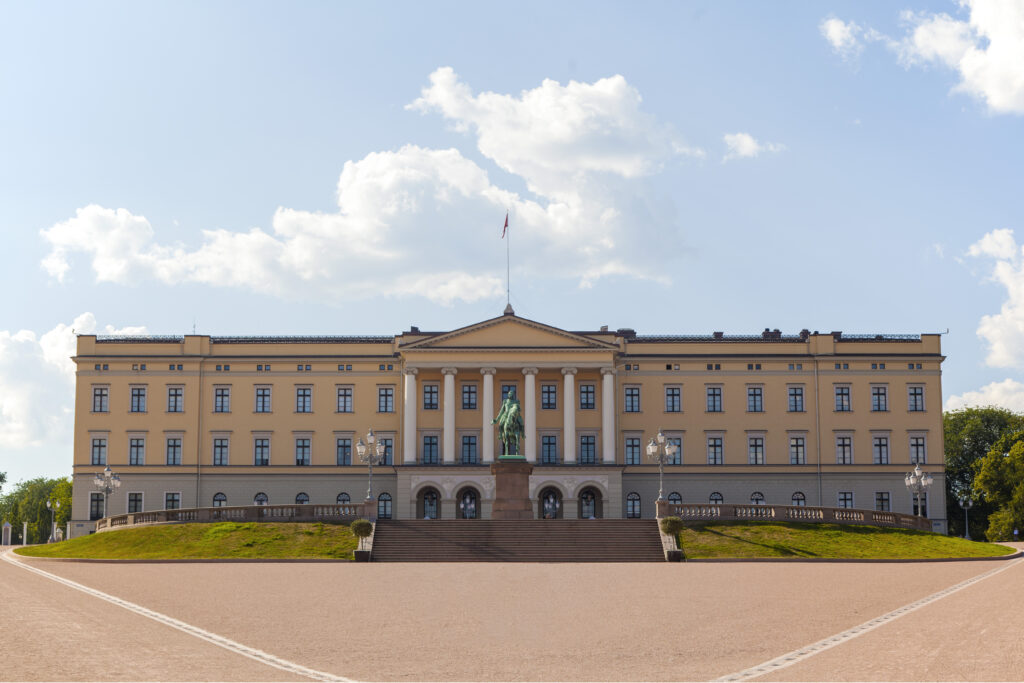
For decades, Norway’s monarchy has survived by doing something
deceptively simple: staying out of trouble, staying out of
politics, and staying broadly in tune with the public mood. That
quiet social contract is now under visible strain.
The question being asked in Oslo is no longer whether the royal
family is embarrassed – that much is obvious – but whether the
institution itself is beginning to wobble.
What makes the current moment so unsettling is not a single
scandal, but a convergence.
Newly released US documents have cast an uncomfortable light on
Crown Princess Mette-Marit’s past association with Jeffrey
Epstein, prompting her to acknowledge “poor judgment”. At the same
time, her son, Marius Borg Høiby, is about to stand trial on
serious criminal charges, which he denies. Either episode on its
own would be bruising. Together, they have placed the monarchy
under an intensity of scrutiny rarely seen in modern Norway.
Yet the most striking development has come not from the palace,
but from government.
When Prime Minister Jonas Gahr Støre publicly agreed with the
crown princess’s self-criticism, he broke with a long-standing
convention of silence. Norwegian prime ministers do not, as a rule,
pass judgment on senior royals. That restraint is not written into
law, but it has functioned as an important stabiliser in a
constitutional system built as much on custom as statute.
By crossing that line – carefully, politely, but unmistakably –
Støre acknowledged something else: that public confidence matters
more than ritual deference. His intervention did not accuse,
speculate or sensationalise. But it did legitimise public
discomfort in a way that palace statements alone cannot.
Does this mean the monarchy is in danger? Not necessarily – but
it does suggest it is no longer insulated.
Norway remains a country with high levels of institutional
trust, and the monarchy still enjoys broad support. There are no
mass republican movements waiting in the wings, nor any serious
political appetite for constitutional upheaval. Historically, the
monarchy has weathered controversy by emphasising transparency,
contrition and restraint – qualities Mette-Marit has attempted to
project in her response.
But the ground rules are shifting. A monarchy that has long
relied on being seen as morally sound, emotionally accessible and
discreetly guided is now confronting questions about judgment,
advisers and accountability. And crucially, it is doing so in an
era when political leaders appear less willing to shield it from
public debate.
This is not a collapse. It is, however, a warning.
If Norway’s monarchy is to endure in its current form, it will
need to demonstrate that it understands why trust has been shaken –
and that it can respond without retreating into silence or
symbolism. Deference alone will no longer do the work it once
did.
For now, the crown remains secure. But the protective bubble
around it has thinned – and once punctured, it is very hard to
fully restore.