
Kyiv
—
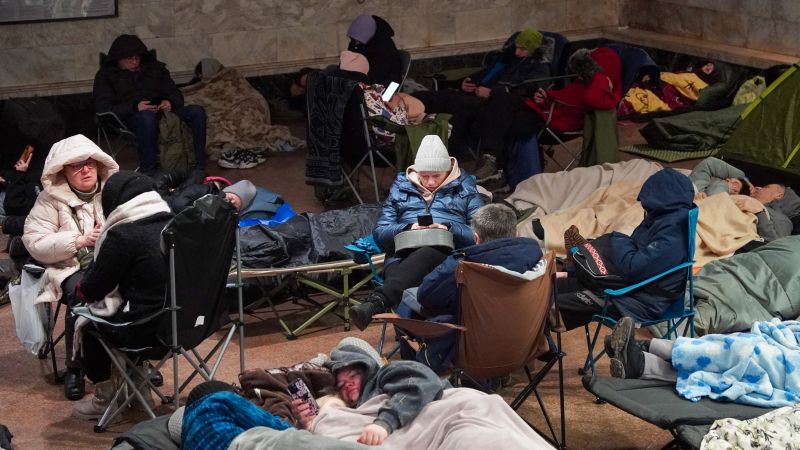
Russia attacked Ukraine’s capital Kyiv with ballistic missiles early on Tuesday, local authorities reported, following a pause in strikes on major cities and infrastructure agreed to by Russia and the US as Ukraine grapples with plummeting winter temperatures.
CNN staff in Kyiv reported hearing several strong explosions in the city.
Russian President Vladimir Putin last week agreed to pause attacking major Ukrainian cities and infrastructure until Sunday, following a “personal request” from US President Donald Trump, according to the Kremlin.
The pause also came following trilateral talks between Russia, Ukraine and the US in Abu Dhabi, the first such talks since Moscow’s invasion in February 2022.
Several multi-storey residential buildings had been damaged, according to reports, Tymur Tkachenko, the head of the Kyiv’ military administration, wrote on Telegram.
Dnipro, in eastern Ukraine, was also being attacked by ballistic missiles, according to the Ukrainian Air Force.
While there have been no reported strikes on energy facilities or major cities since last Thursday, according to Ukrainian authorities, Russia has continued to strike logistics routes and transport infrastructure, with deadly results.
The Kremlin has confirmed that the next round of trilateral talks between Ukraine, Russia and the United States aimed at ending the war in Ukraine will take place on Wednesday and Thursday in Abu Dhabi.
“In the freezing cold, Russians decided to launch another massive strike on Kyiv,” Tymur Tkachenko, the head of the Kyiv’ military administration, wrote on Telegram following the strikes early Tuesday.
Russia has stepped up attacks on Ukraine’s energy infrastructure, leaving swathes of the country facing power shortages and outages in the depths of winter. On early Tuesday morning local time, the temperature on Kyiv was -20 Celsius ( – 4 Fahrenheit).
Ukraine’s biggest private energy company is in “survival mode,” its CEO told CNN, with the next few weeks critical as the country grapples with plummeting temperature and the “worst condition of our energy system in modern history.”
DTEK currently operates five thermal power plants in Ukraine, of which two are currently offline and the other three are functioning at low capacity, Maxim Timchenko told CNN Monday in an interview from Dnipro.
He said the company was working to repair the damage from repeated Russian attacks, but it’s often not possible in freezing weather conditions.
His biggest hope right now is that the energy ceasefire announced last week, which he says brought a five-day reprieve in attacks on DTEK’s thermal power plants, is extended in talks in Abu Dhabi this week.