
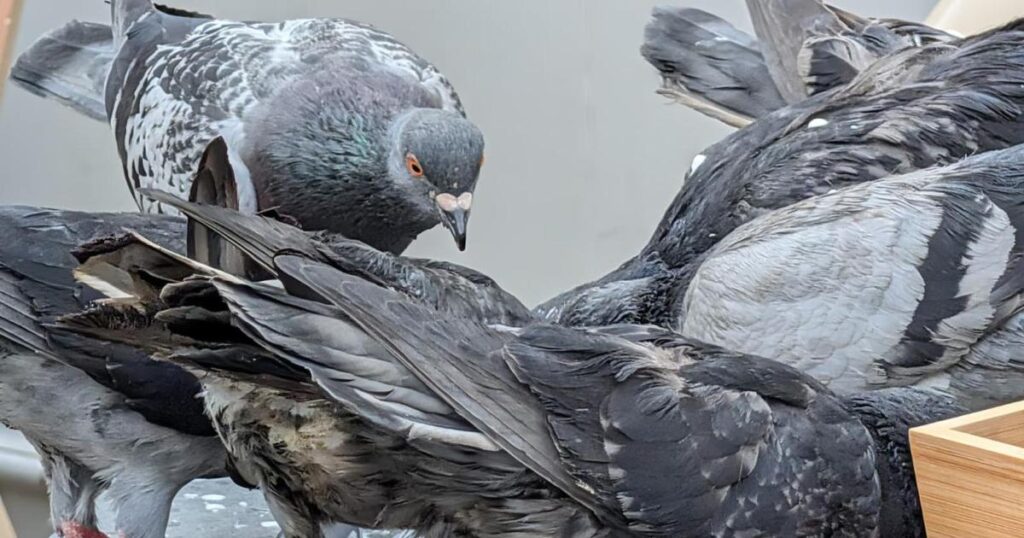
Plans to capture and cull feral pigeons across Malta as part of an initiative to control their growing population have been approved by the government, after a trial using contraceptive-laced feed was discontinued.
Coordinated by the health ministry, through the directorate for environmental health, and with the agriculture ministry, the pest control programme will involve trapping pigeons in “approved lure cages” and transferring them to the civil abattoir for slaughter.
The announcement comes in response to questions over whether the government has begun pigeon culling after discontinuing the contraceptive programme.
A health ministry spokesperson told Times of Malta that the two ministries will soon launch the coordinated programme.
“Feral pigeon overpopulation can create environmental and public health challenges, and this programme is designed to help local communities maintain cleaner and safer surroundings,” the spokesperson said.
In December, animal activists warned that the contraceptive feed project had failed due to the poor implementation and that the government allegedly had turned to culling to control the feral bird population.
This collaborative effort forms part of ongoing works to safeguard public health and improve the overall urban environment for residents and visitors alike
The spokesperson said the culling methods had been reviewed and authorised by the animal health and welfare department and would be conducted in line with animal welfare guidelines.
“This collaborative effort forms part of ongoing works to safeguard public health and improve the overall urban environment for residents and visitors alike,” the spokesperson said.
No timeline has been announced for the rollout of the trapping and culling programme.
The new strategy comes after Times of Malta reported that the contraceptive-laced bird feed project to curb pigeon numbers was discontinued after it failed to receive sufficient funding.
That programme ran from October 2021 to August 2023 and saw 45 automatic feeding stations installed across 35 localities in Malta and Gozo, targeting areas with dense pigeon populations.
Carried out by the Local Councils Association and pest control expert Arnold Sciberras, the €360,000 project was funded by the department for local government. According to the detailed 31-page report, the trial led to a 30 per cent drop in pigeon numbers in some areas.
Calls for a long-term solution for the feral pigeon population have been part of the local discussion for years.
In 2015, local councils felt culling was the only solution to the “uncontrollable infestation” of pigeons in the locality, yet one ornithologist disagreed, stating that culling was only a temporary solution.
In 2023, a Maltese researcher found that using falconry can be an effective method of controlling the pigeon population. According to his studies, the simple presence of the hawk in areas where the pigeons roost was enough to drive them away by triggering their instinct for self-preservation in the presence of a predator.