
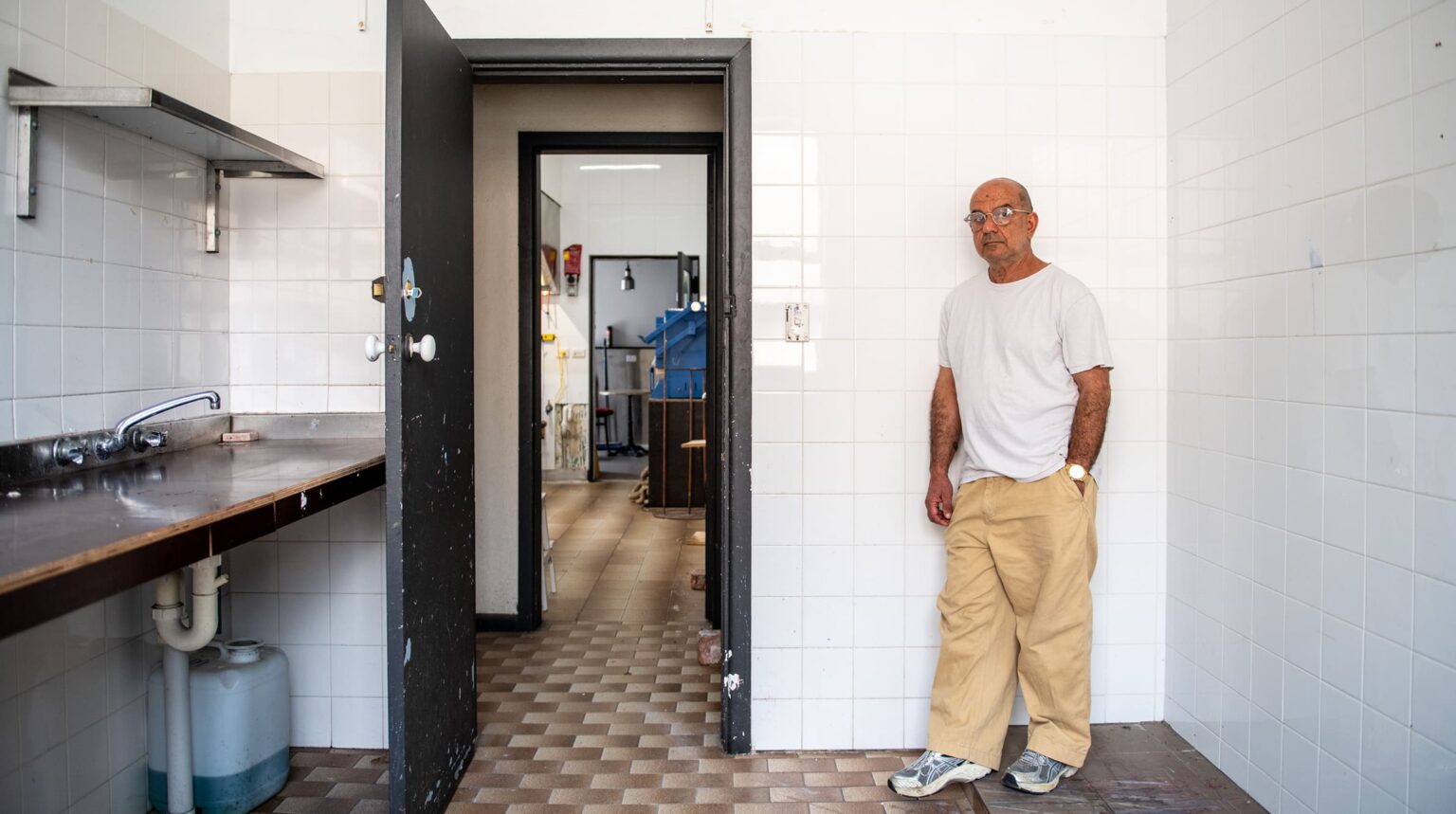
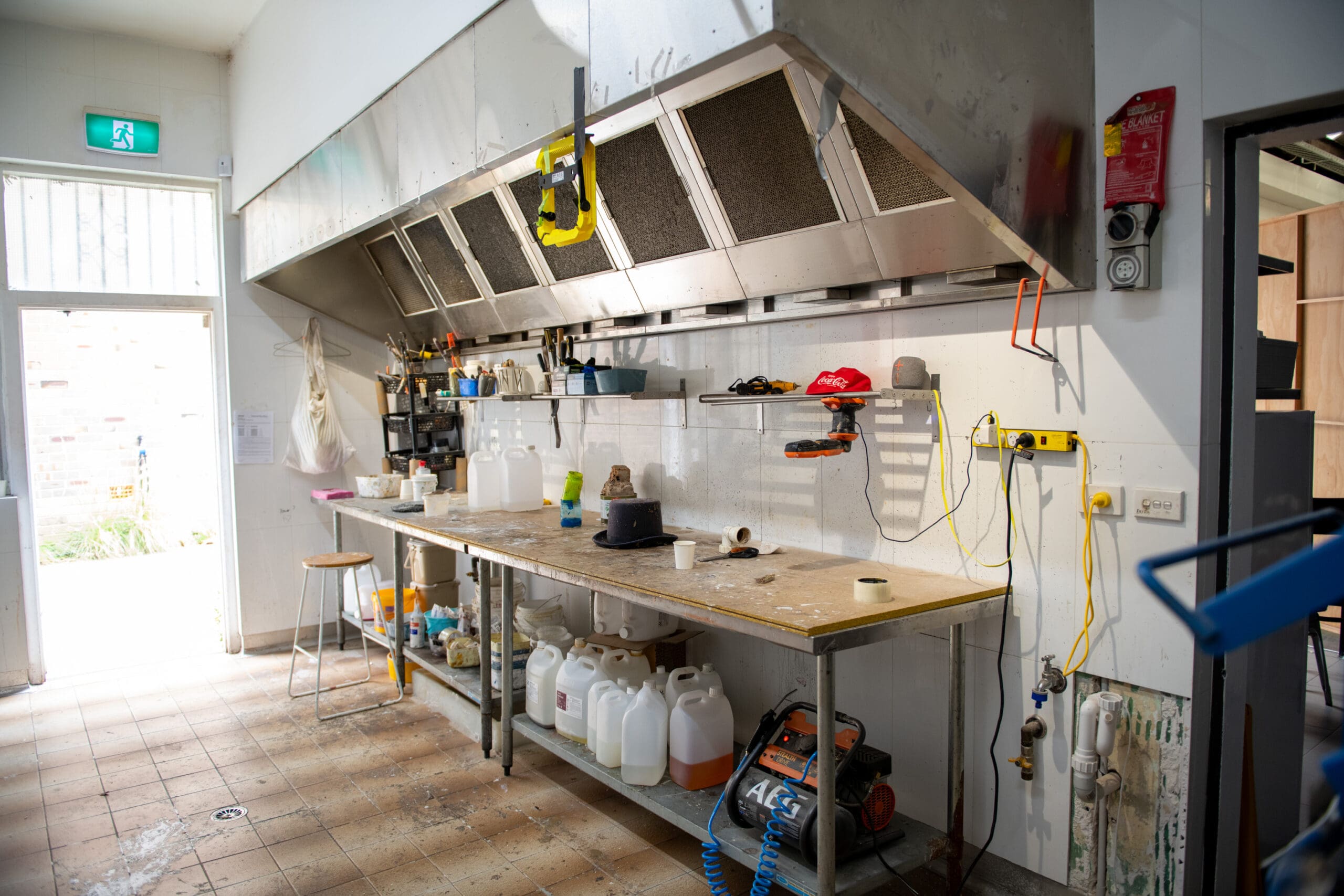
Hany Armanious’ studio is in an old commercial kitchen at the back of a large complex in the inner west of Sydney. Used moulds are stacked in the walk-in fridge. The resins and pigments for his uncannily realistic sculptures are stored under the long workbench, and a hammer and crowbar hang from the tool rack above.
It’s a fitting workspace for an artist whose current survey exhibition, Stone Soup, is named after a folktale about cooking something from nothing. Stone Soup was first presented at the Henry Moore Institute in the United Kingdom in 2024. The Melbourne exhibition at Buxton Contemporary is a significant expansion, bringing together over 80 works from the past 15 years including key pieces from his showing in the Australian pavilion at the 2011 Venice Biennale.
His practice is often described as alchemical but it might be better understood as an attempt to recalibrate perception. Armanious, who is also working towards a solo exhibition at Sydney’s Museum of Contemporary Art in mid-2026, gravitates to well-used, everyday objects like polystyrene packaging and stubs of crayon tangled in rope. By casting and reproducing these humble finds, he draws fresh attention to their tactile qualities, and also to wider questions around value, what we choose to see and how we anchor ourselves in the physical world.
Hany Armanious: The studio space is really set up for fabrication. A lot of the ideas happen elsewhere, often in my apartment. I’ll have a series of objects that I’m looking at and thinking about.
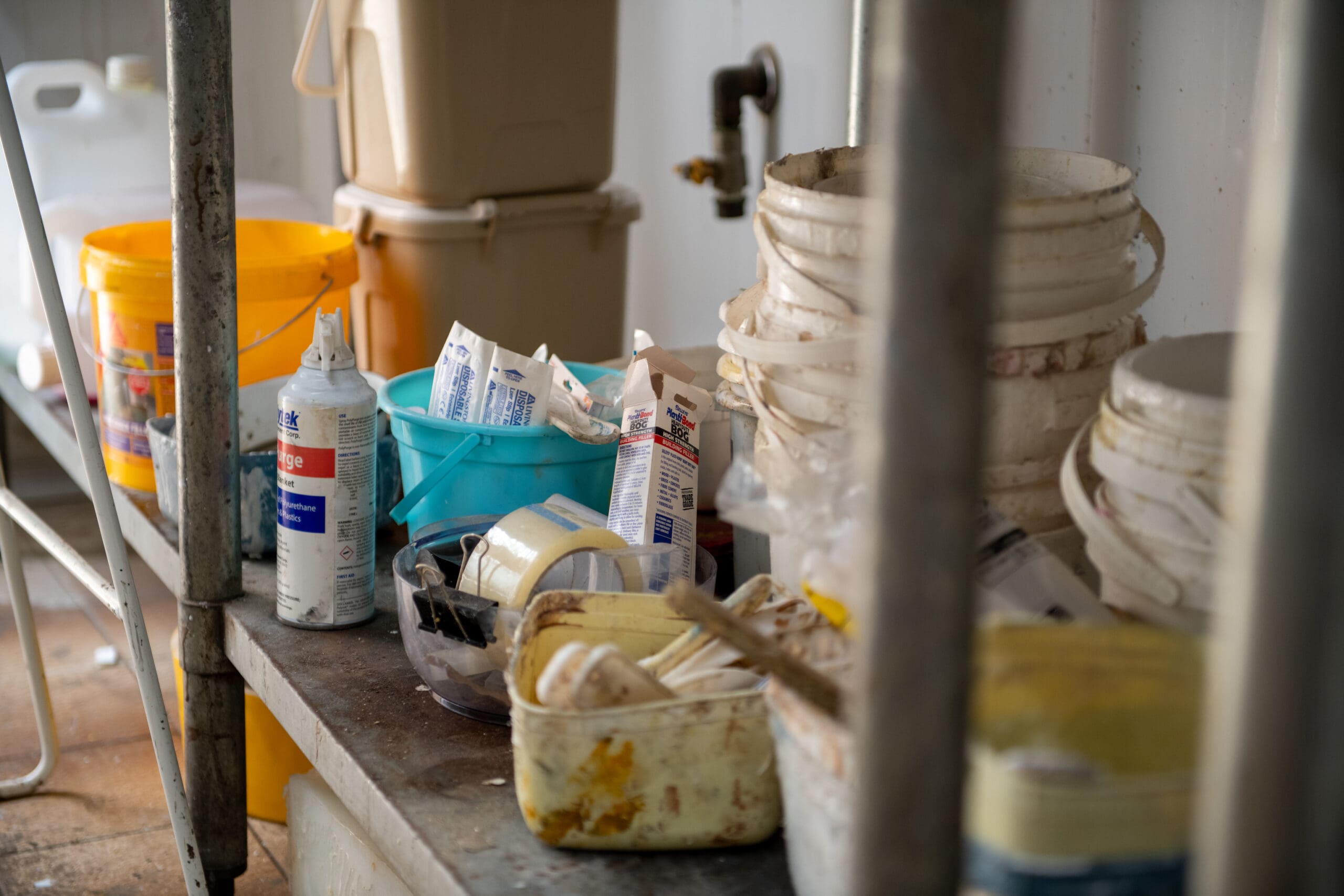
They’re peripheral objects. Almost nothing. They’re the things that I find most striking, most poetic. You can’t really expect them to turn up, they just do, so it’s about remaining open and letting them appear. Eventually, if I commit to wanting to work with them, then I bring them in here and start making moulds.
It’s really time-sensitive because I don’t have a lot of time in the studio. I’m working at the National Art School four days a week. The rest of the time I’m here, or I come after work. Setting up this place [first with Mike Hewson and Patrick Hartigan and now also with Agatha Gothe-Snape, Salote Tawale and others] was really important for all involved. We’re always walking into each other’s spaces and having a look. A lot of times, you’re working in this vacuum, and you need fresh eyes.
I’m often surprised at how wrong I can be, about what I’m thinking is happening and what actually is happening, so others’ point of view is really vital.
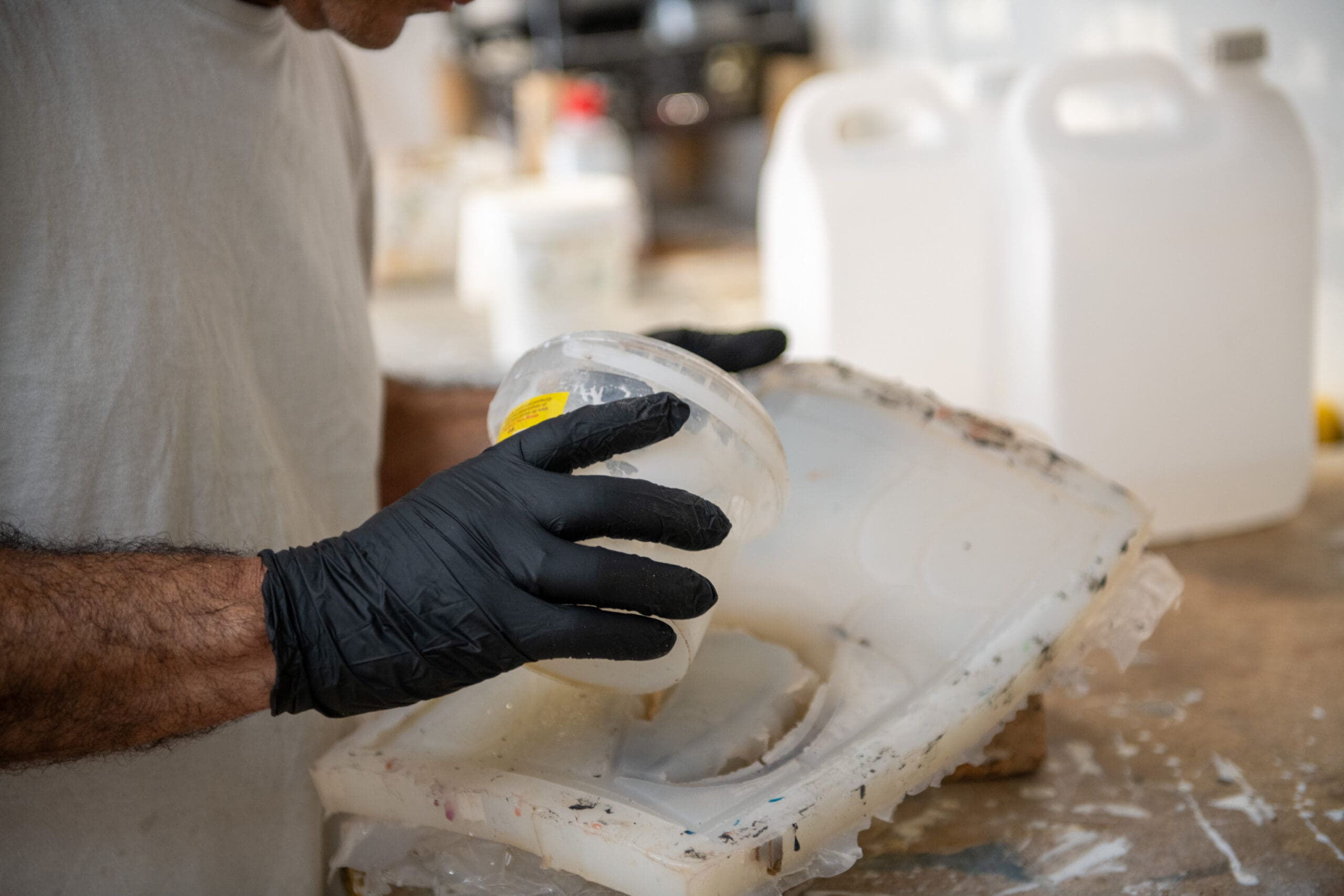
Hany Armanious: In the studio, it’s just hard work. It’s unpleasant work and it’s hair-raising because it’s expensive and time consuming and you get one shot at it. But it’s a pretty programmed process. You know, one step follows another. There are the stages of preparing the objects before a mould is made. Then you’ve got to create a box to pour the liquid silicon into and make sure there are no leaks. The resin is clear so all the colour matching happens before you cast. You’re forever mixing colours until it’s accurate. And then you pour.
Once it’s set, it’s all fused together so you’ve got to crank everything open. It takes quite a lot of energy and willpower [laughs]. And you need to be careful not to actually break your cast. But once it’s out of the mould, there’s no painting to be done. It comes out complete. People assume that they’ve been hand-painted afterwards, but they’re not. If anything, they’re just patinated by rubbing a dirty rag over them.
Often they’re one offs. In the process, the object or the mould will be destroyed. That’s why if something goes wrong, it’s irretrievable, so you’ve got to rehearse every step really carefully. It can be really nerve-wracking. Leaks are a big one. Or you may not put enough pigment in and it’s a little bit translucent but it should be opaque, or vice versa, and it’s just not convincing. It just looks like a plastic object—and the last thing you want is for
it to look like a plastic object.
Hany Armanious: In Stone Soup, there are a couple of pieces that were only seen around the time of the Venice Biennale and it’s nice to see them again: Happiness (2010) and another piece called the Birth of Venus (2010). There’s also recent work, a few pieces from this year, and then a couple of new pieces [developed for the exhibition], which are prints for the wall. In a sense they’re an extension of the casting process too.
Often what will drive it is being sufficiently excited about a project that, you know, nothing will get in the way of bringing it about. It energises you when you’re really excited about something. I mean, if you’re not really having a good time, it’s not going to work. But it’s interesting, the price you pay. The grunt that goes into realising these quite incidental moments of levity. It’s a permanent fixing, through these permanent artificial materials, of something that’s almost ephemeral.
The more this goes on, the more I know that I have less and less control and actually, I can’t direct. I don’t know where the next one will appear, or whether or how I’ll be able to bring it about. It’s always beginning from the start, with every single one. It’s not as though I can build on a past work, or add to a series. It’s always got to be intuitive. Entirely new, and new every time. On its own terms.
Hany Armanious: Stone Soup
Buxton Contemporary
(Melbourne/Naarm VIC)
Until 11 April
This article was originally published in the January/February 2025 print edition of Art Guide Australia.